How to transform an abandoned office building into a public facility?
- Office
- Public
- Public
- Completed
- Location
Uccle, Brussels
- Surface
16.645 m²
- Client
Municipality of Uccle
- Partners
MK Engineering, Steel & Co Engineering
- Description
Conversion of an old office building into the administrative centre of Uccle
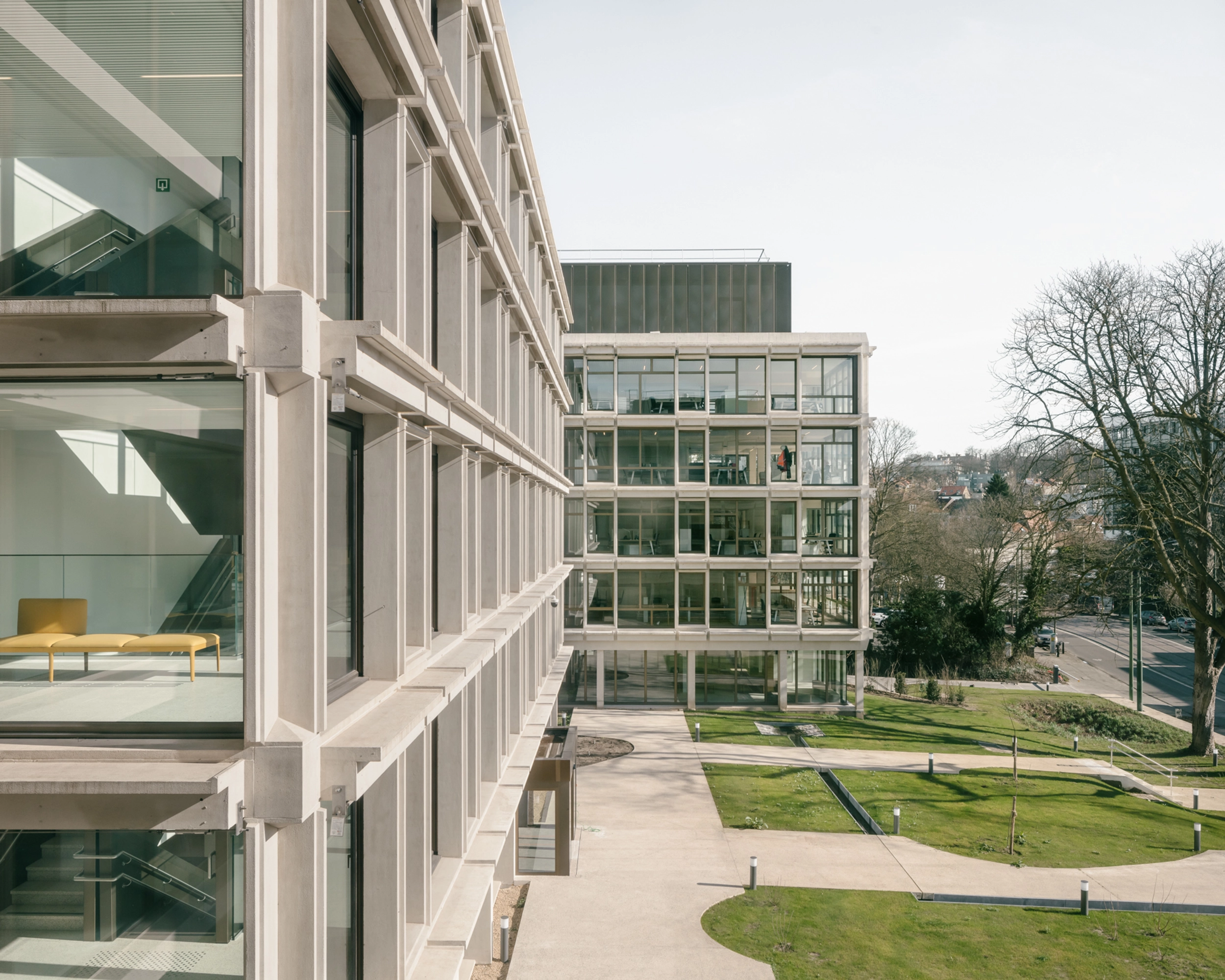
Project U is the conversion of a disused office building into a contemporary workplace for 450 administrative staff of the municipality of Uccle. This regrouping strengthens synergies between departments and optimises services for citizens. Situated on the outskirts of Brussels, the project assertsa strong identity through circular design principles, achieving high environmental performance in an efficient public workplace. The project was awarded the Be Exemplary Award in 2017.
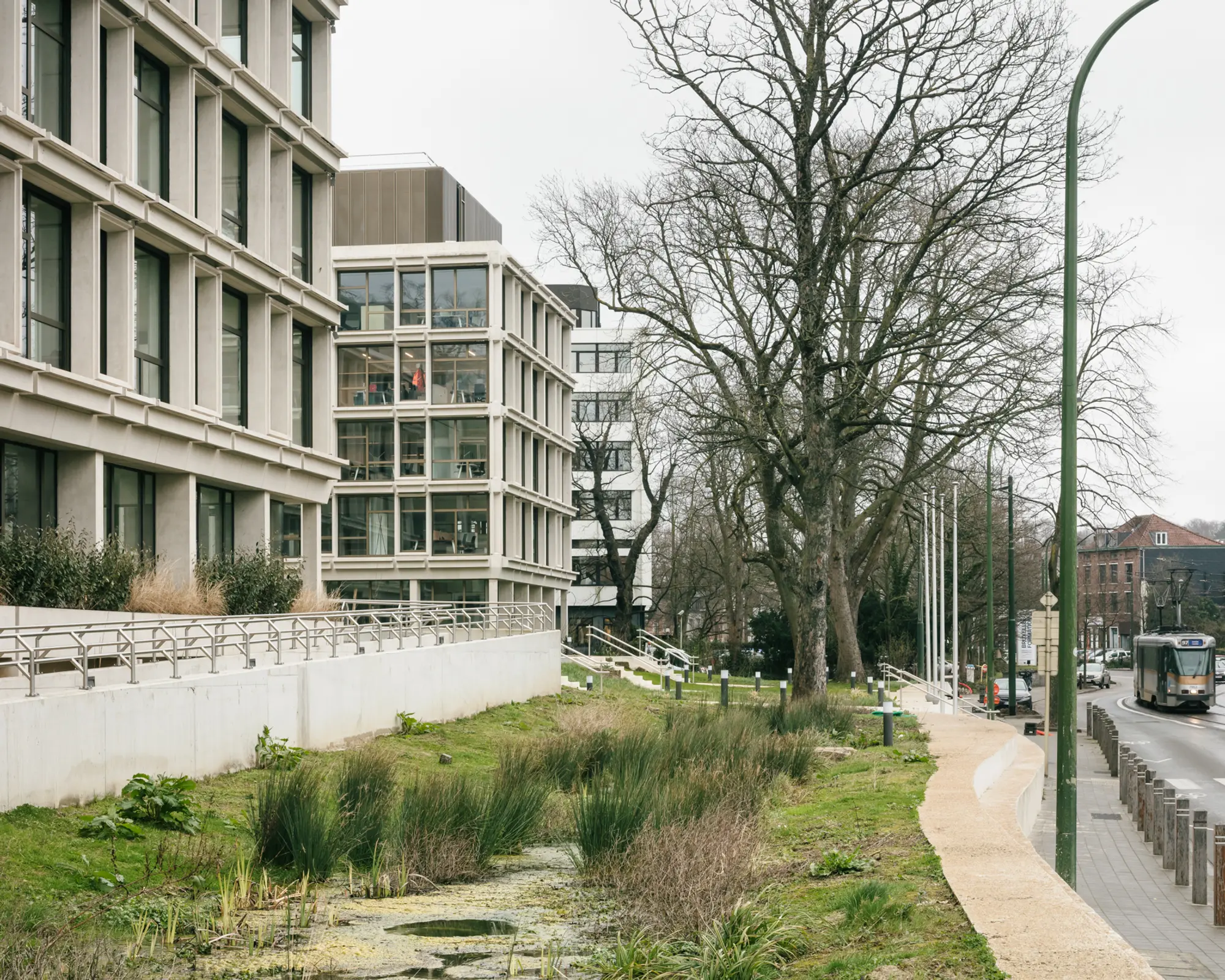
3d model
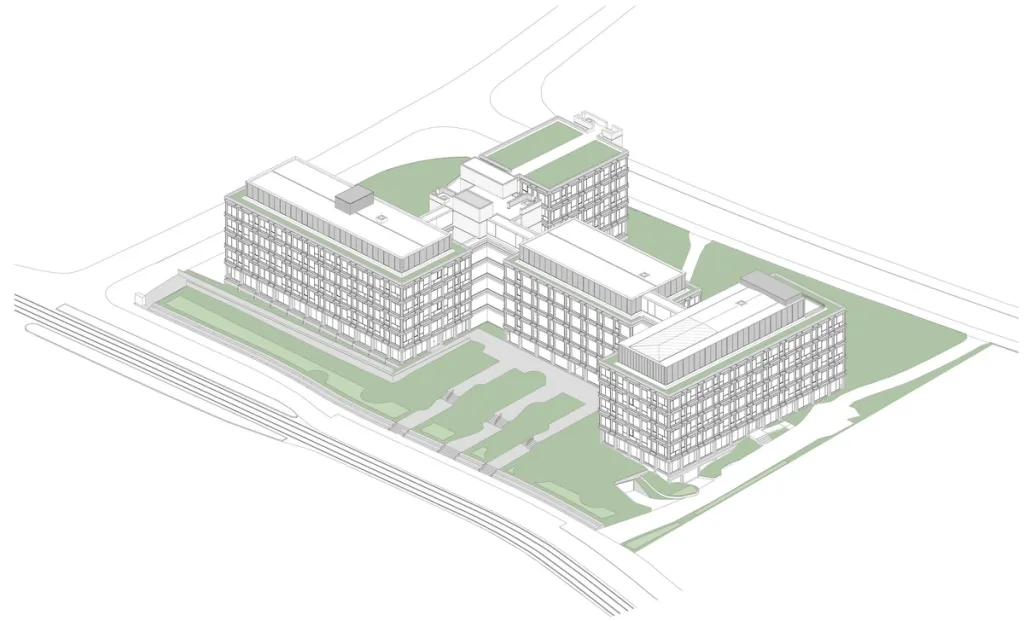
A respectful transformation
Instead of constructing new infrastructure, the municipality of Uccle purchased the Fabricom building in 2014: a disused 1970s building. The complex, a reflection of its era, possessed intrinsic architectural qualities and was set in a valuable green environment. The challenge of this project? Transforming a private office building, into a public facility for municipal services, while respecting the architectural quality.
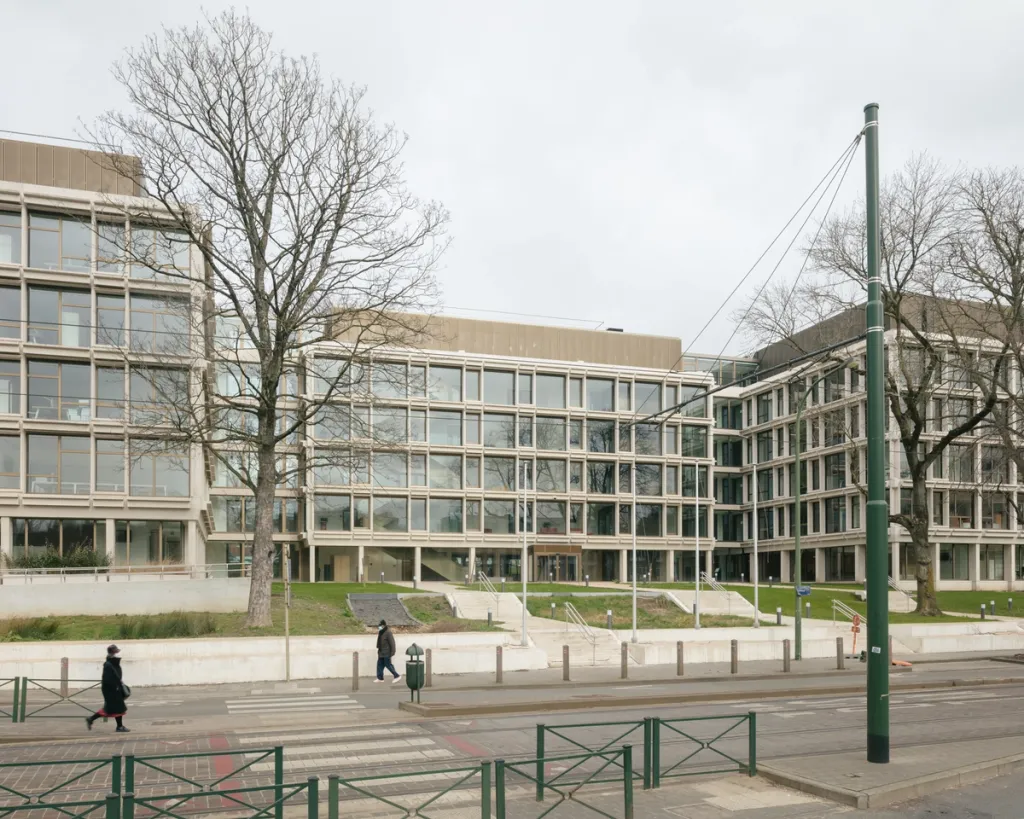
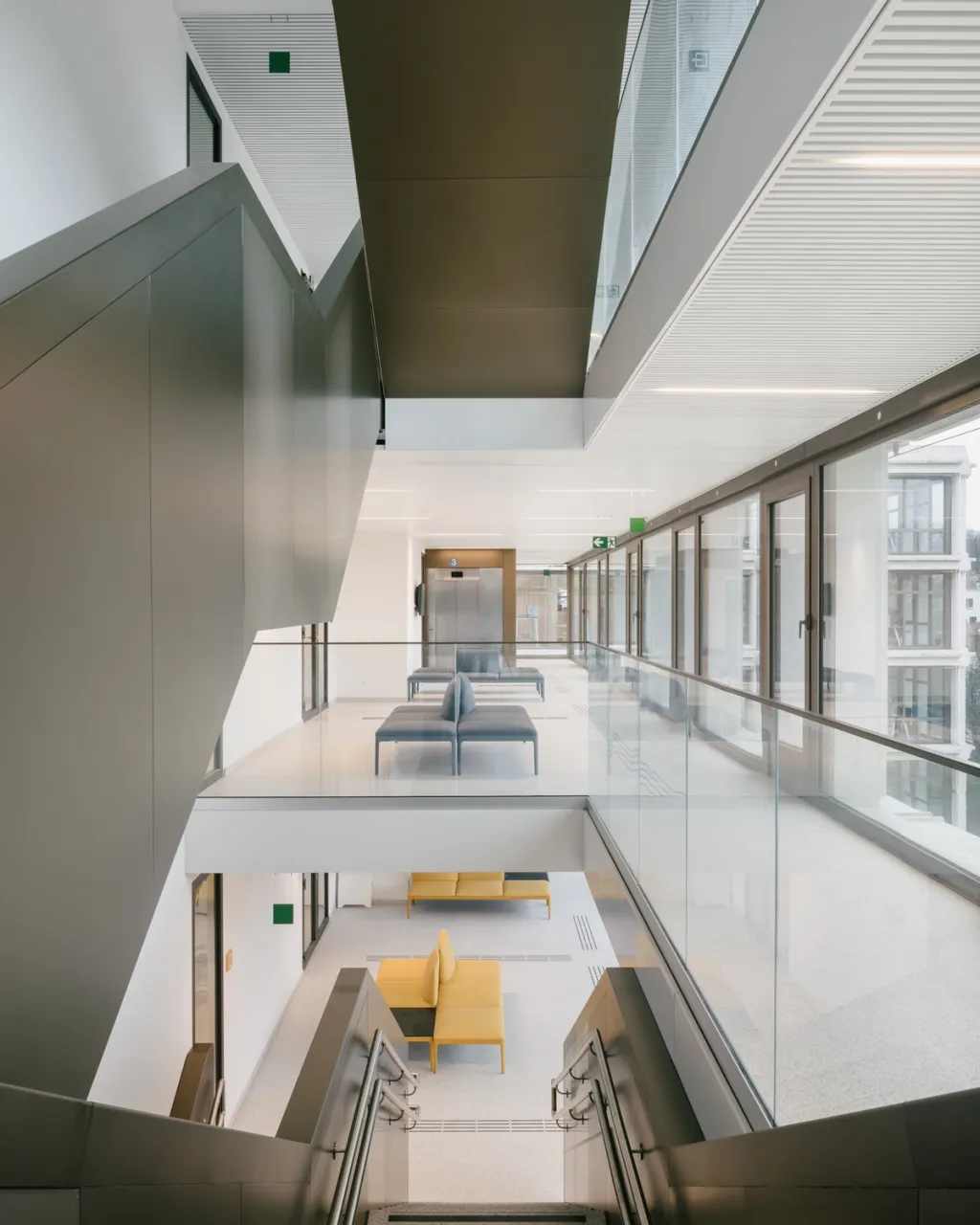
First we reconfigured the private setting as a public park. The historic entrance to the building on Rue Gatti de Gamond had a distant and abandoned character. Therefore, we proposed creating a new entrance within the park, on the side of Rue de Stalle. The pedestrian areas, directly connected to the park and bathed in natural light, serve as informal meeting spaces.
To encourage interaction between municipal staff and residents, we created a “space for citizens” at the side of the park entrance. It provides access to all the services of the town hall.
“The project proves that it is possible to renovate a mono-functional 1960s/1970s building in Brussels. We can choose a different path than demolishing heritage whose qualities are underestimated.” Gilles Goffin, project architect
Entrance to the complex. Copyright Stijn Bollaert.
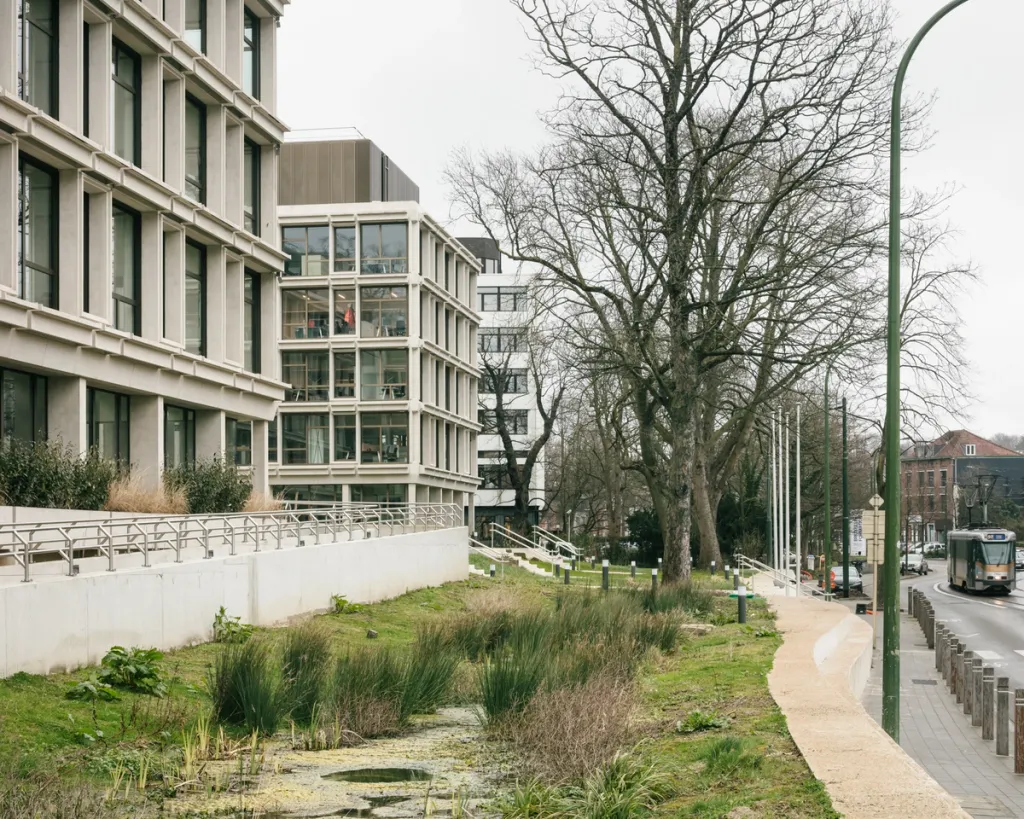
Entrance to the complex. Copyright Stijn Bollaert.
Encouraging encounters
The citizens’ space channels all visitor flows and controls access to the town hall. Circulation routes for staff and the public are clearly separated, except at the ground-floor level. Because the building also had to remain accessible outside opening hours, part of it can be used independently: the citizens’ area, the reception and recreation space, and the large meeting rooms on the roof all operate separately from the day-to-day functioning of the town hall.
Ground floor axonometric view
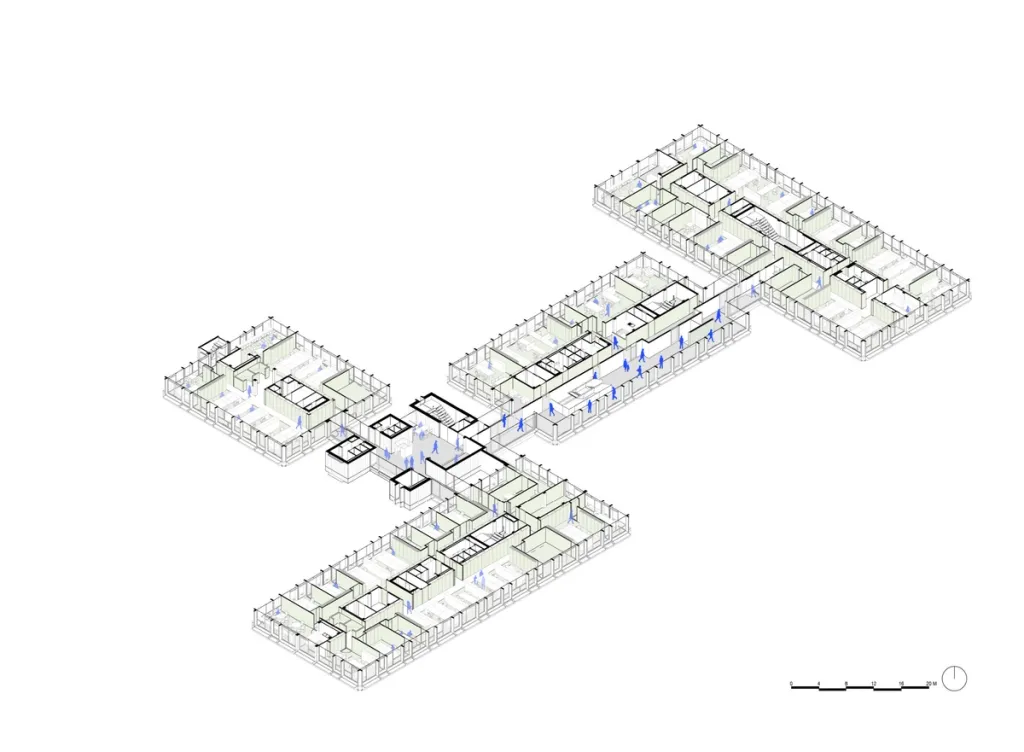
Circulation areas. Copyright Stijn Bollaert.
Circular economy and sustainable transformation
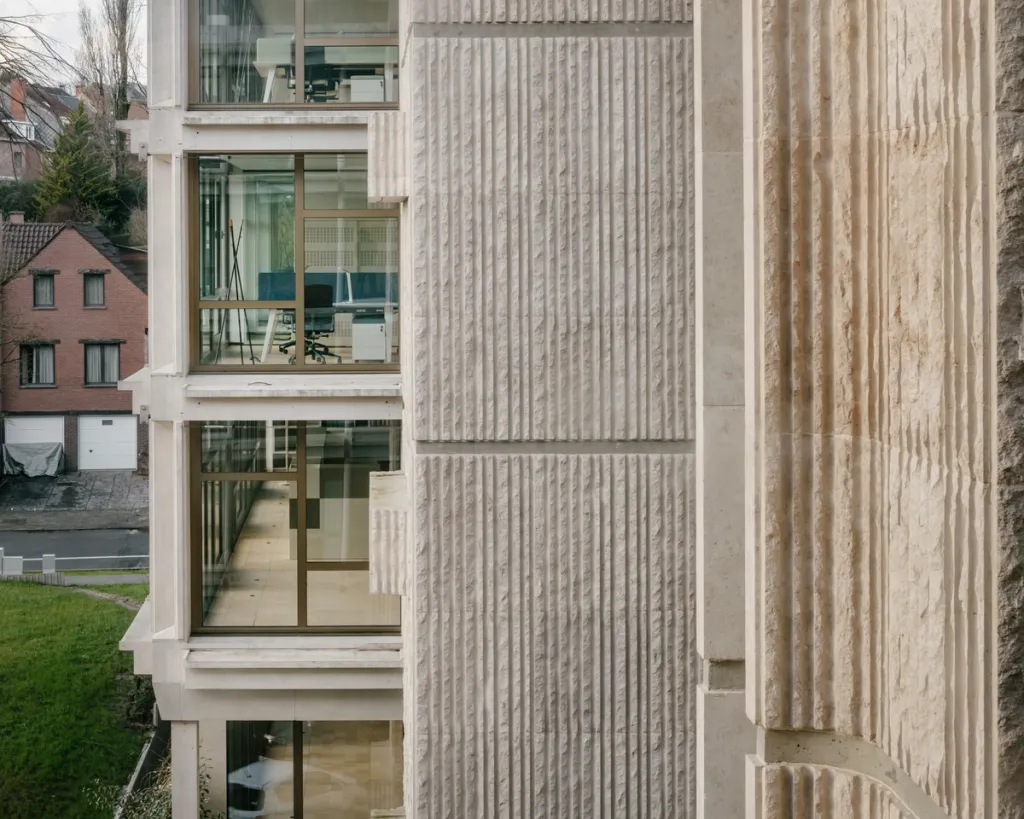
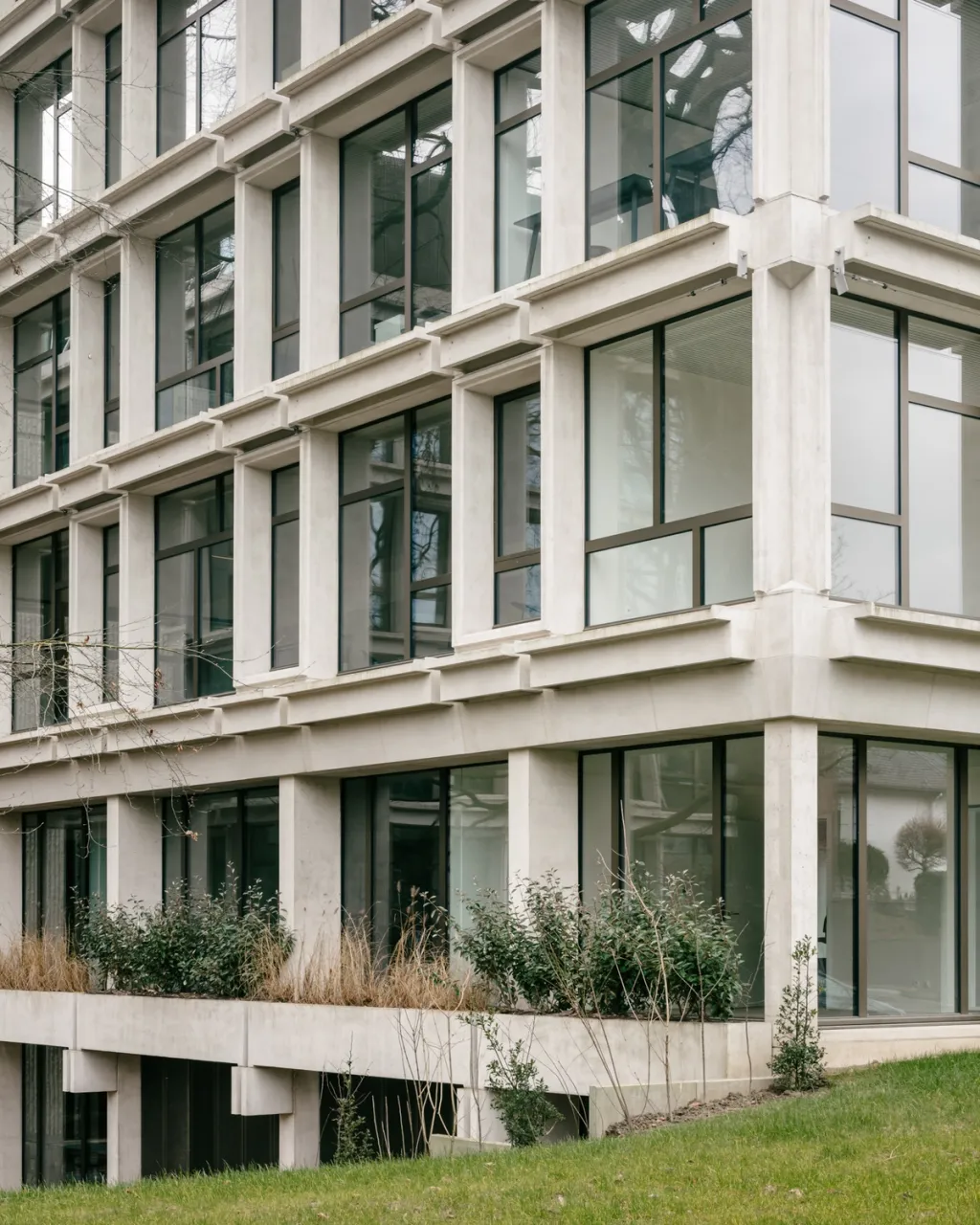
From the very beginning we made conceptual choices applying the principles of the circular economy. In doing so, we considered not only the social dimension and heritage value, but also energy savings and environmental performance. Reusing selected building elements, identified through a careful study, significantly reduced environmental costs while preserving the load-bearing architectural concrete façade.
The project also included several innovative technical solutions. One example is a pilot project in collaboration with Vivaqua, which extracts energy from wastewater in the sewer system to to heat and cool the building using riothermal energy. We moreover designed a flexible and fully modular office layout to respond to the needs of an ever-evolving administration, with a few permanent functions, such as the cafeteria, to help anchor the project in the long term.Top of Form
Facade. Copyright Stijn Bollaert
Renovation as a catalyst for sustainable urban regeneration
Heritage is still too often demolishedor altered without care. Project U sends a powerful signal as soon as you enter the municipality and brings a refreshing diversity to the neighbourhood. The project was recognised by the jury of the be.exemplary award in 2017 as a remarkable example of sustainable urban regeneration. It stands as proof that a mono-functional 1960s/1970s building in Brussels can be successfully refurbished in a cost-effective, high-quality and efficient way.
Facade. Copyright Stijn Bollaert
Related projects & research
- Education
GBS Leefdaal
- Care
Centre Régional Psychiatrique Les Marronniers
- Infrastructure
- Industry
Reynaers Aluminium
- Retail
McDonald’s Mechelen
- Masterplan
- Mixed-use
Gelatine quarter
- Care
Care Home Booghuys
- Office
Greenpeace Belgium HQ
- Hospital
Joseph Bracops Hospital
- Education
CUZG – Centre Universitaire Zénobe Gramme
- Mixed-use
- Infrastructure
Mobility Hub
- Care
Broydenborg

- Residential
- Mixed-use