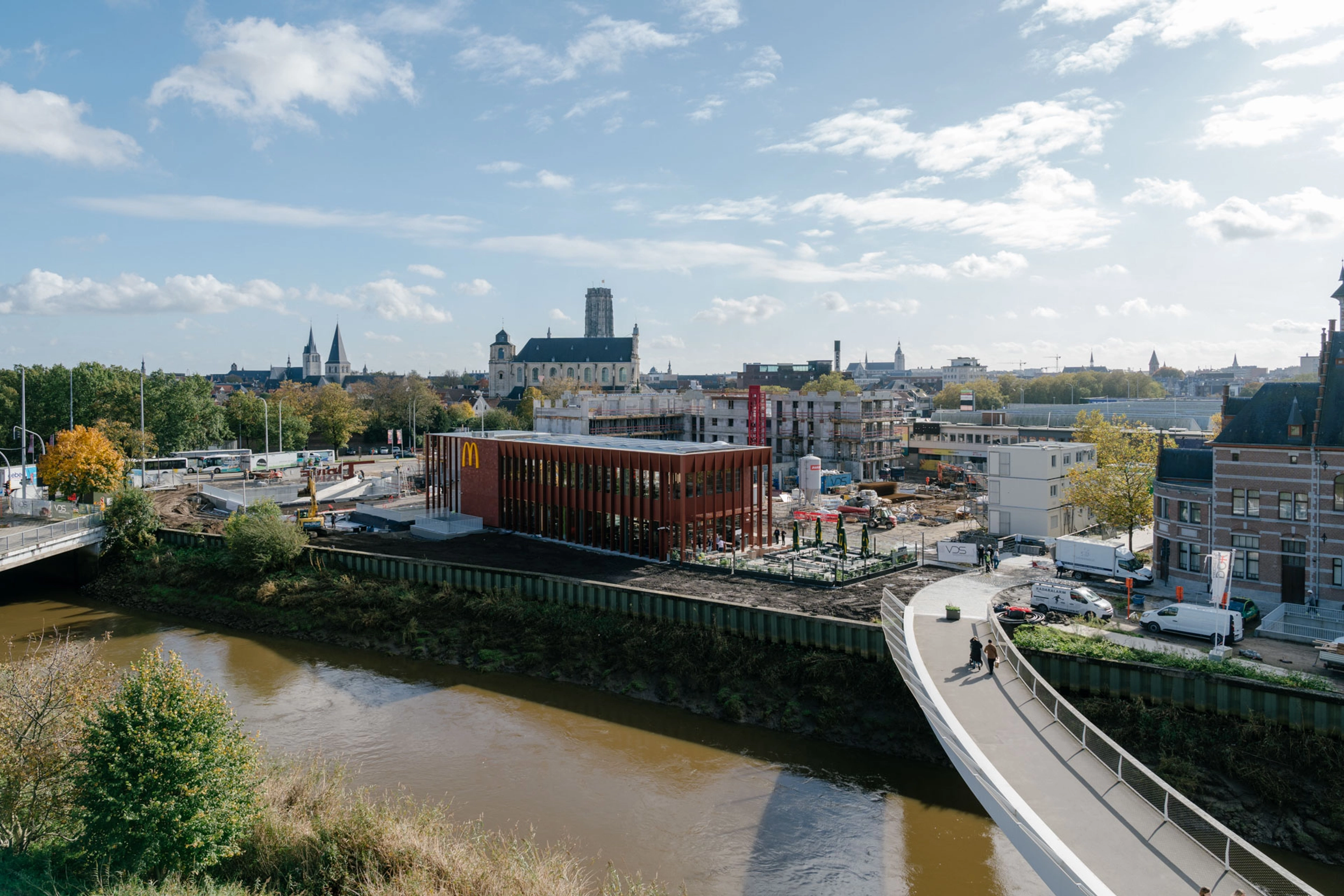
A new restaurant at the crossroads of the city and a new neighbourhood
- Retail
- Private
- Completed
- Location
Mechelen
- Surface
1.000 m² building 2.700 m² underground parking / drive-thru
- Client
McDonald’s Belgium Inc.
- Partners
SWECO BAS Vanderstraeten
- Description
Restaurant with 300 seats, 46 underground parking spaces and an underground drive-thru, connected to a new urban district
An urban landmark for Mechelen
The design for McDonald’s Mechelen is a key element in the redevelopment of a new urban district. While the underground level follows the logic of logistical flows, the volume above ground deliberately enters into dialogue with its surroundings and connects seamlessly with the renewed square. The result is an inviting urban place where quality of stay, accessibility and experience go hand in hand.
“We strive for thoughtful design that combines innovation and sustainability, creating a space where every meal is a new experience.” Thomas Merckx, project leader
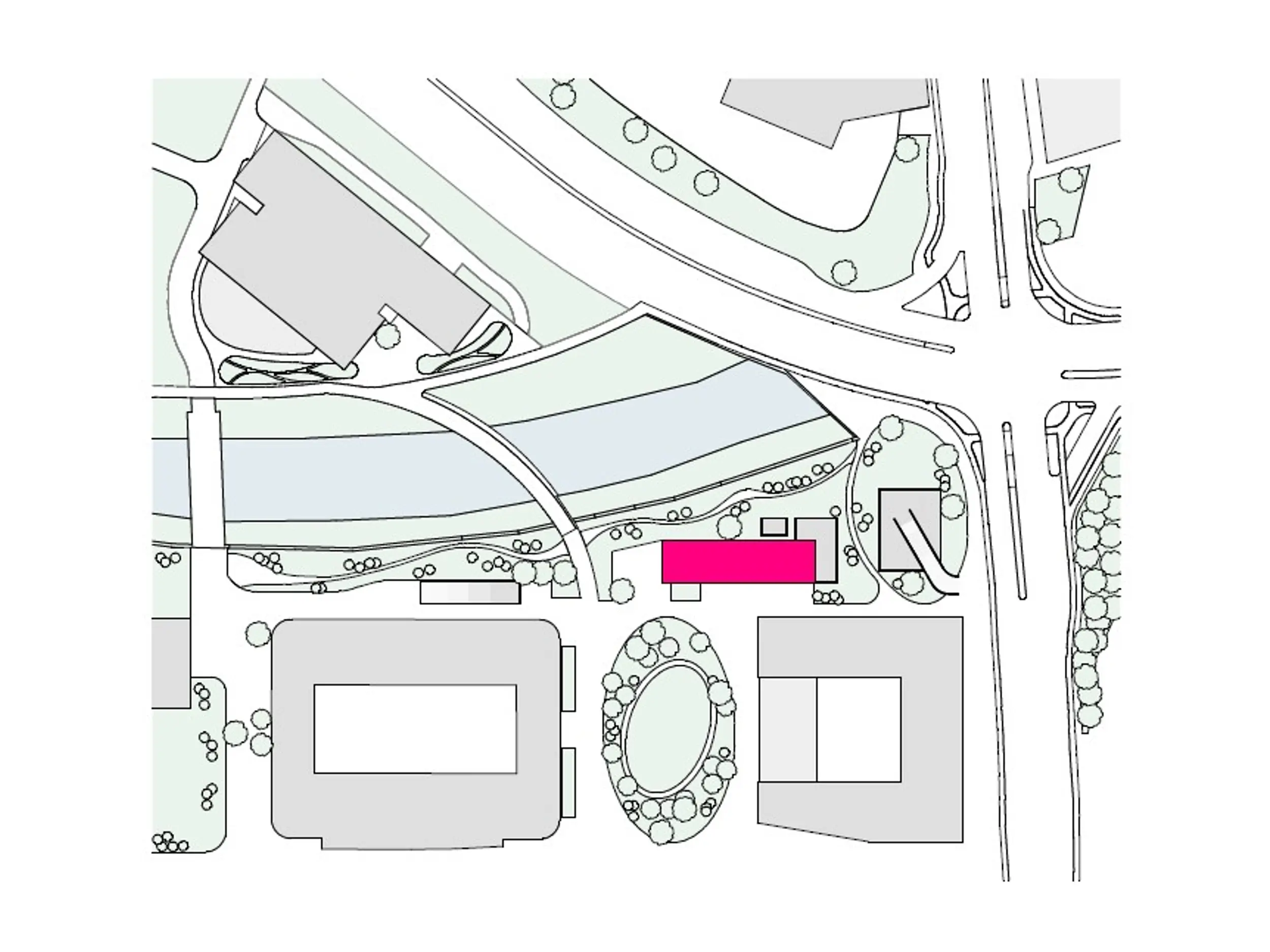
Compact building, underground parking
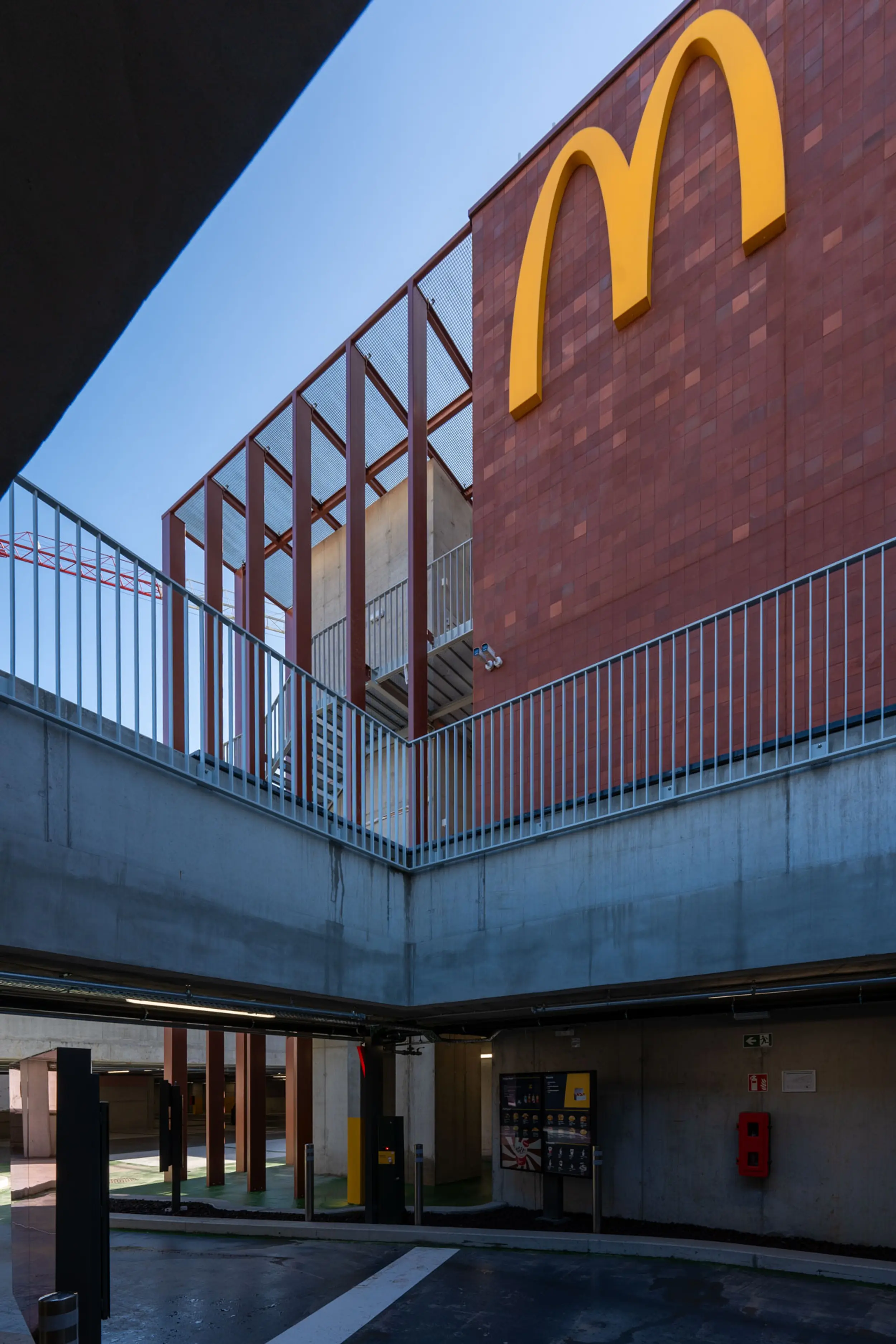
To keep the new district as low-traffic as possible, car circulation has been organised largely underground. A car park with 46 spaces and a fully underground drive-thru make this project unique within the Belgian McDonald’s network. By placing most of the paved surfaces and circulation below ground level, space at street level is freed up for pedestrians, cyclists and places to linger. The emerging volume ties in carefully with the redesigned Rode Kruisplein and forms a clear, legible building volume that helps to define the public realm.
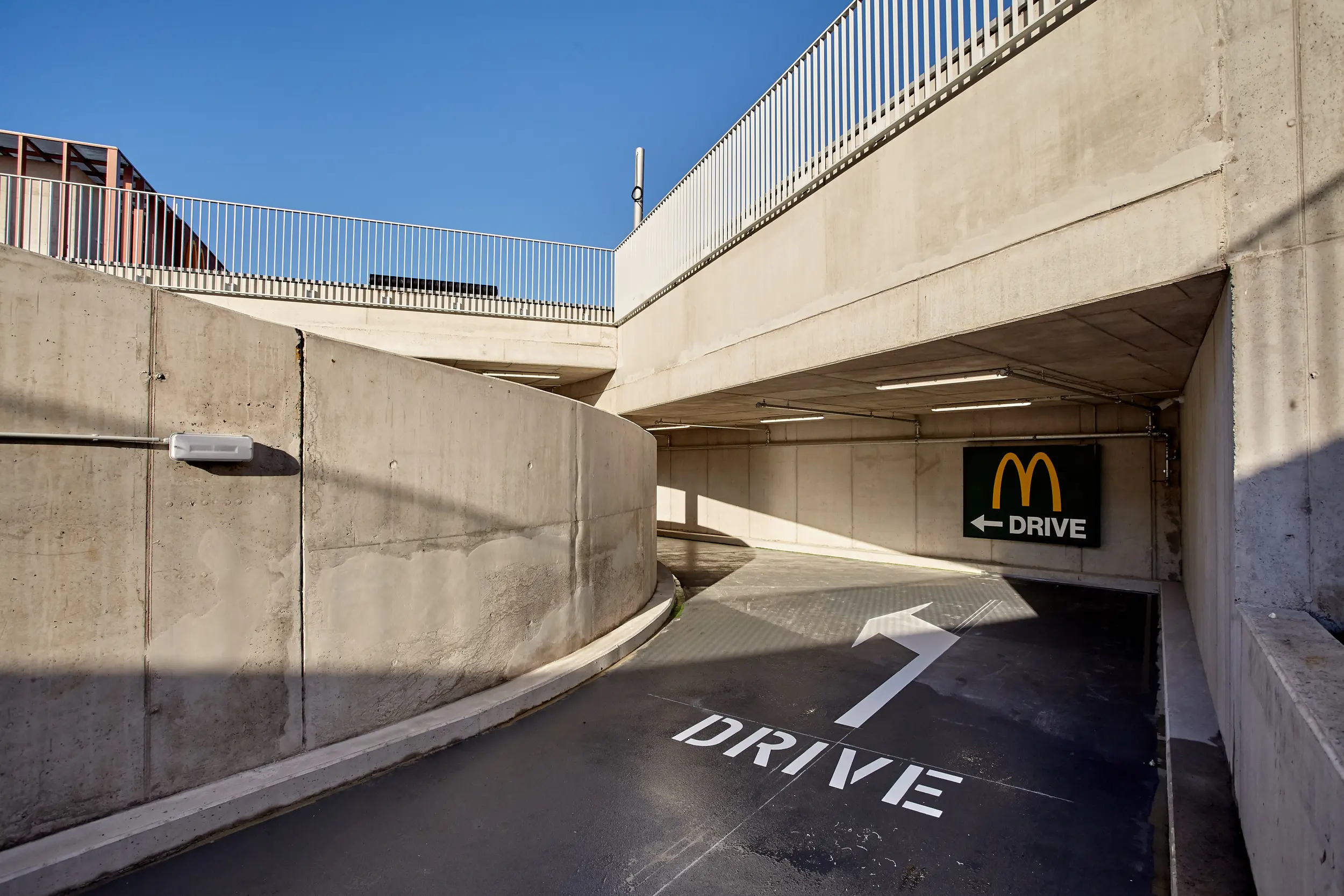
parking
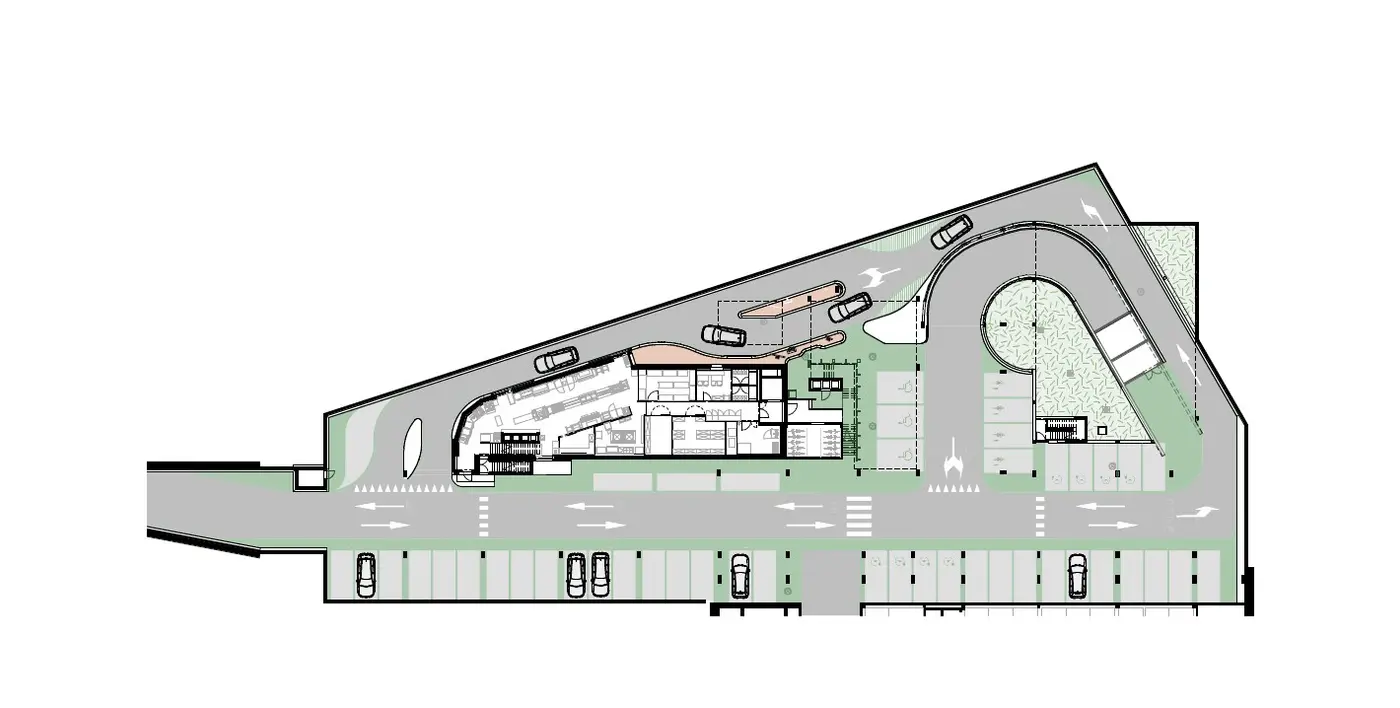
Five façades, one experience
The way the site is experienced and approached from different access routes is a key starting point in the design. Whether visitors arrive via the Antwerpsepoort, the Mobility Hub, Rode Kruisplein or from the historic city centre, the building is equally recognisable and welcoming on all sides. Because all five façades, including the roof and the visible underground elements, have been designed with the same care, the building achieves a 360° architecture that looks particularly coherent even when viewed from above.
Generous roof openings bring daylight deep into the underground levels and create a continuous visual and spatial relationship between above and below ground.
A robust concrete plinth forms the base. The basement levels project partially above ground, giving the building a character that is both solid and contemporary. Terracotta façade tiles pick up the warm tones of the surroundings, while aluminium accents in the same copper-coloured coating provide a refined, unified appearance.
A vibrant, green urban place
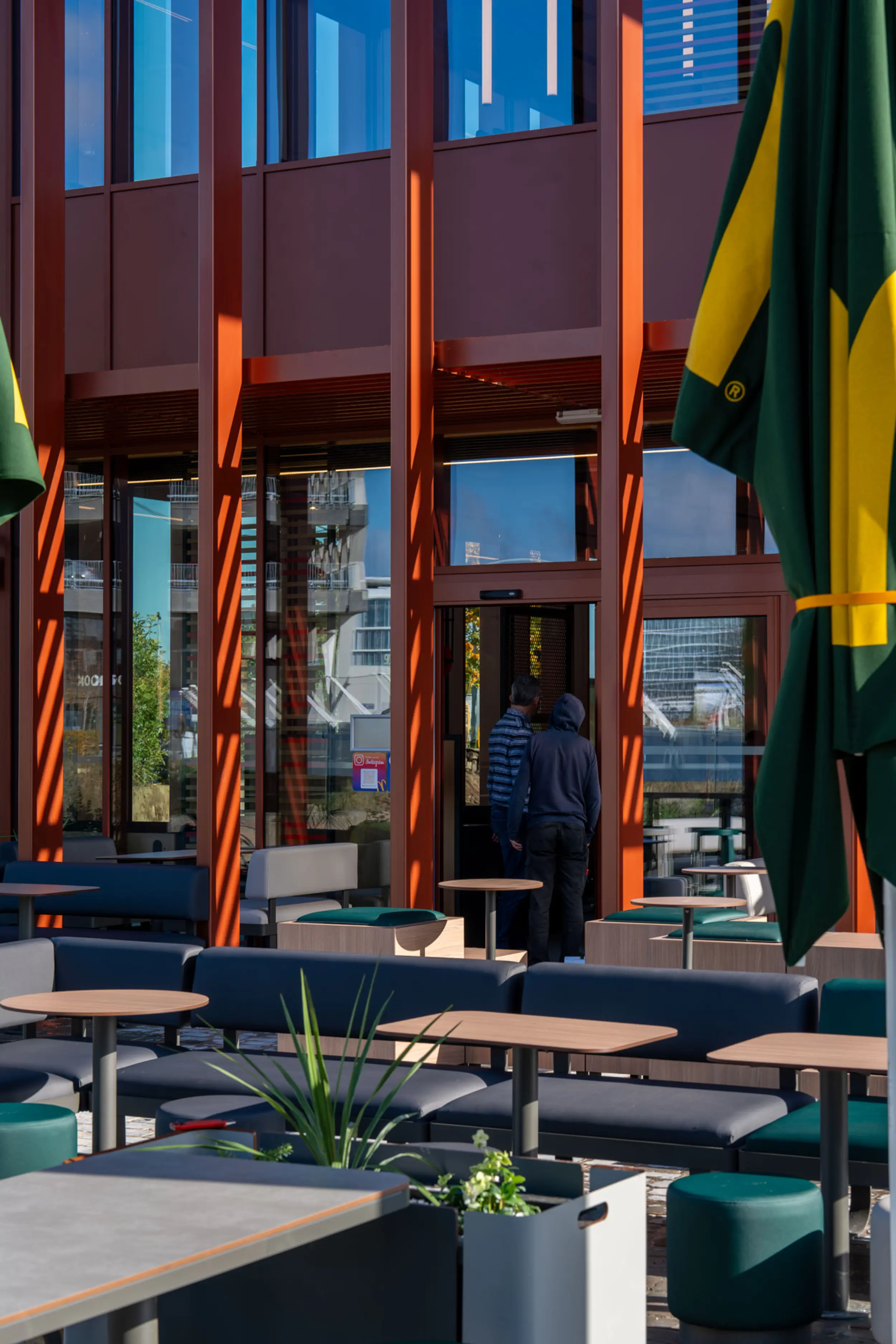
A generous terrace with green areas wraps around the building. As a result, the restaurant is not a stand‑alone object, but a lively link in the urban fabric where meeting and interaction take centre stage. Slender columns support canopies and external staircases, emphasising the vertical character of the volume. In this way, the building establishes itself as a landmark for the new urban district and shows how a commercial function can grow into a fully fledged, integrated part of the city.
Related projects & research
- Education
GBS Leefdaal
- Care
Centre Régional Psychiatrique Les Marronniers
- Infrastructure
- Industry
Reynaers Aluminium
- Masterplan
- Mixed-use
Gelatine quarter
- Care
Care Home Booghuys
- Office
Greenpeace Belgium HQ
- Hospital
Joseph Bracops Hospital
- Education
CUZG – Centre Universitaire Zénobe Gramme
- Mixed-use
- Infrastructure
Mobility Hub
- Care
Broydenborg

- Residential
- Mixed-use
Vanden Tymple - Diestestraat
- Office
- Public