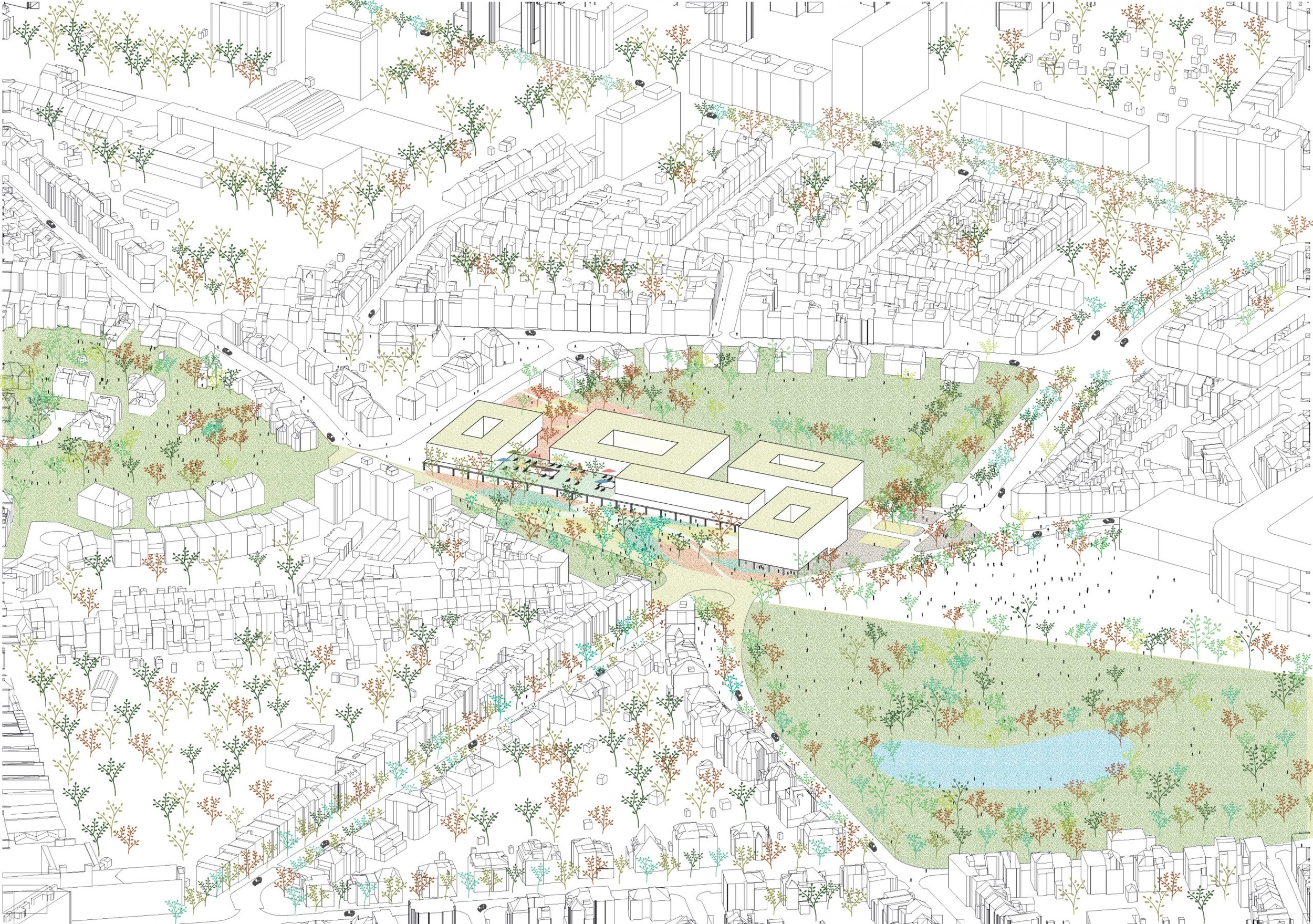
What does an urban hospital look like when it is designed according to the sustainable principles of the circular economy?
- Hospital
- Public
- Ongoing
- Location
Anderlecht
- Surface
15.250 m²
- Client
Iris Ziekenhuizen Zuid (IZZ)
- Partners
NU architectuuratelier, BUUR, Ellyps, MATRIciel, MC-carré, COSEP
- Award
Future Healthcare Design Award 2022
- Description
Masterplan for the redevelopment of the hospital site, construction of a new outpatient clinic and a medical-technical block
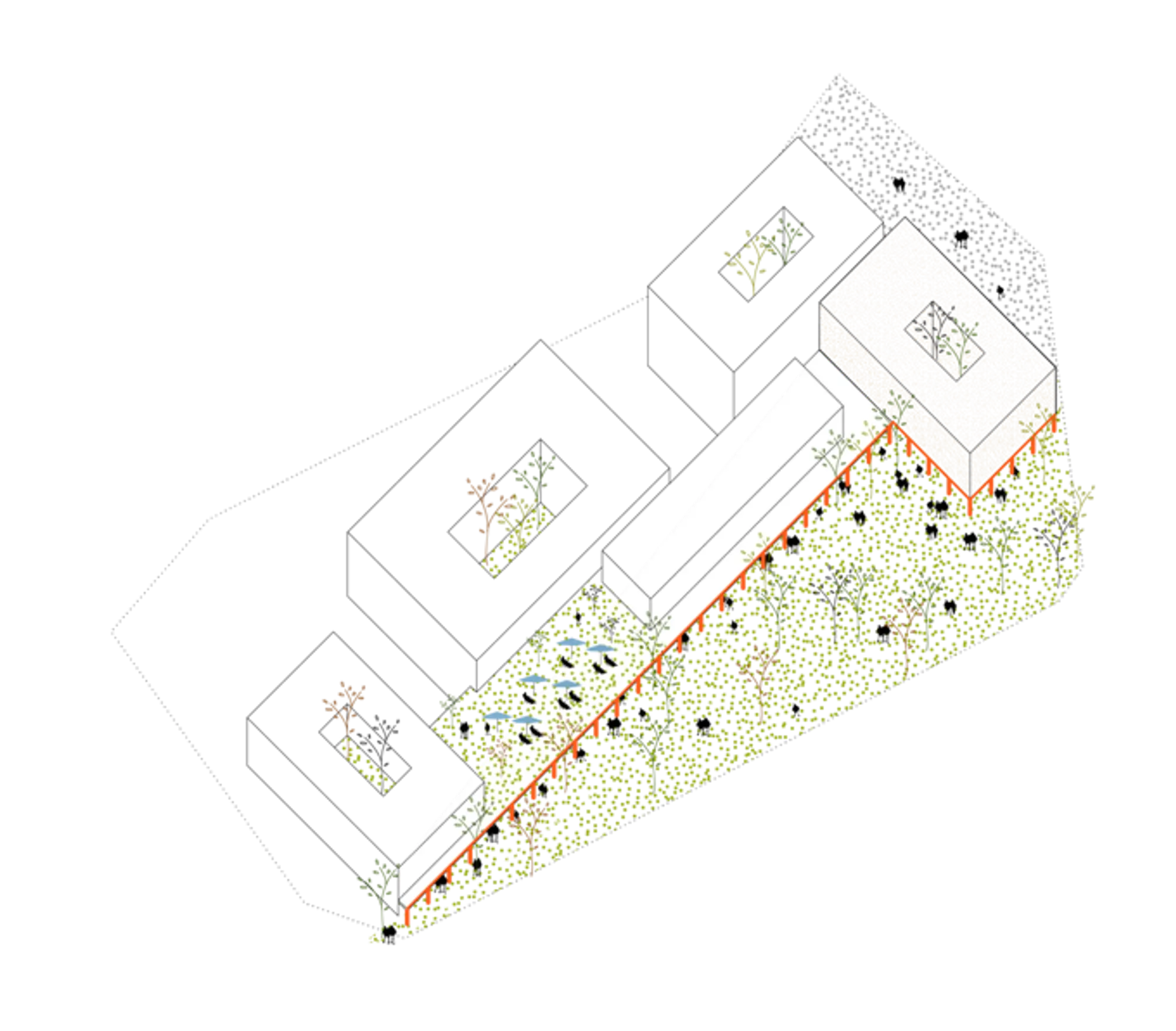
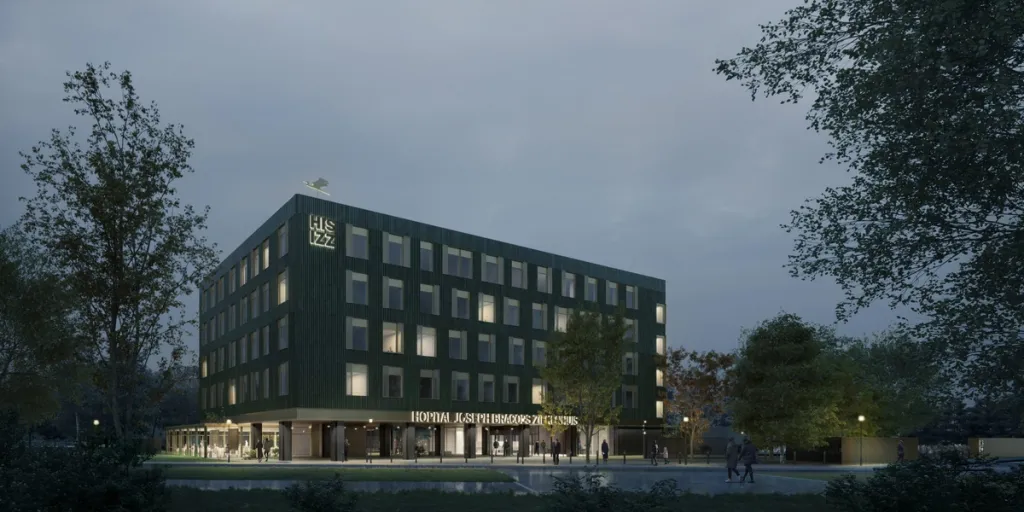
The Joseph Bracops Hospital – part of the Iris South Hospitals network in Brussels – is located in the heart of Anderlecht, within walking distance of the football stadium. The project is based on an ambitious masterplan that focuses on urban densification of the campus and the creation of a new public park for local residents. The entire project follows the principles of the circular economy: local and sustainable materials, reversible design, the zero‑energy principle and a carefully considered assembly-based construction. The result is a hospital that strengthens both its urban context and the public indoor and outdoor spaces in a sustainable way.
Bracops is the winner of the 2022 Future Healthcare Design Award.
Aerial view/render. Copyright Drawfield/BetaVisuals
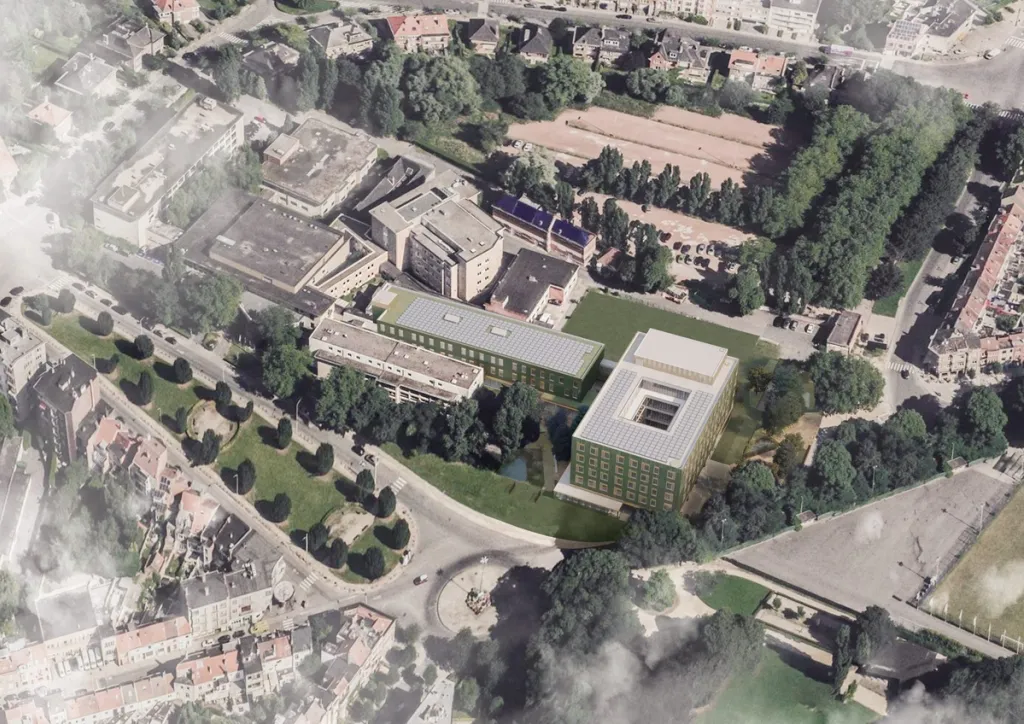
An urban hospital rooted in greenery
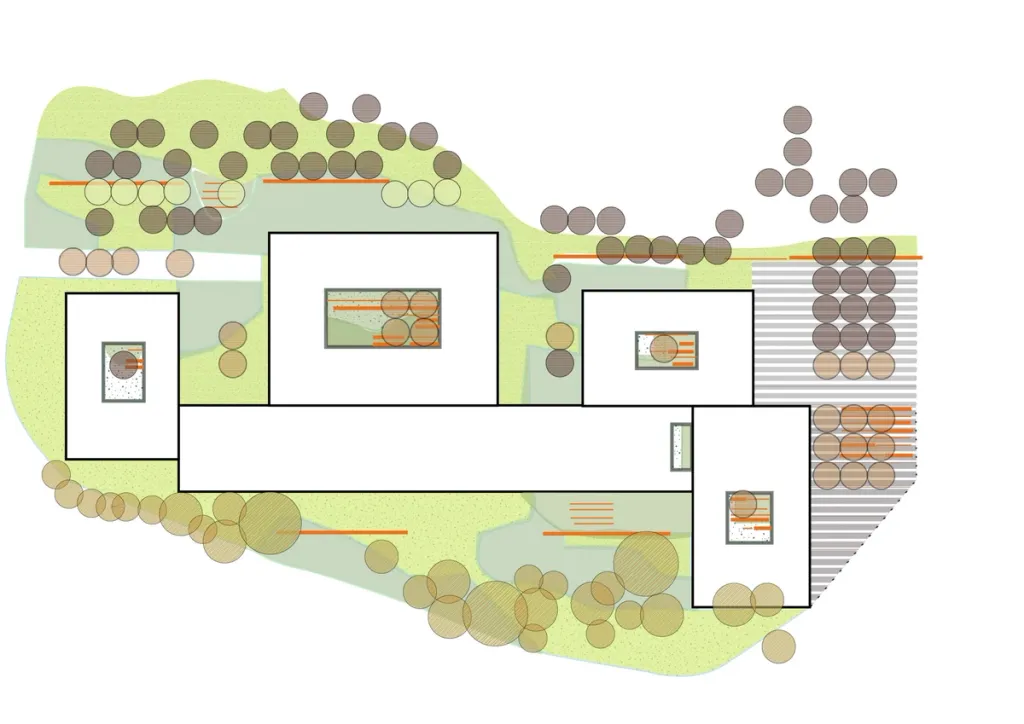
The hospital is firmly rooted in the city while remaining surrounded by valuable green spaces. To preserve these, the existing building is densified and restructured instead of adding new infrastructure. A new public park links the hospital with the neighbourhood. The masterplan echoes the urban planning logic of the surrounding garden cities, with the same emphasis on greenery and quality of life. The proximity of green space reflects an approach in which the health and well-being of patients and staff are central.
Site plan
A strategic and future-oriented logistics
Public access to the site is organised around the open ground floor, creating many opportunities for future developments. The hospital buildings have been conceived by department, based on a standard model that defines the entire outpatient clinic: the reversible building. Each entity has its own entrance, allowing departments to be added, adapted or removed with ease. In this way, the hospital infrastructure can expand or contract, and parts of it can even be given a completely different, non-medical use, without disrupting the underlying logistical structure.
Typical floor plan
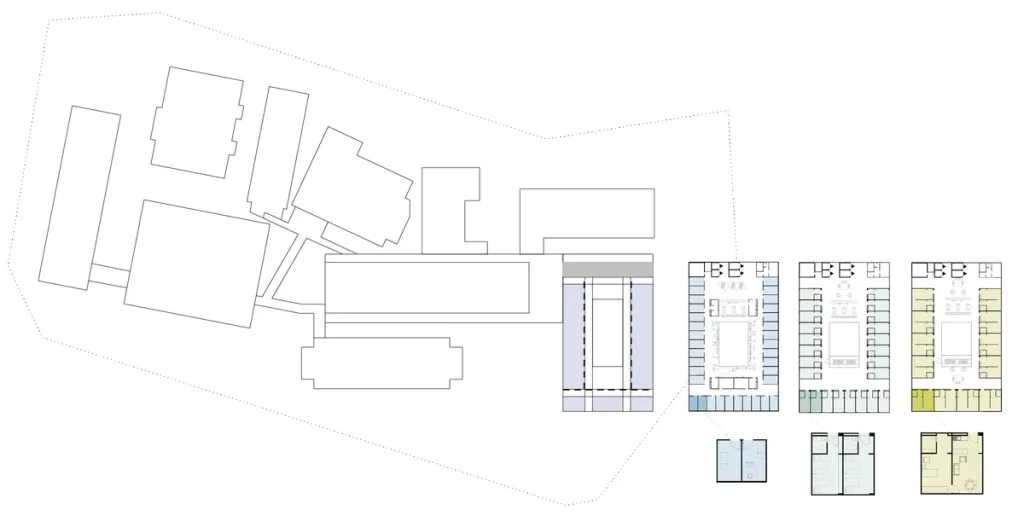
Phasing
Circular architecture and performance-based design
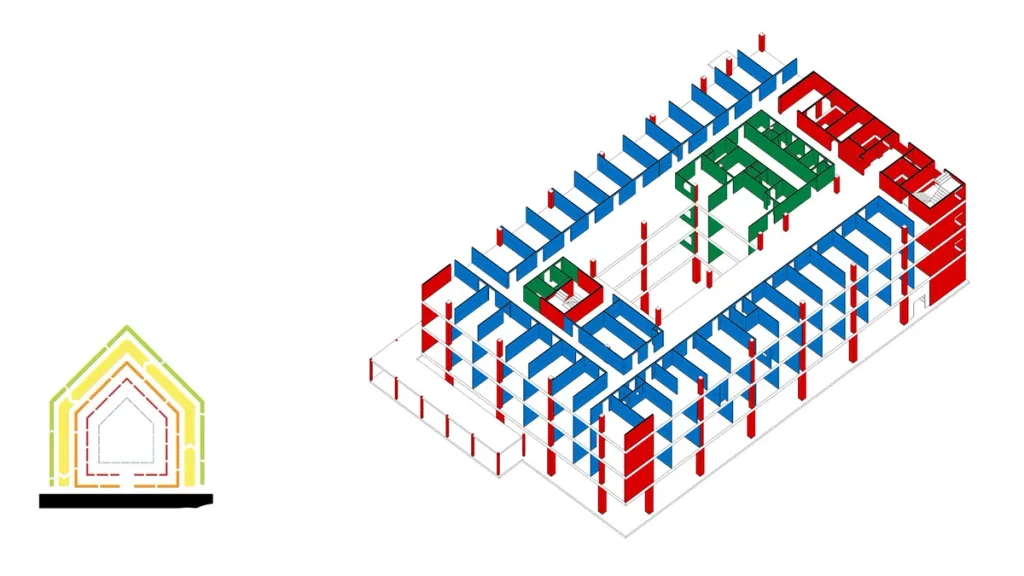
The forward-looking and reversible nature of the new outpatient clinic stems from thorough analyses of structural, technical and spatial aspects. Spaces have been designed so they can be easily adapted to new functions. We place strong emphasis on optimising material and energy flows, the core principle of the circular economy. This is reflected in the choice of materials, the design of the building envelope and the application of energy guidelines.
Compact buildings combine short walking distances with high flexibility through modular floor layouts. A performance-based design approach made it possible to define key priorities from the very first sketches, such as generous natural daylight and a healthy environment for patients and staff.
“With its clear vision of the future, this new hospital is intended to serve as a model for sustainable urban infrastructure. From the very beginning of the project, the rules of the circular economy have been fully embraced.” Laurent Grisay, engineer-architect, executive partner
Adaptability through the principle of “shearing layers”
A warm welcome
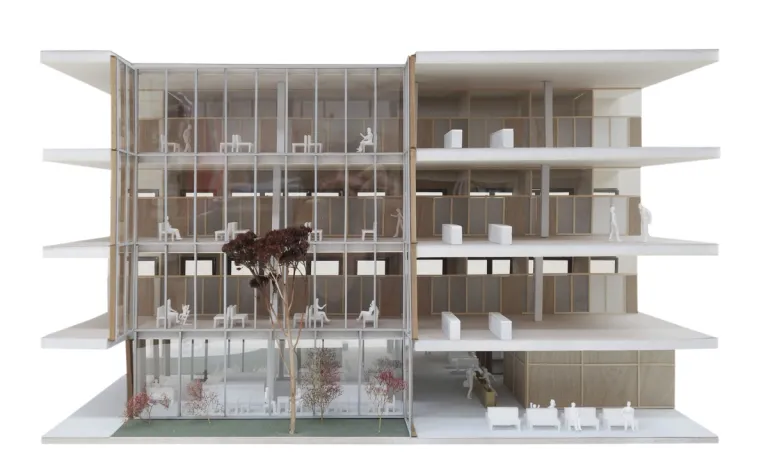
Green spaces run beneath the outpatient clinic, linking the paved square with the park and converging at the main entrance, where a patio floods the reception with natural light and brings greenery indoors. In the lobby, a cafeteria with park views strengthens the hospital’s social bond with the neighbourhood. The urban location is treated as an opportunity to assume a broader social role: the hospital becomes a natural part of the city rather than a place to avoid, “de‑sacralising” access to care and easing the transition into medical spaces.
Healthcare architecture as a driver of neighbourhood quality
In this project, the hospital is regarded not only as essential infrastructure, but also as an added value for the neighbourhood and the urban fabric. It contributes green spaces, meeting places and spatial quality for residents, staff and patients alike. Through reversible construction, optimised logistics, circular-economy principles and performance-based design, the project delivers efficient, sustainable infrastructure that can evolve together with the neighbourhood.
Model, copyright NU architectuuratelier
Visualization, copyright Drawfield/BetaVisuals
Related projects & research
- Education
GBS Leefdaal
- Care
Centre Régional Psychiatrique Les Marronniers
- Infrastructure
- Industry
Reynaers Aluminium
- Retail
McDonald’s Mechelen
- Masterplan
- Mixed-use
Gelatine quarter
- Care
Care Home Booghuys
- Office
Greenpeace Belgium HQ
- Education
CUZG – Centre Universitaire Zénobe Gramme
- Mixed-use
- Infrastructure
Mobility Hub
- Care
Broydenborg

- Residential
- Mixed-use
Vanden Tymple - Diestestraat
- Office
- Public