A breath of fresh air – the positive impact of landscape architecture on mental healthcare
- Care
- Public
- Ongoing
- Location
Tournai, Belgium
- Surface
28.000 m²
- Client
Centre Régional Psychiatrique Les Marronniers
- Partners
AADD, Ingenium, Lemaire Ingénieurs, Cenergie, ATS, Pigeon Ochej Paysage
- Description
Secure psychiatric care facility with shared gardens and park
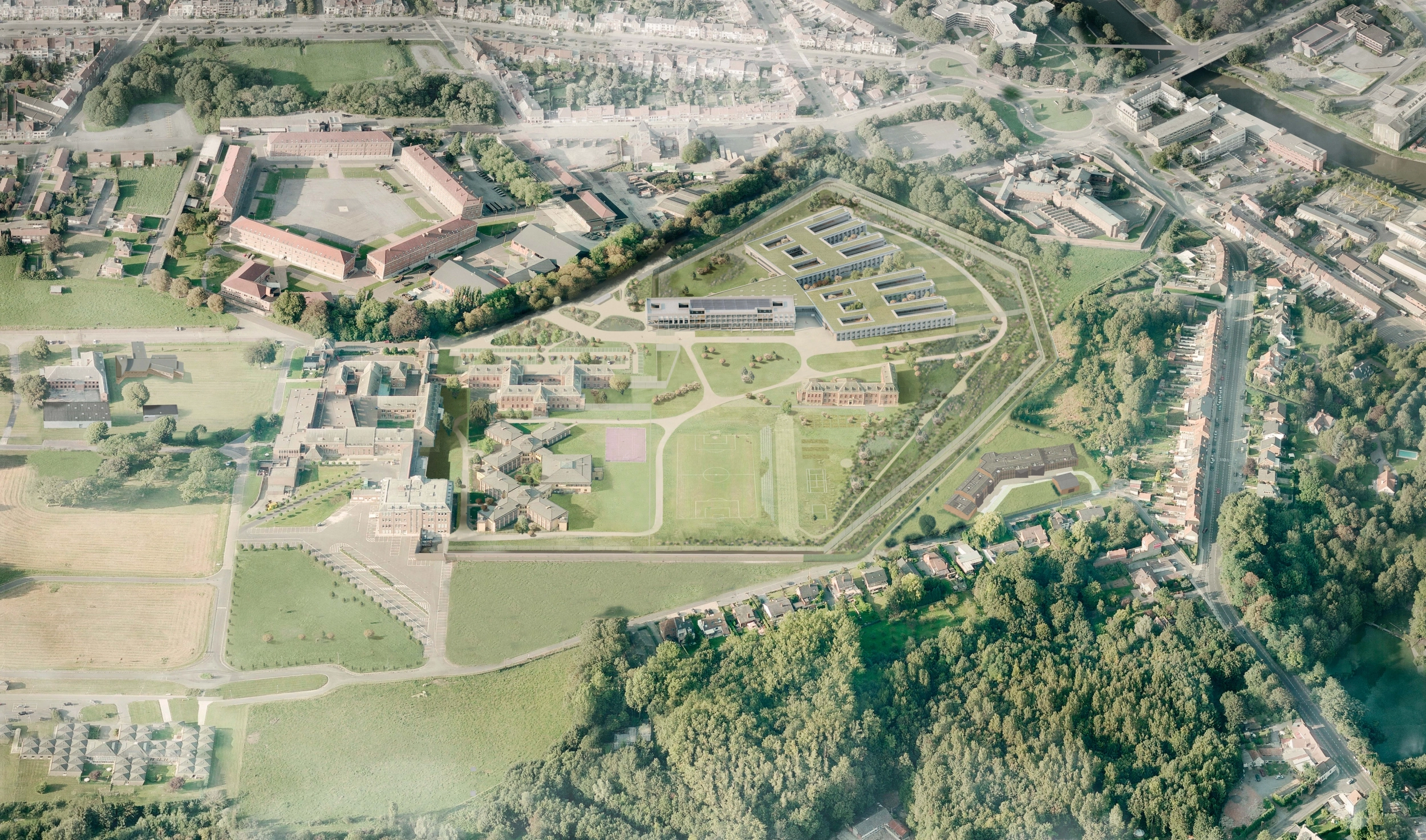
The ‘Centre Régional Psychiatrique (CRP) Les Marronniers’ in Tournai offers mental health care for patients of all ages. The Secure Psychiatric Hospital (SPH) is the secure forensic part of the Marronniers campus. The building fosters autonomy, while protecting privacy, supporting the patients’ reintegration.
Located on the outskirts of the city, the centre acts as a transition zone between urban life and open landscape. Patients stay in a calming environment while remaining connected to their social network – a crucial factor in the rehabilitation process.
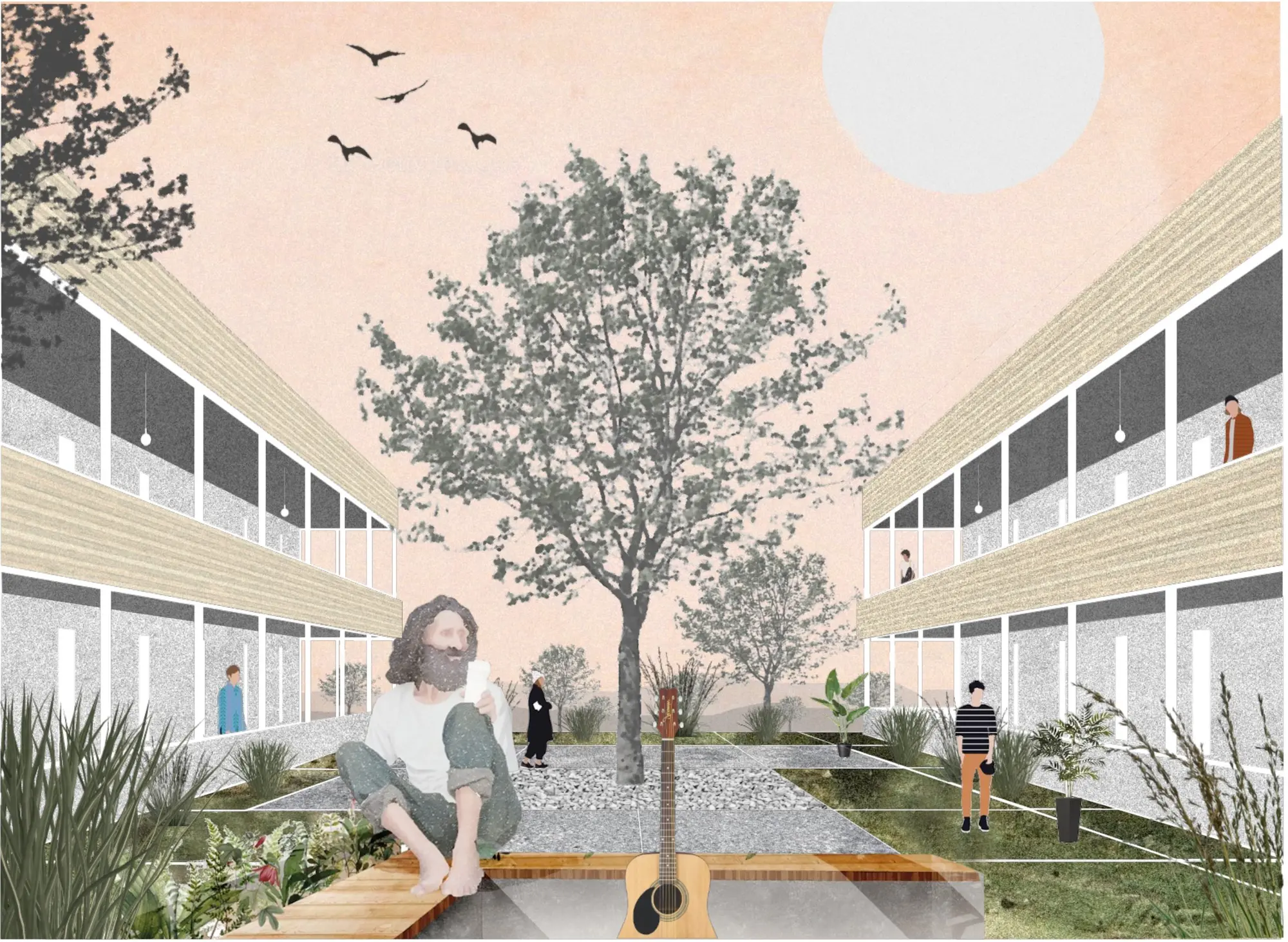
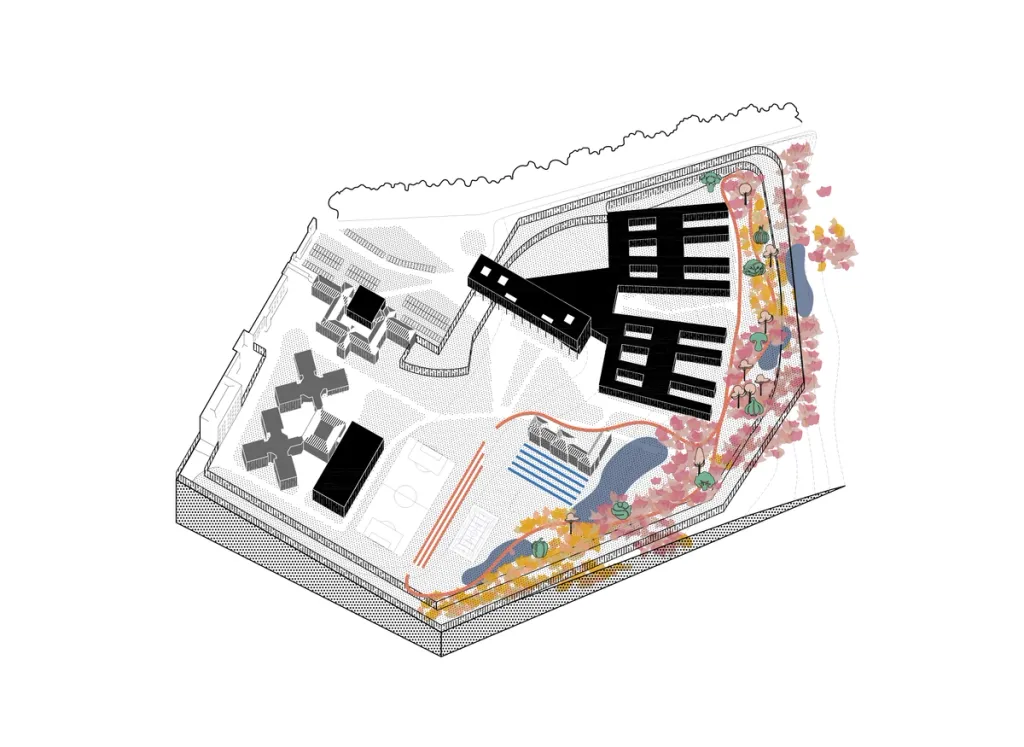
Axonometric view with programmatic layout
Topography of the site
The positive impact of fresh air and outdoor space on mental health is widely acknowledged, yet in forensic psychiatry it often conflicts with strict security requirements. This project therefore adopts a specific design approach, placing the relationship between landscape and architecture, access to nature and activity-based programming at its core.
The landscape design makes optimal use of the site’s topography and integrates seamlessly with the architectural concept. Ten units are connected by a central node which also hosts the group activities. Shaping the project like “hands” creates four smaller clusters of 20 to 30 beds, operating at the scale of the patient, with every room facing open green space.
Long views over the surroundings soften the institution’s sense of enclosure.
Outdoor areas range from gently sloping gardens to patios and terraces, each calibrated to specific security levels. A generous ‘forecourt’ on the city side organises all mobility flows and establishes a link between the institution and the town, offering places to wait, meet, pause and have lunch.
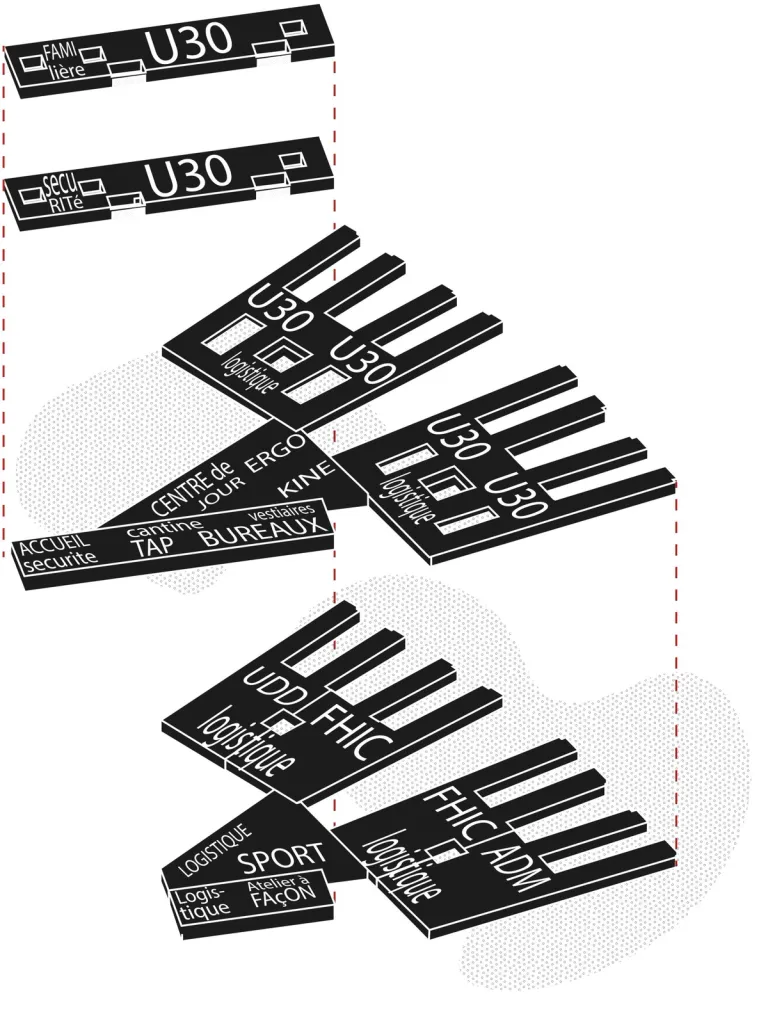
Patio collage
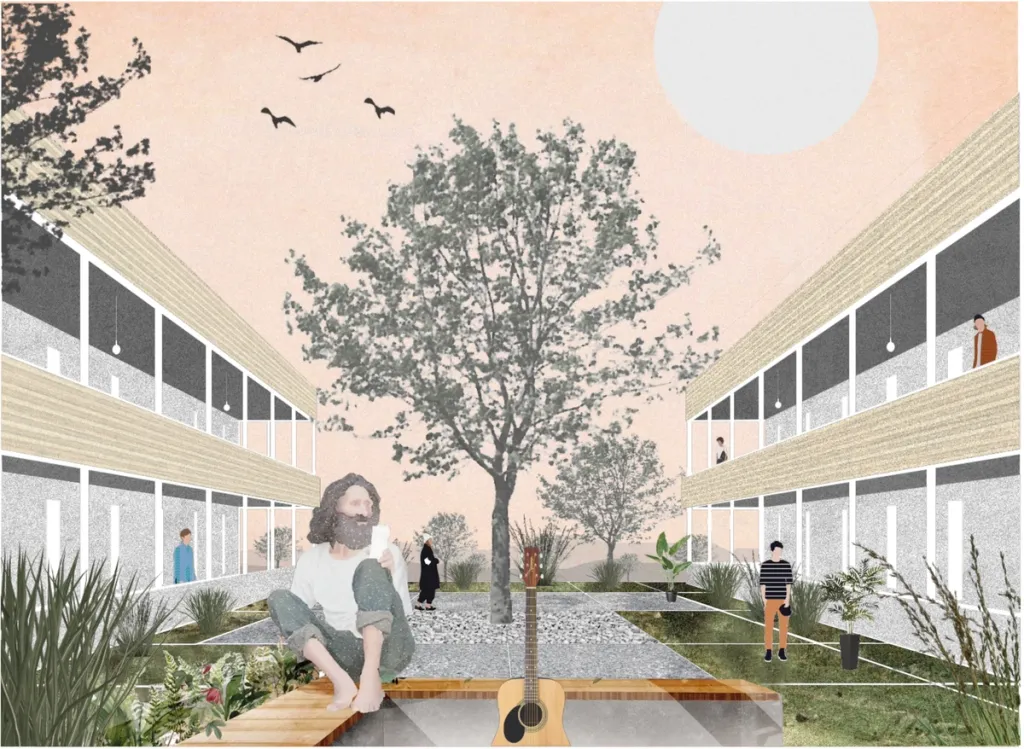
Varied outdoor spaces
In close collaboration with caregivers, the outdoor program was carefully designed through a participatory process organized around workshops, working groups, and presentations. The result is a vibrant selection of outdoor spaces that reconnect patients with the outside world, including open gardens, urban farming plots, patios, dining areas, sports fields, and therapeutic outdoor rooms, directly connected to the indoor occupational therapy facilities.
Autonomy within a safe, activating environment
The ambition of the project is to grant patients as much autonomy as possible within a secure perimeter, with therapeutic benefits and reduced workload for staff. Shared amenities and the logistics infrastructure across the institute underpin this ambition.
Safety is achieved through rapid detection and de-escalation of aggression, employing graded protection zones and a transparent architectural approach that combines expansive views of the landscape with clear sightlines for care teams. Generous circulation spaces opening onto greenery reinforce this supervisory logic.
Interactive walking routes and an activity-based design make the dynamics of the therapeutic process spatially legible. Upper-floor units open onto covered common areas and patios, while ground-floor units connect directly to gardens and park-like landscapes. Within clearly defined boundaries, this creates a sequence of seamlessly connected spaces where patients can move freely, relax, and reflect.
“Mental healthcare at ‘CRP Les Marronniers’ is supported by the patients’ environment, both in the new facilities and in the large surrounding park.” Lorenzo Alfieri, project architect
Illustration of the walking path
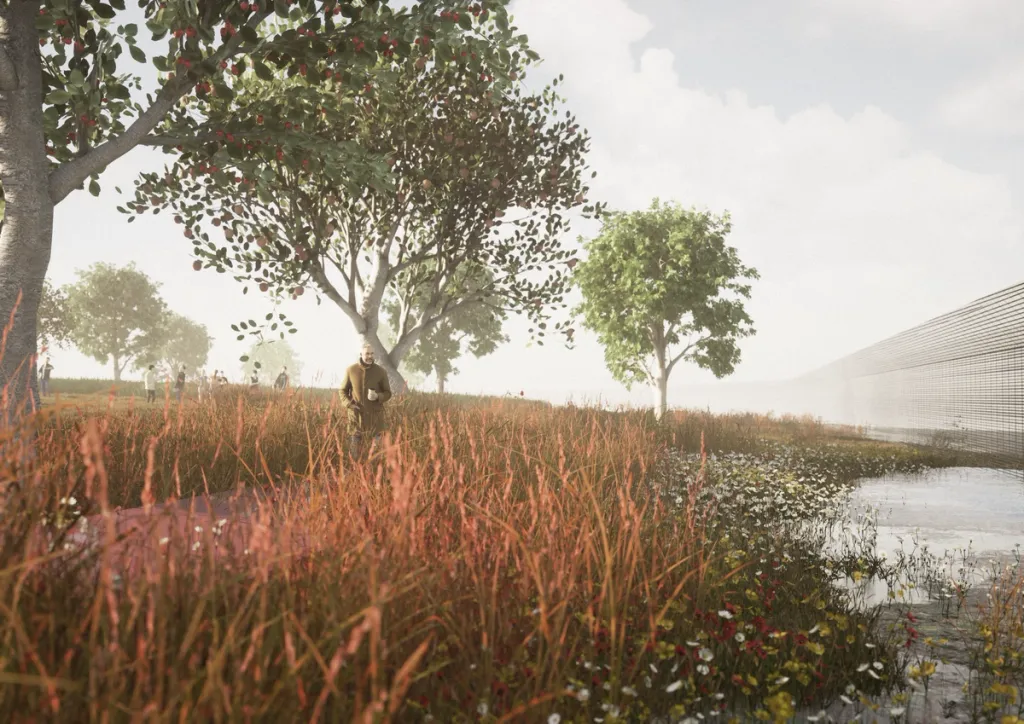
Architecture that supports the therapeutic process
Through landscape and architecture, we strive to positively impact both the environment and users’ well-being. To accomplish this, we utilize a holistic approach to mental healthcare where landscape design and activity-based planning work together to support the therapeutic process and guide patients step by step toward rehabilitation.
Park with fitness trail
Related projects & research
- Education
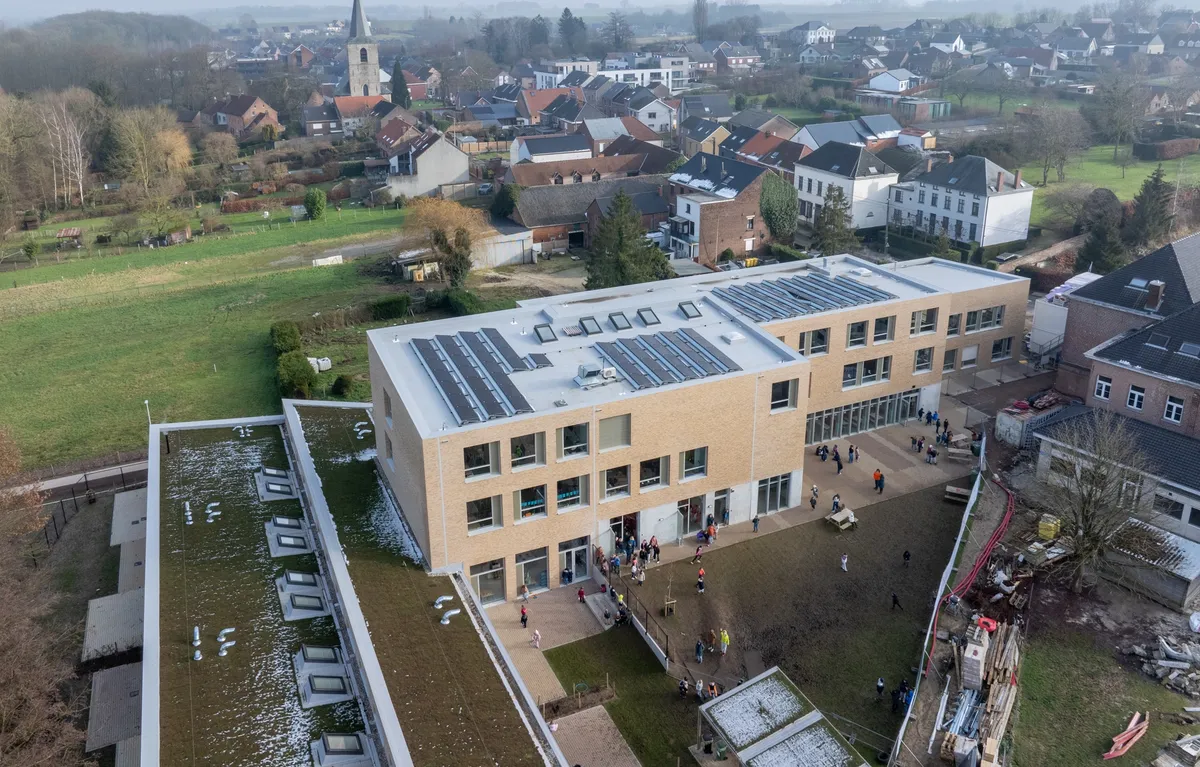
GBS Leefdaal
- Infrastructure
- Industry
Reynaers Aluminium
- Retail
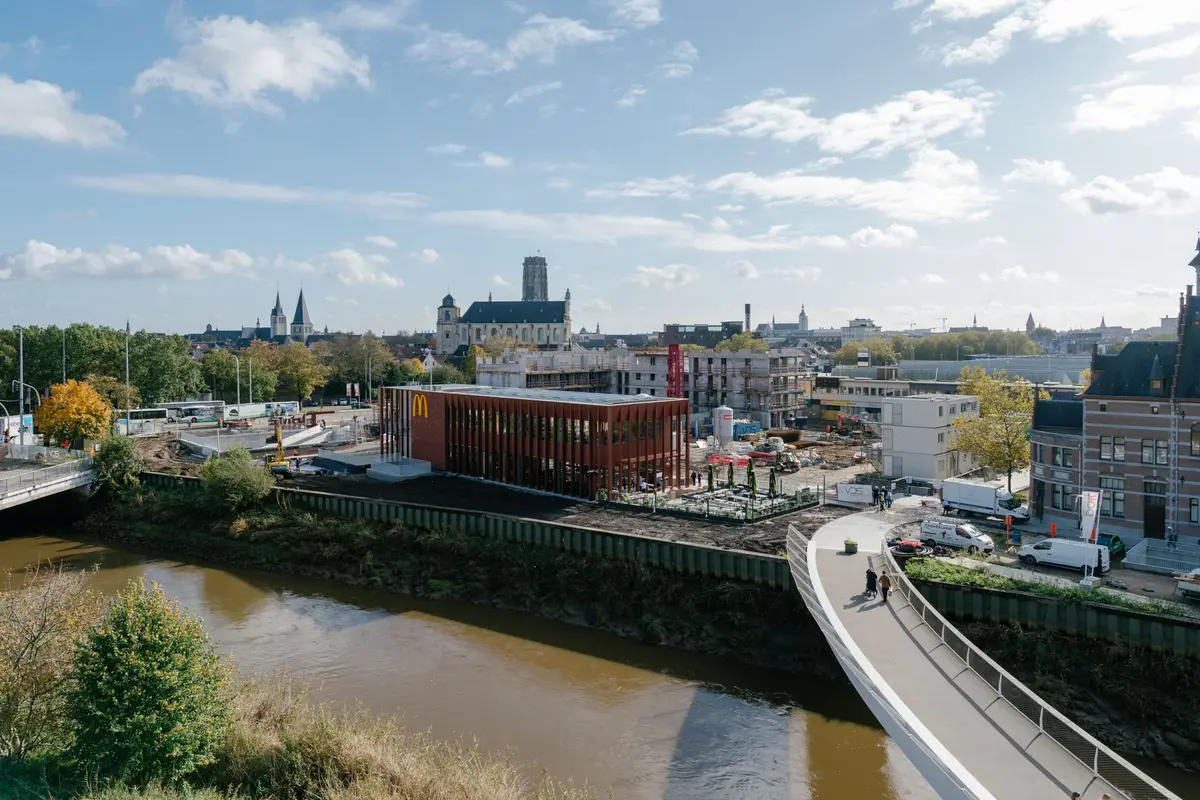
McDonald’s Mechelen
- Masterplan
- Mixed-use
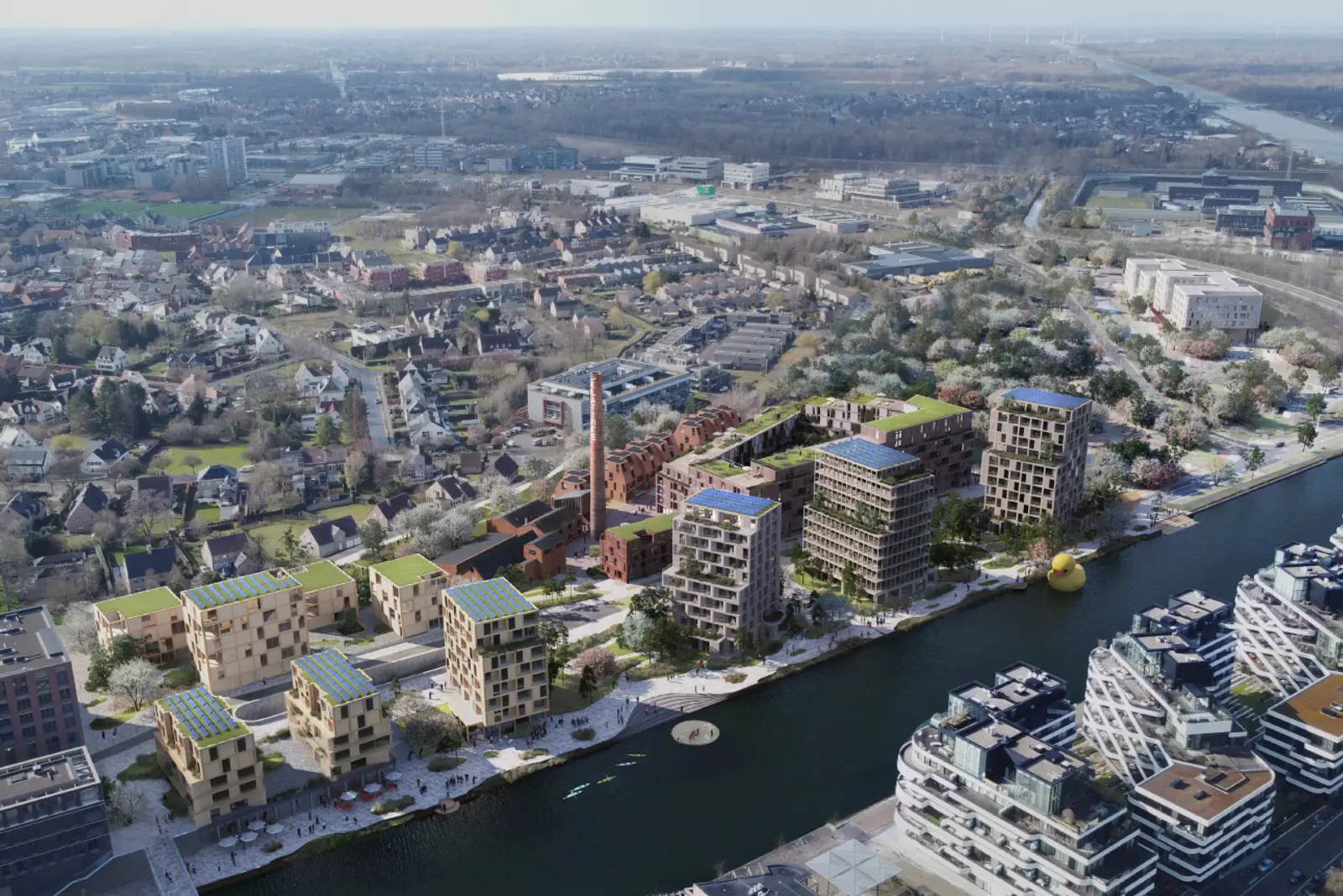
Gelatine quarter
- Care
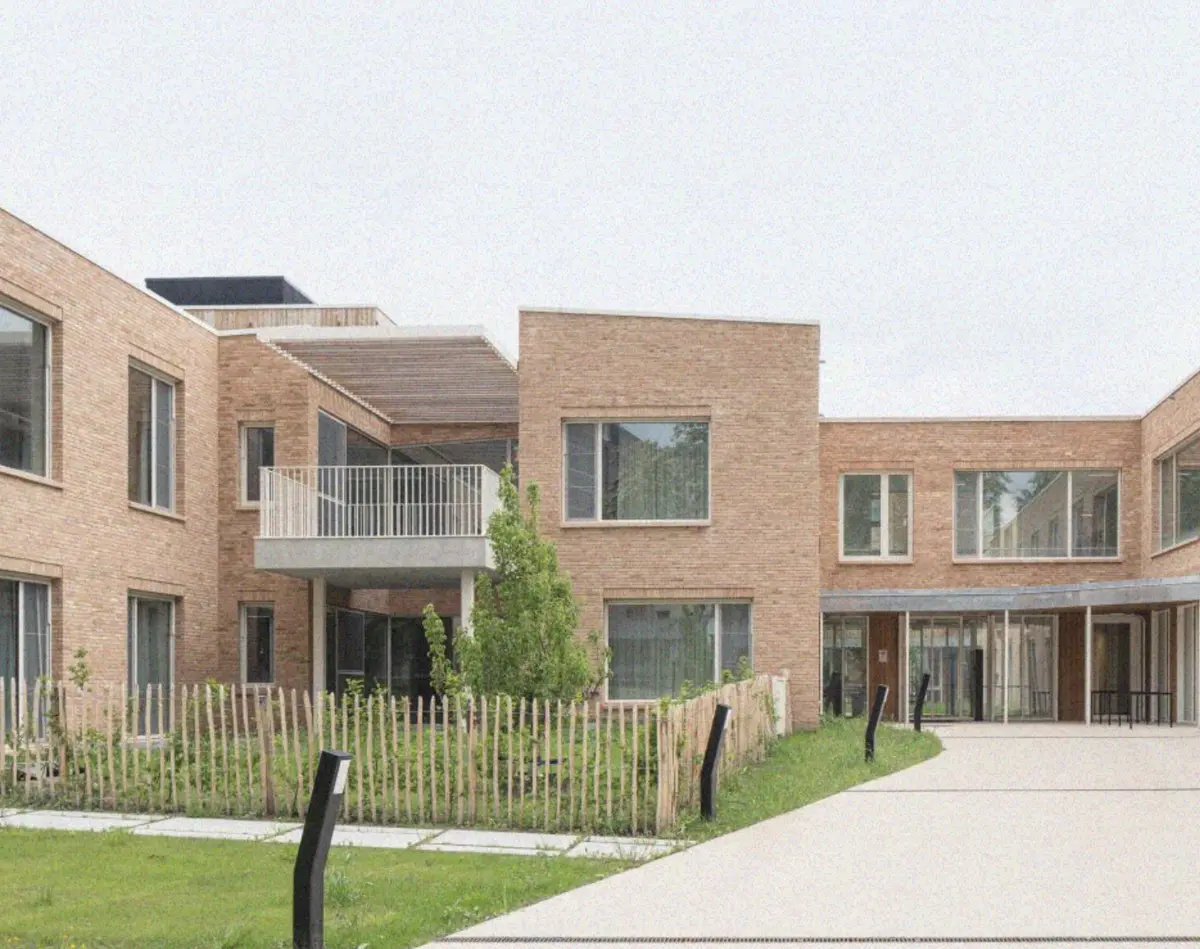
Care Home Booghuys
- Office
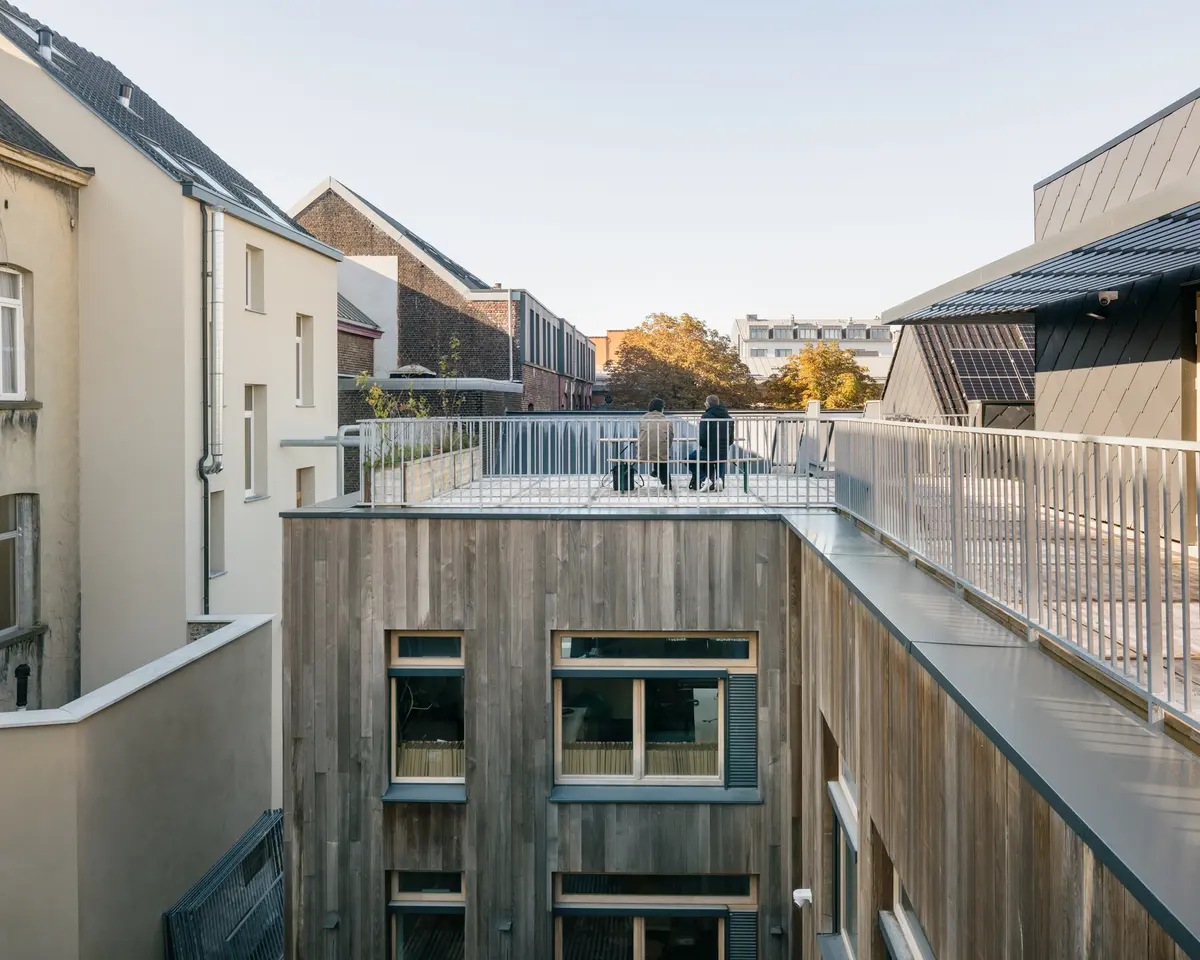
Greenpeace Belgium HQ
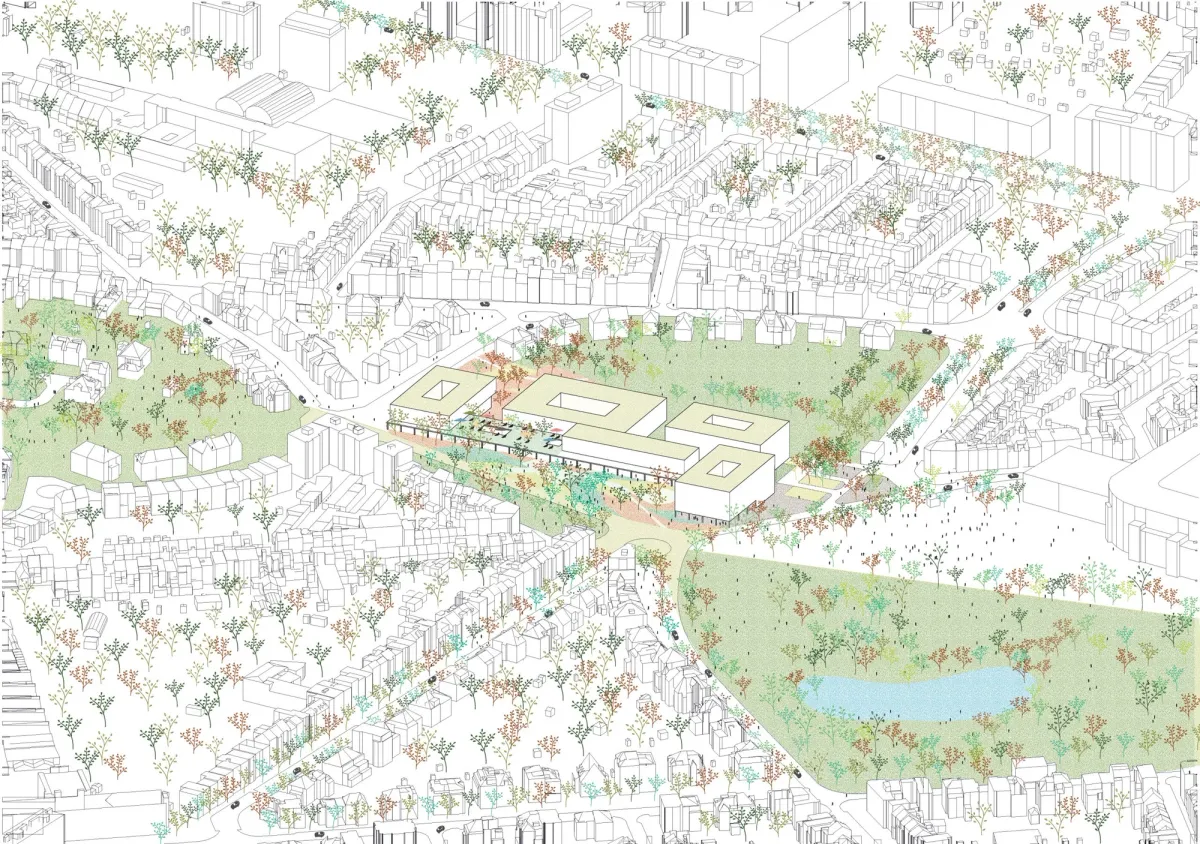
- Hospital
Joseph Bracops Hospital
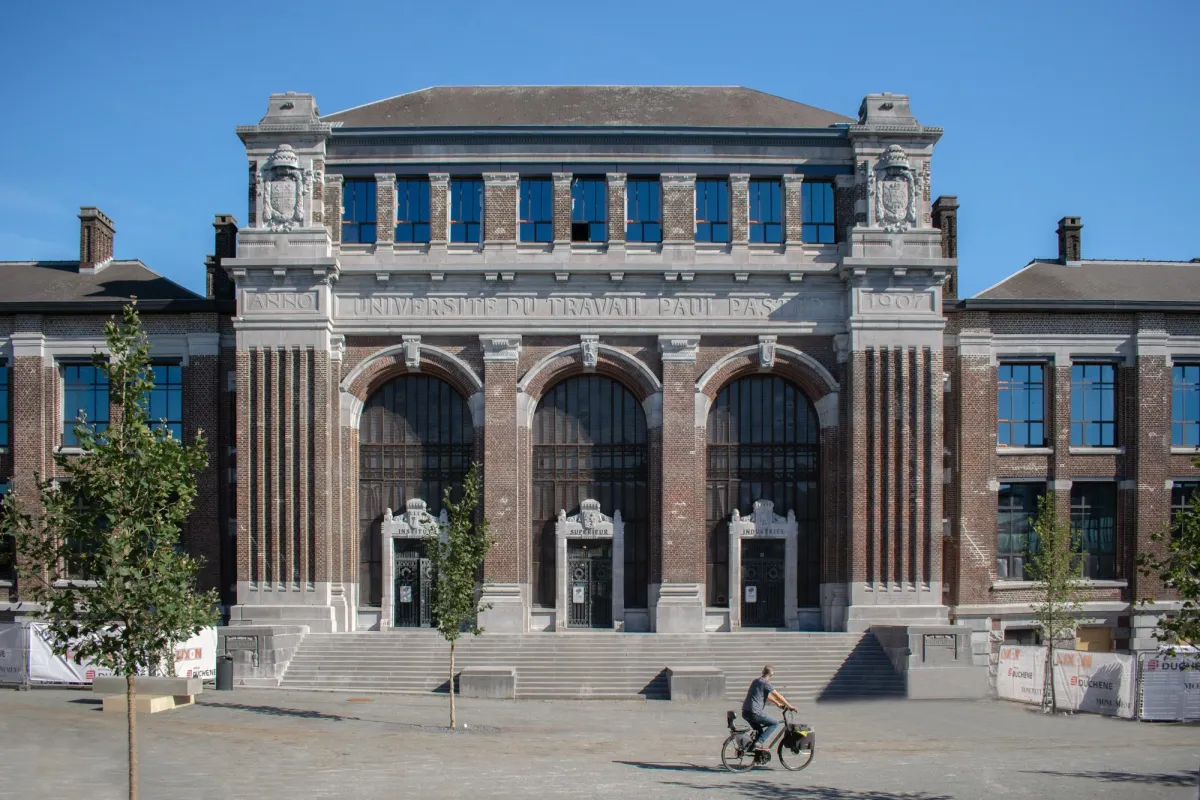
- Education
CUZG – Centre Universitaire Zénobe Gramme
- Mixed-use
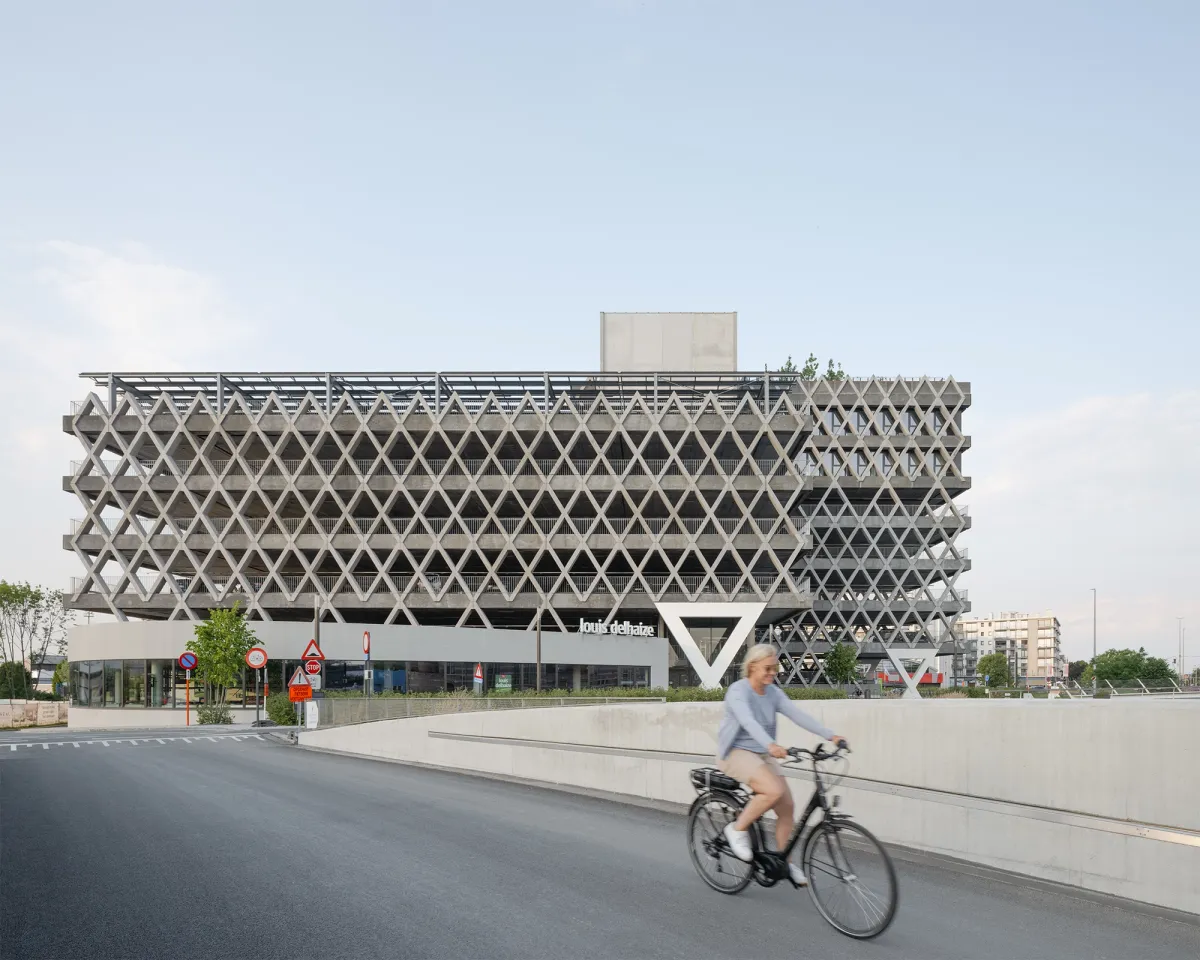
- Infrastructure
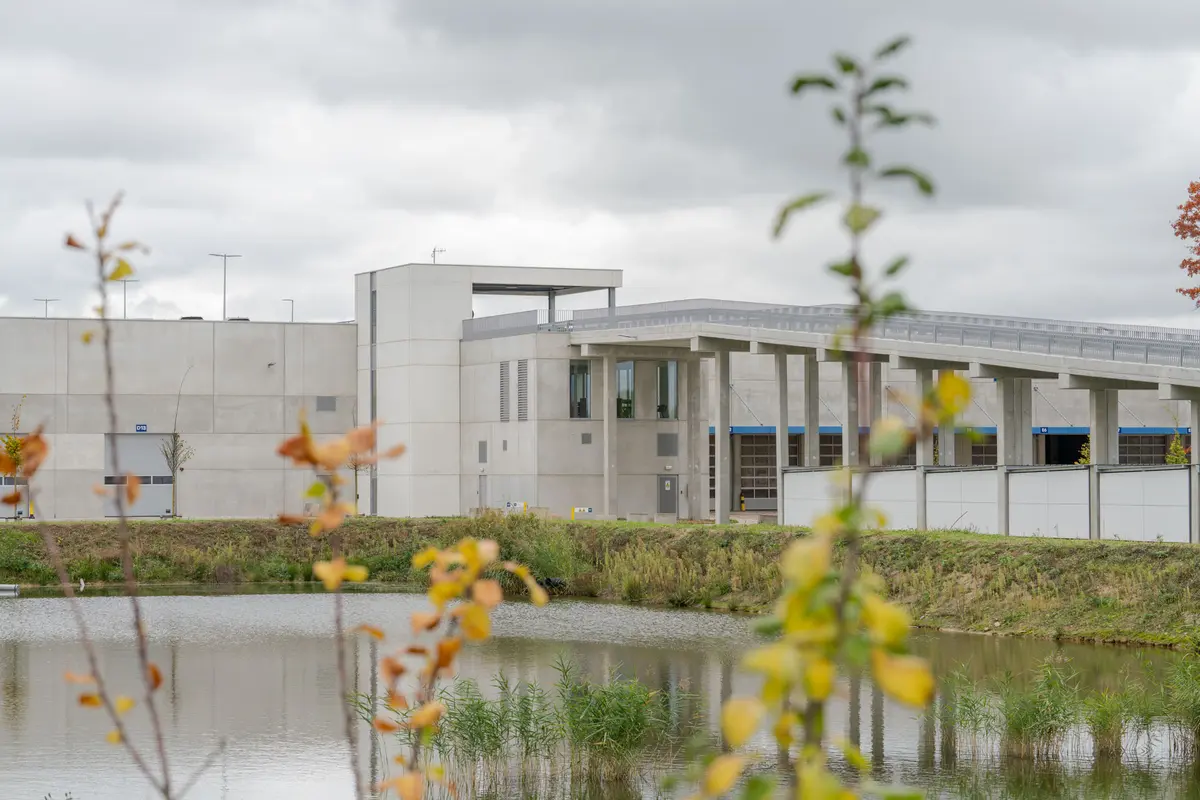
Mobility Hub
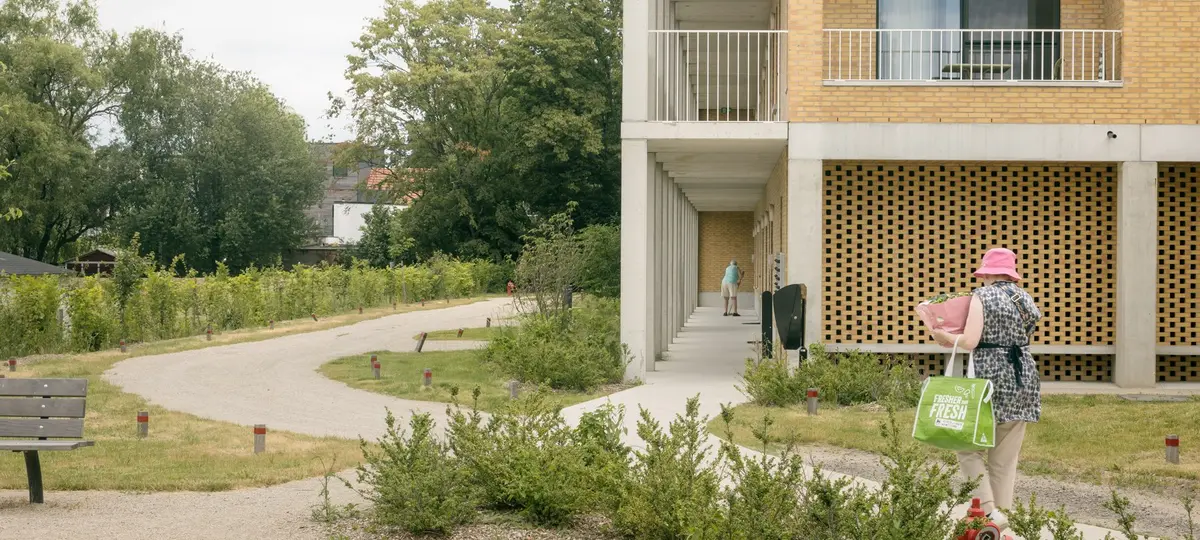
- Care
Broydenborg

- Residential
- Mixed-use
Vanden Tymple - Diestestraat
- Office
- Public