space kit
A design method that puts well-being at the centre from the outset, based on a flexible grid and evidence-based design principles.
 Peter-Willem Vermeersch
 Jo Van Hees
- Wellbeing
The Space Kit Approach (SKA) is a design method for hospitals that places wellbeing at the centre from the very beginning. By starting with a flexible grid, Evidence-Based Design principles are integrated at an early stage, so that spatial and architectural choices enhance the wellbeing of patients, staff and visitors. This method was used in the design of the Helora hospital network: waiting areas with zones for privacy and interaction, and care stations that provide both overview and calm. Thanks to co-design workshops with users and Self-Determination Theory, a holistic, adaptable and future-oriented hospital design emerges.
Wellbeing at the heart of tomorrow’s hospital: discover the ‘Space Kit Approach’
Designing hospitals is a complex challenge. These buildings must be functional and flexible in order to adapt to the rapidly changing medical landscape and the needs of patients. At the same time, they must promote the wellbeing of patients, staff and visitors. To meet these needs, Archipelago developed the Space Kit Approach (SKA). This method integrates wellbeing from the very beginning of the design process, using a language that architects understand and can work with in practice. In the meantime, we are also applying this approach to the design of offices, where flexibility and wellbeing are likewise central.
Design challenges for hospitals
Hospitals are not just buildings, but environments where people come to recover and where healthcare professionals work under demanding conditions. Designing them requires a balance between the need for a healing environment on the one hand and technical and medical requirements on the other. To ensure a positive impact on wellbeing and health, we use Evidence-Based Design (EBD): scientific evidence supports design decisions at different levels (Herweijer-van Gelder, 2016). Because EBD is often introduced late in the process, the key choices have already been made by then and the impact of wellbeing-oriented interventions remains limited.
The ‘Space Kit Approach’
The SKA was developed to integrate EBD principles right from the start. At Archipelago, we begin large-scale hospital designs by defining a grid, which forms the basis for flexibility, adaptable programming and standardised construction methods (Pilosof, 2021). Think of the modular architecture of Herman Hertzberger or Aldo van Eyck, who in the 1960s and 70s designed large hospitals based on a grid. By using EBD already when defining this grid, we deploy spatial and architectural qualities in the service of wellbeing, instead of later limiting ourselves to interior finishes or furniture. We see the beginning of the design process as assembling a puzzle, with each puzzle piece coming from a different box – including a box of EBD knowledge.
Top of Form
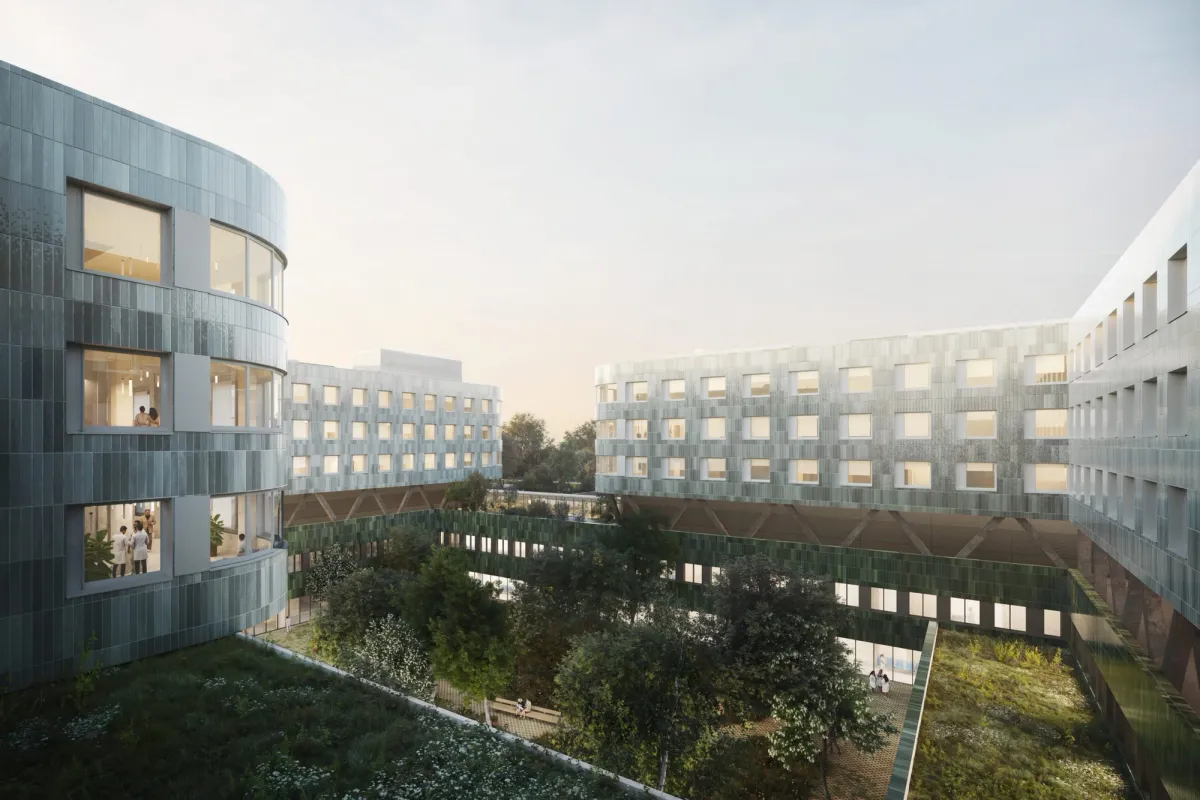
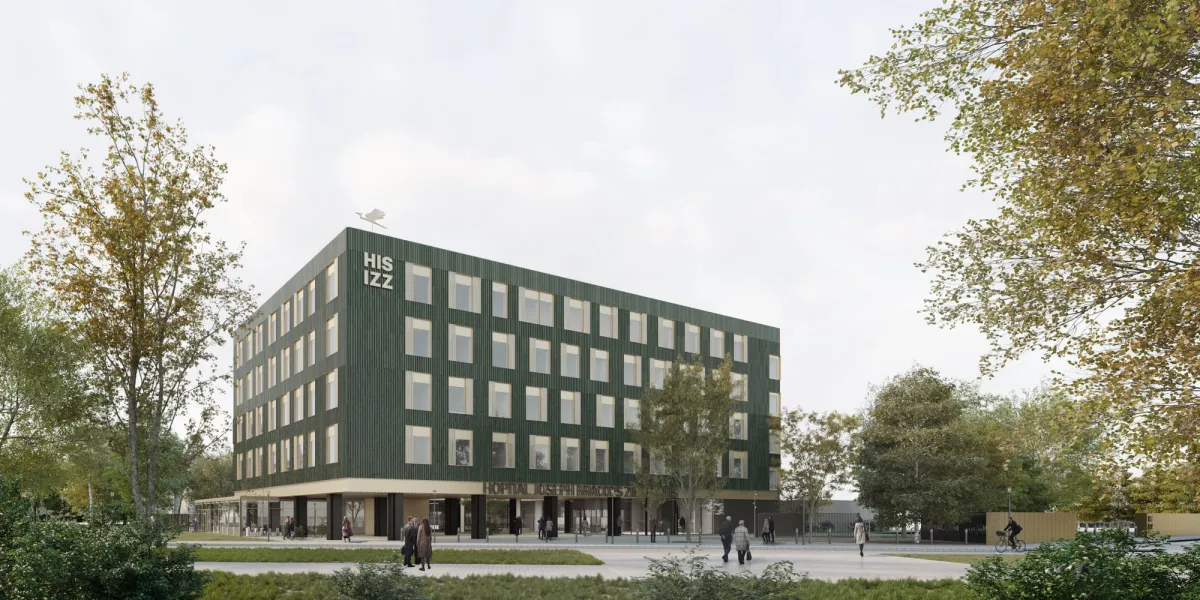
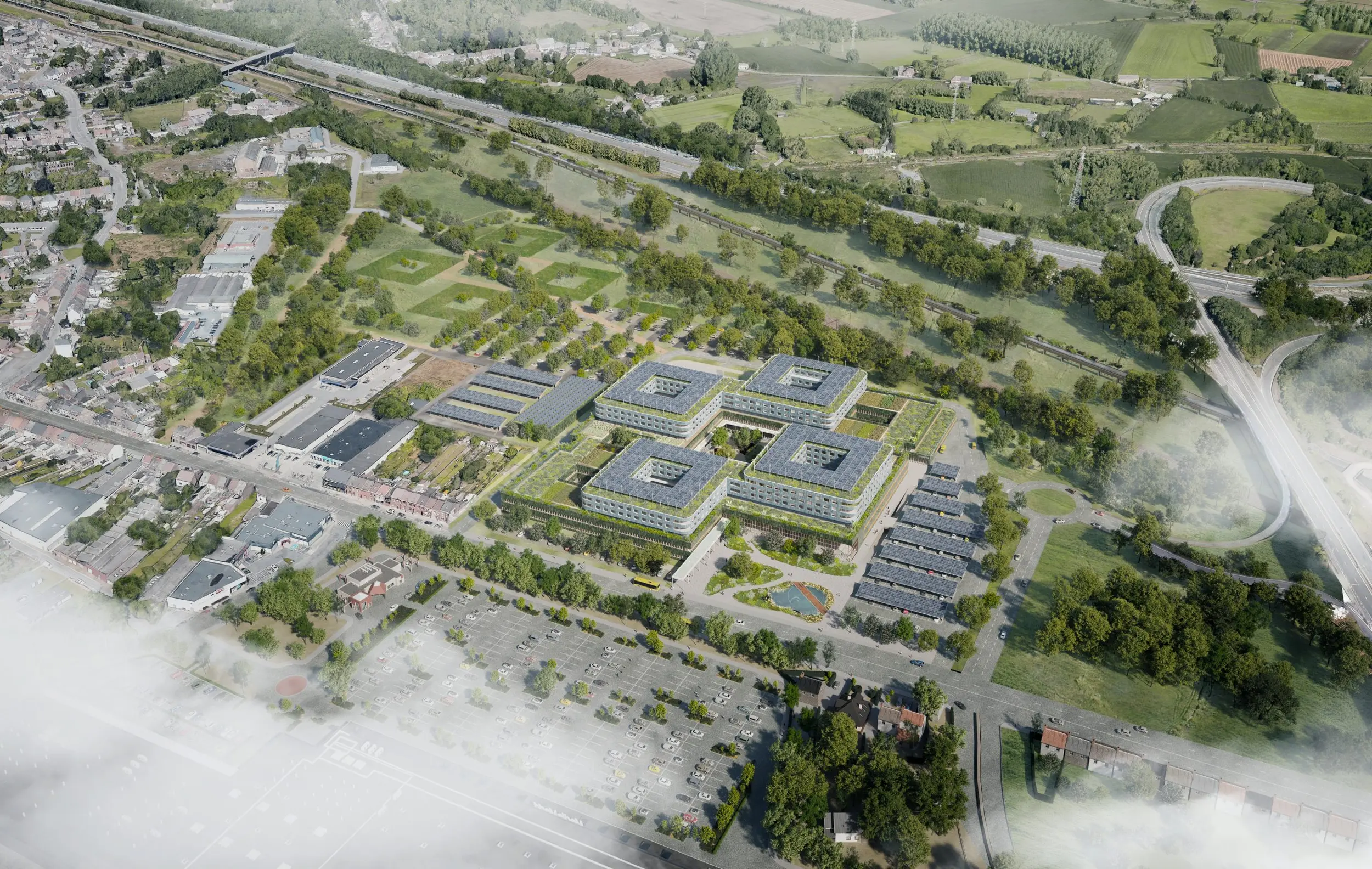
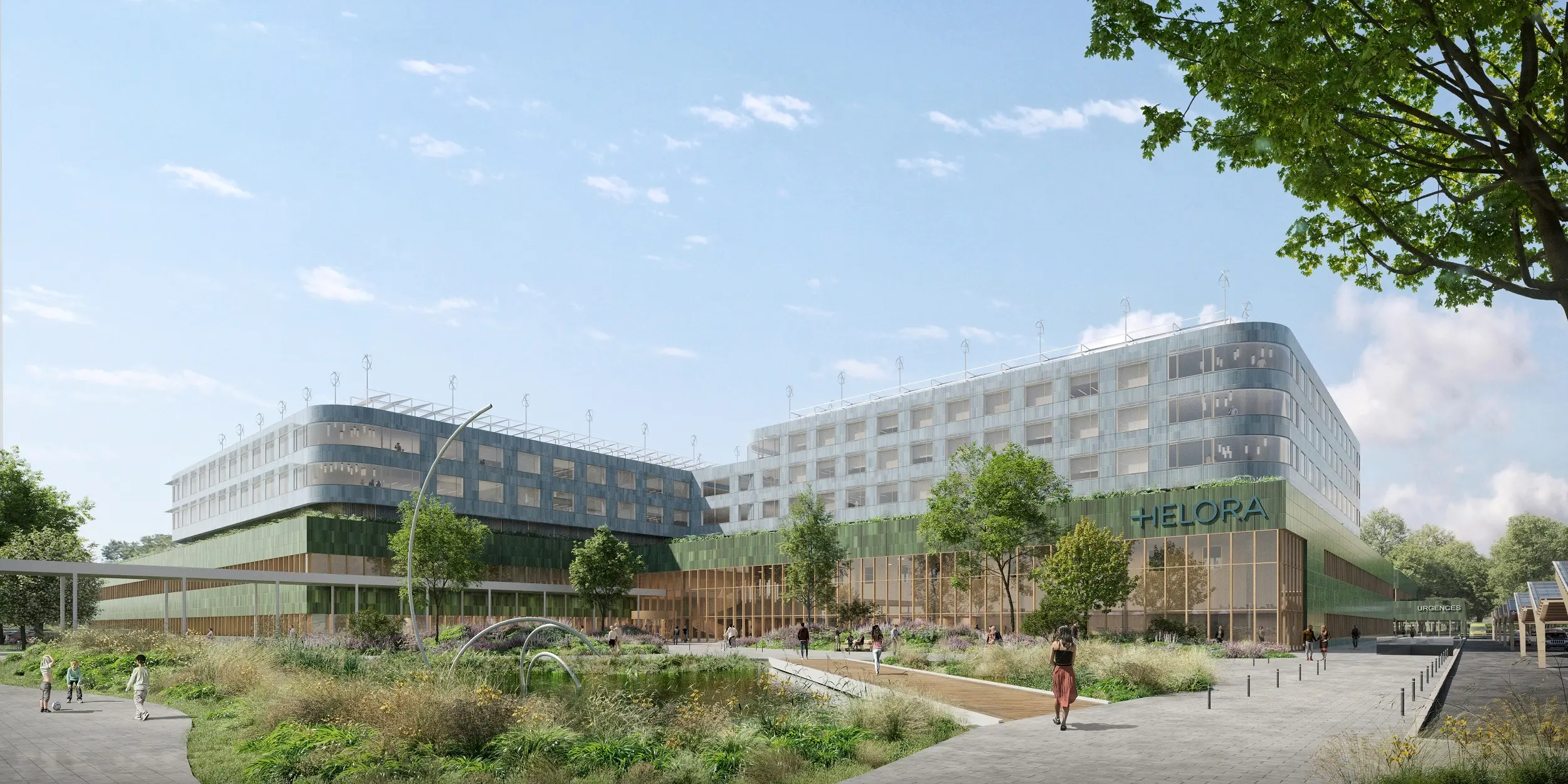
The SKA is being applied, among other things, in the Helora hospital project: five new hospitals in Wallonia, together accounting for approximately 2,150 beds and 220,000 m². The aim is to create a network of hospitals that is efficient and functional and that also supports wellbeing.
Key qualities of the Space Kit Approach
01 – Early integration of wellbeing
The SKA integrates wellbeing principles by focusing on how spaces are used and experienced. Drawing on Self-Determination Theory (SDT), we design comfortable spaces that support subjective wellbeing as well as basic psychological needs – autonomy, competence and relatedness (Deci & Ryan, 2012).
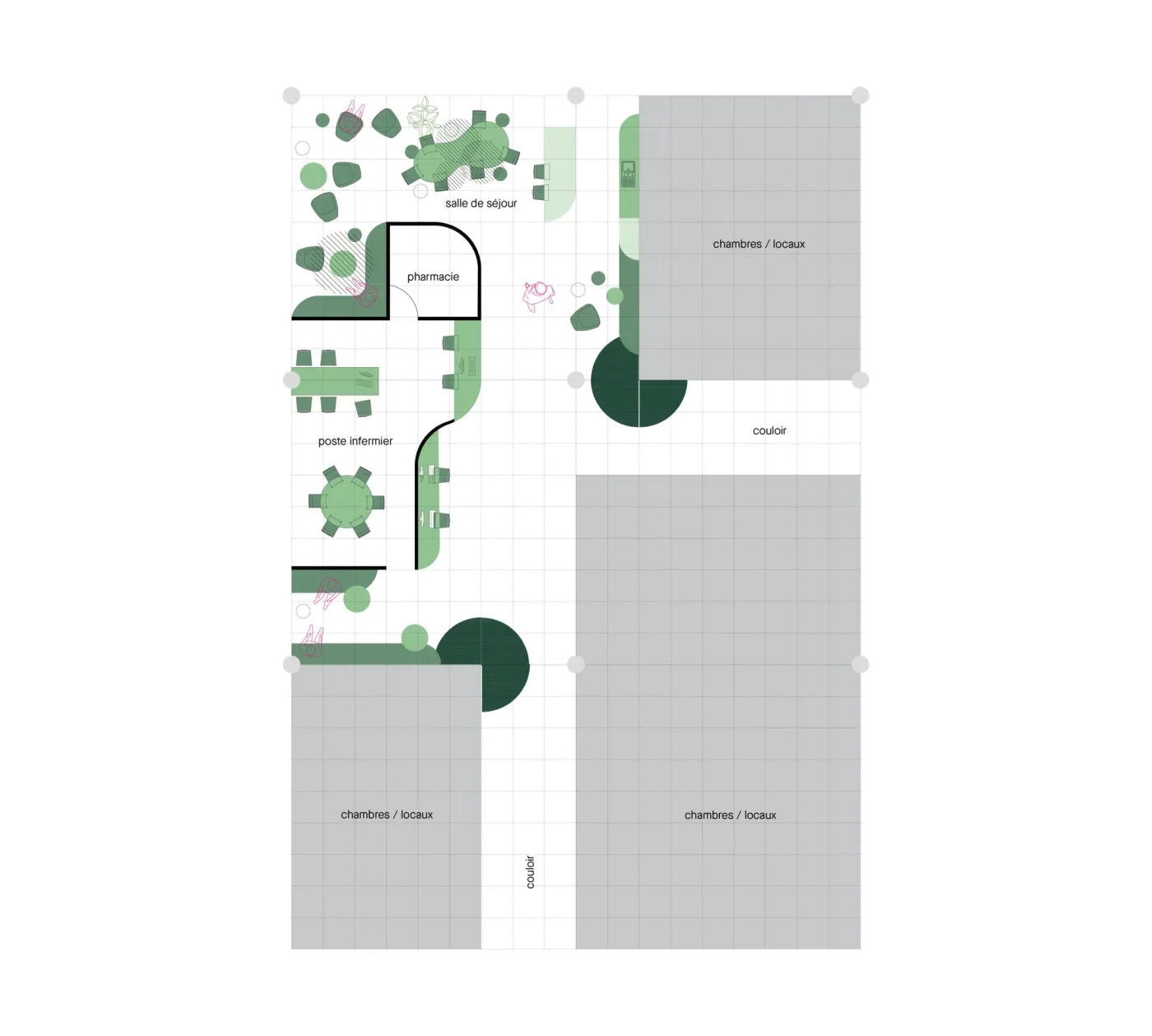
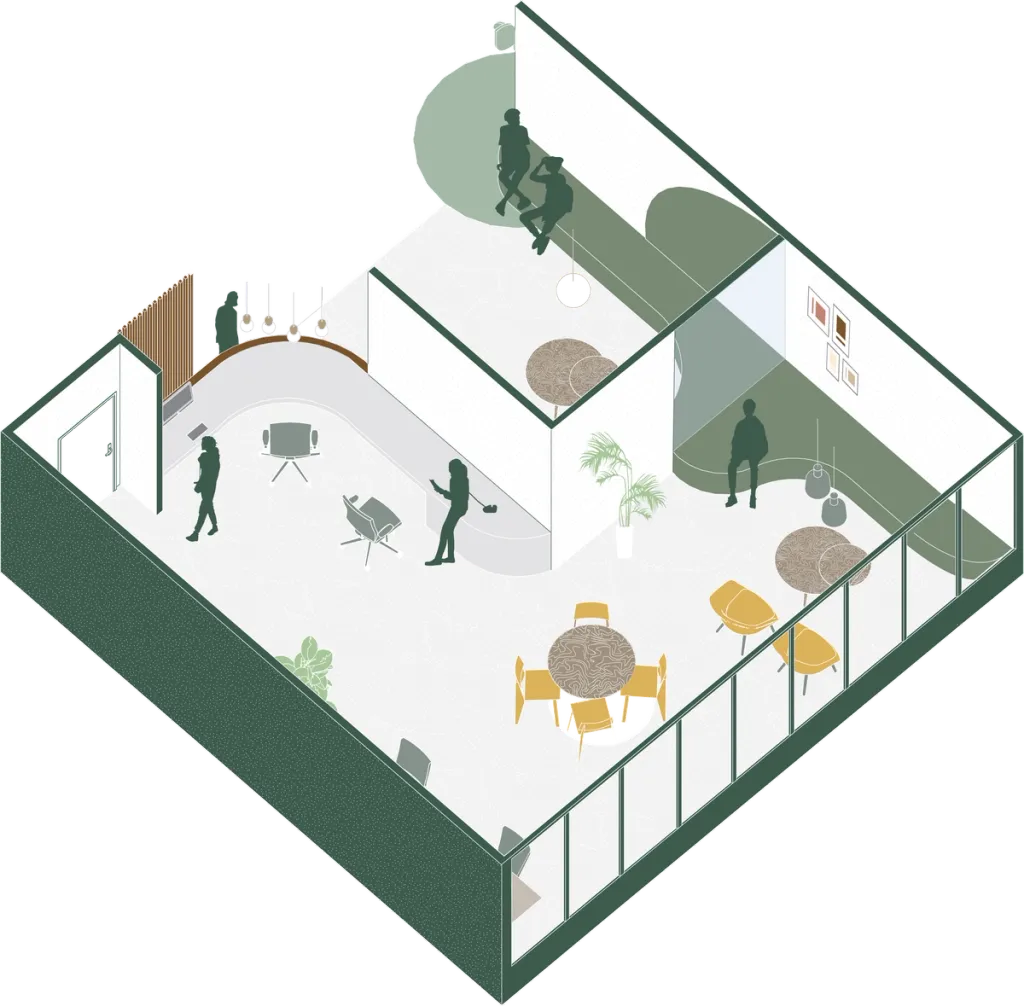
At Helora, for example, waiting rooms are designed with zones for both social interaction and privacy, making waiting times feel less stressful and improving patient satisfaction (Bell et al., 2018). Nursing stations are positioned so that nurses can monitor patients effectively while also having a place for short breaks and informal conversations. This approach supports the psychological wellbeing of both patients and nurses.
Nurse station and waiting area in the Helora hospitals, where comfort and aesthetics go hand in hand.
02 – Language of designers
Because architects think visually, the SKA translates EBD principles into diagrams and sketches that make complex information accessible and show how spaces can feel and function (Cross, 2006).
Axonometric view of a nurse station and adjoining waiting area.
03 – Flexibility and adaptability
It is crucial to avoid the grid becoming a rigid methodology: we start from the specific context, improve existing solutions and integrate new insights. In this way, EBD remains scientifically grounded without slipping into a plug-and-play approach, even as a hospital design brief inevitably evolves over the years (Simon, 1969; Maier et al., 2014).
Wellbeing through user involvement
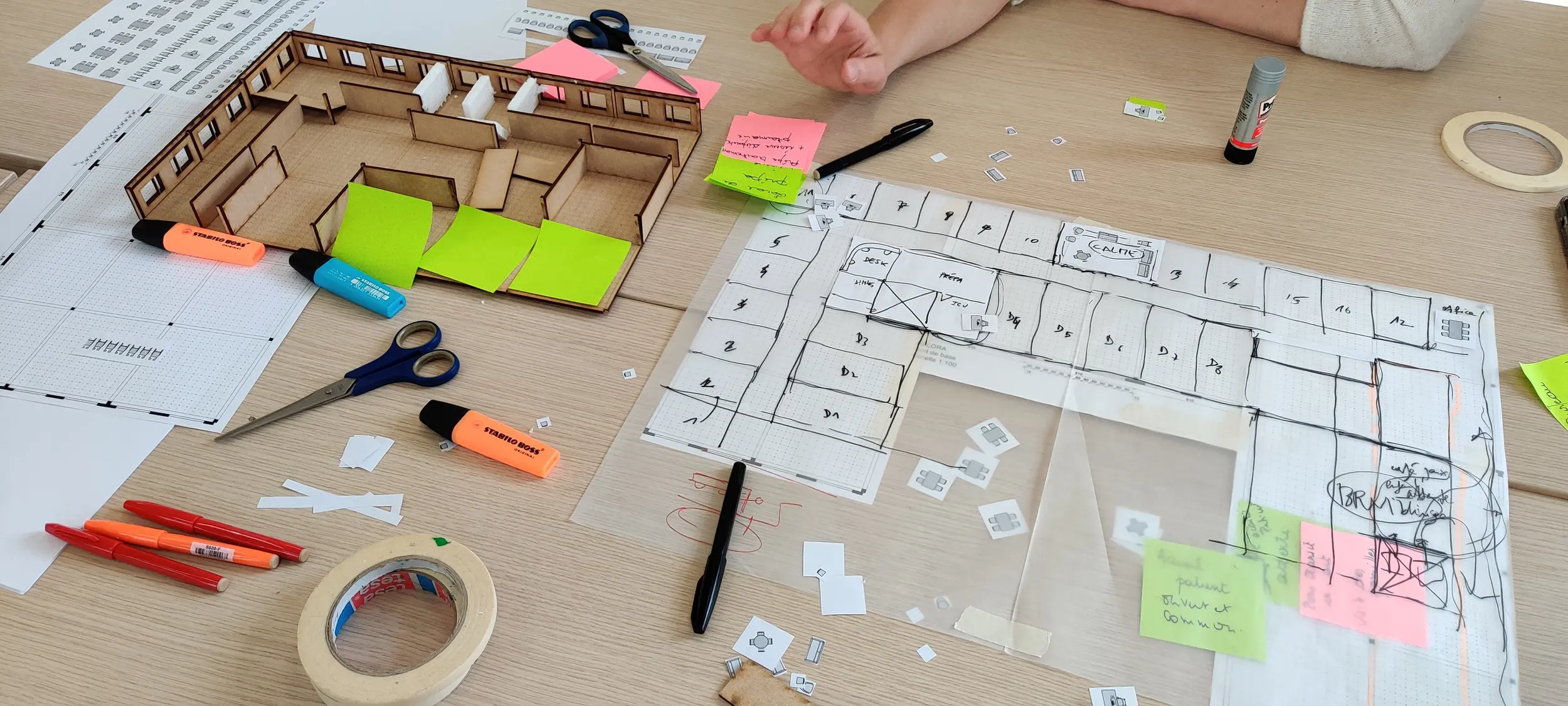
Within the SKA, we organise co-design workshops in which patients, staff and designers jointly explore different configurations of the modules within the grid. By linking their experience to the grid and to Self-Determination Theory, a holistic design emerges that places user experience and wellbeing at the centre from the very beginning of the design process, resulting in a flexible, context-specific and well-considered hospital environment.
References
Herweijer-van Gelder, M. H. (2016). Evidence-Based Design in Nederlandse ziekenhuizen: Ruimtelijke kwaliteiten die van invloed zijn op het welbevinden en de gezondheid van patiënten. A+ BE| Architecture and the Built Environment, 6, 1–456.
Pilosof, N. P. (2021). Building for Change: Comparative Case Study of Hospital Architecture. HERD: Health Environments Research & Design Journal, 14(1), 47–60.
Bell, S. L., Foley, R., Houghton, F., Maddrell, A., & Williams, A. M. (2018). From therapeutic landscapes to healthy spaces, places and practices: A scoping review. Social Science & Medicine, 196, 123–130.
Cross, N. (2006). Designerly ways of knowing. Springer London.
Deci, E. L., & Ryan, R. M. (2012). Self-Determination Theory. In Handbook of Theories of Social Psychology: Volume 1 (1–1, pp. 416–437). SAGE Publications Ltd. https://doi.org/10.4135/9781446249215
Simon, H. A. (1969). The Sciences of the Artificial. MIT Press.
Maier, A. M., Wynn, D. C., Howard, T. J., & Andreasen, M. M. (2014). Perceiving design as modelling: A cybernetic systems perspective. An anthology of theories and models of design: philosophy approaches and empirical explorations, 133-149.
Related projects & research
- Residential
- Mixed-use
- Masterplan
- Residential