2024
Exploring a Space Kit Approach to guard psychosocial well-being in planning public hospital spaces
The Space Kit Approach translates psychosocial well-being into early, evidence-based choices for waiting areas, family zones and nursing environments within Helora.
 Peter-Willem Vermeersch
 Jo Van Hees
 Joost Declercq
- Hospital
- Wellbeing
- Process
- Partners
KU Leuven
Hospital projects demand flexible yet evidence-based design, especially when addressing psychosocial well-being at scale. This study develops a Space Kit Approach within archipelago to collect, shape and share scientific knowledge on autonomy, competence and relatedness in a designerly way. Applied to the Helora hospital network, the method steers early spatial decisions for waiting areas, family spaces and nursing environments, ensuring psychosocial needs remain central rather than being reduced to late-stage interior choices.
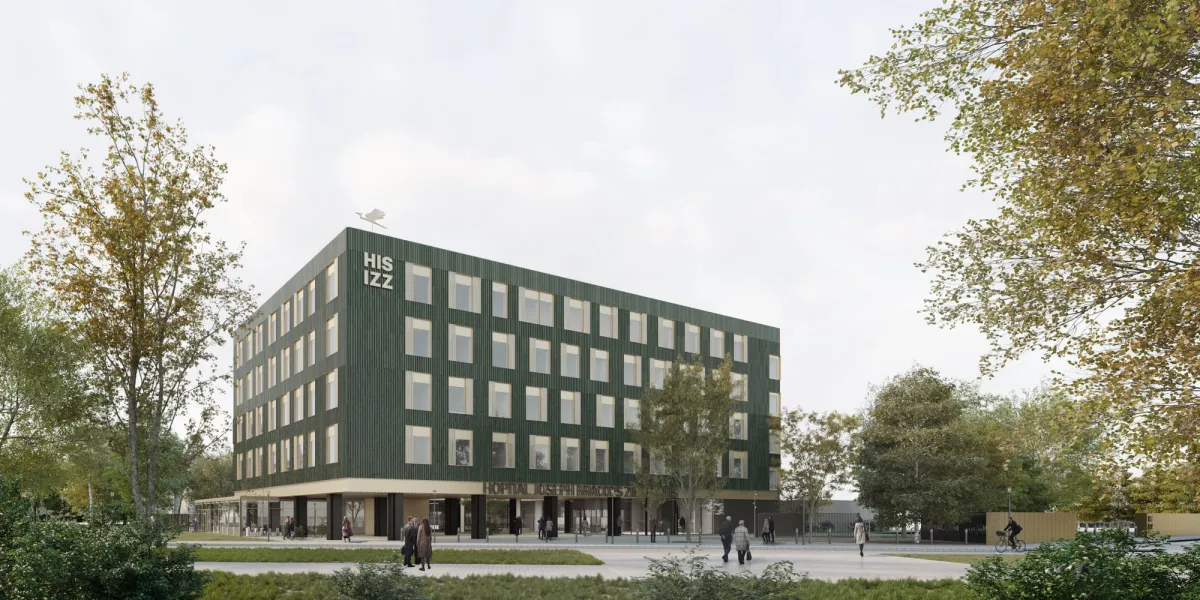
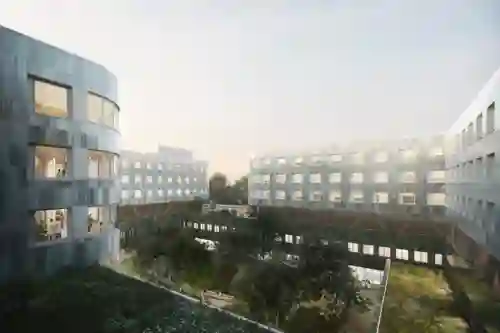
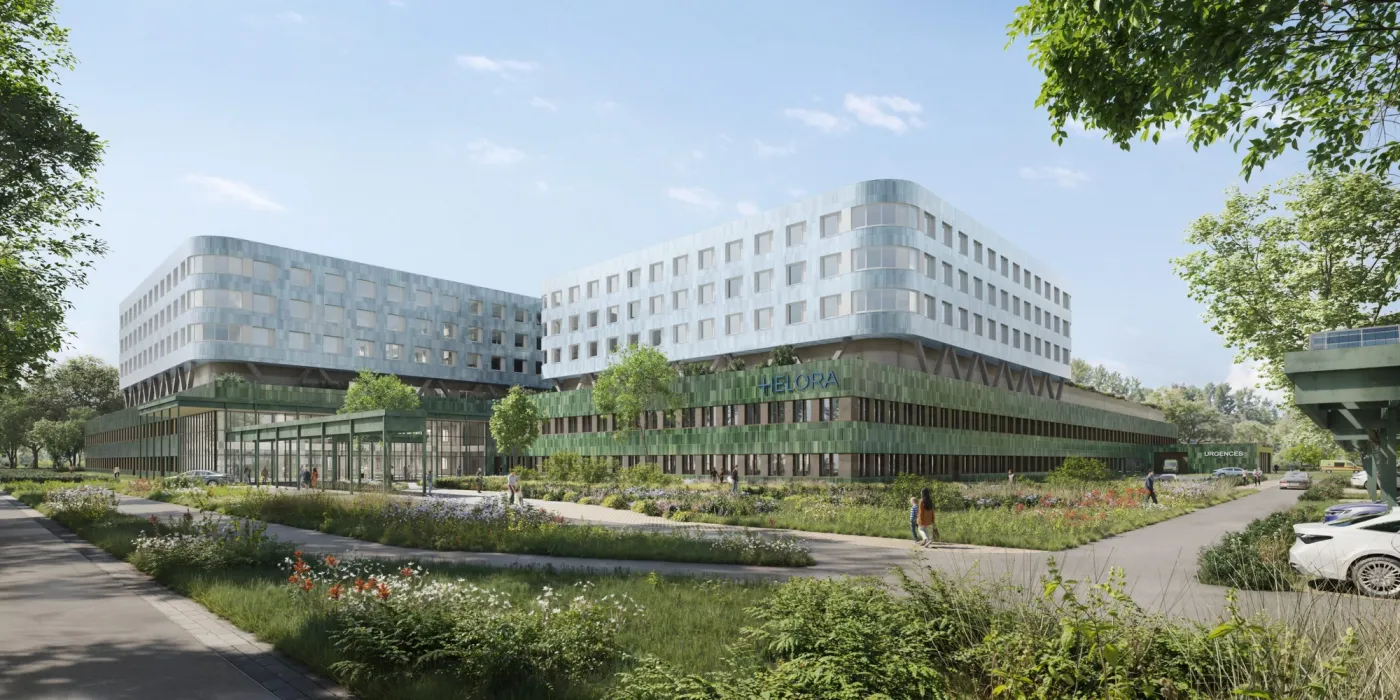
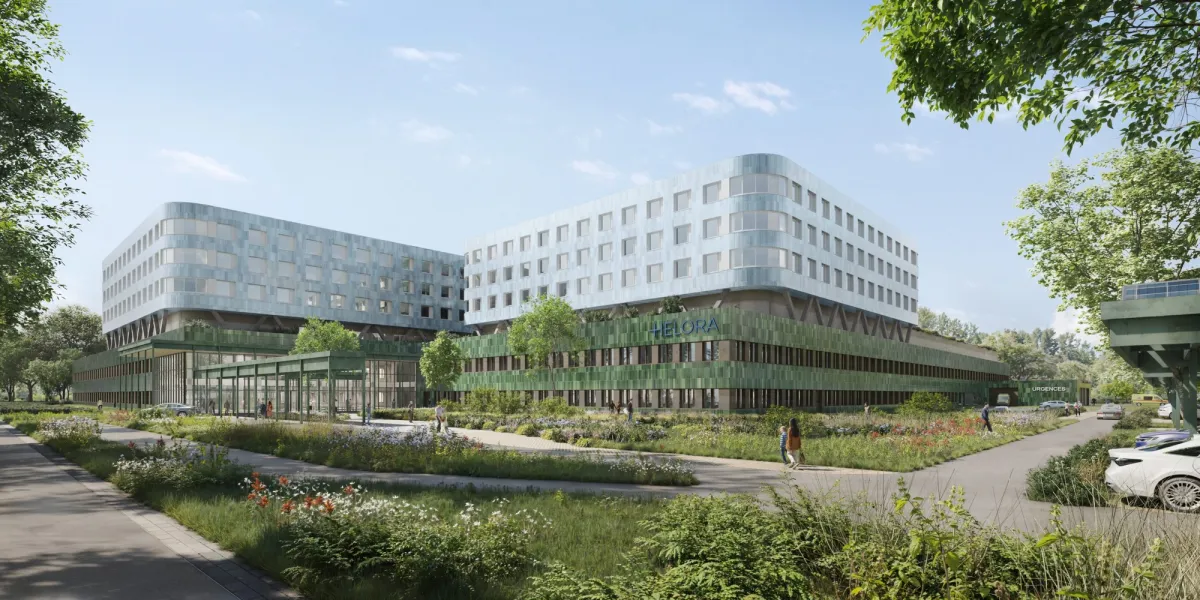
General image of the Helora hospitals
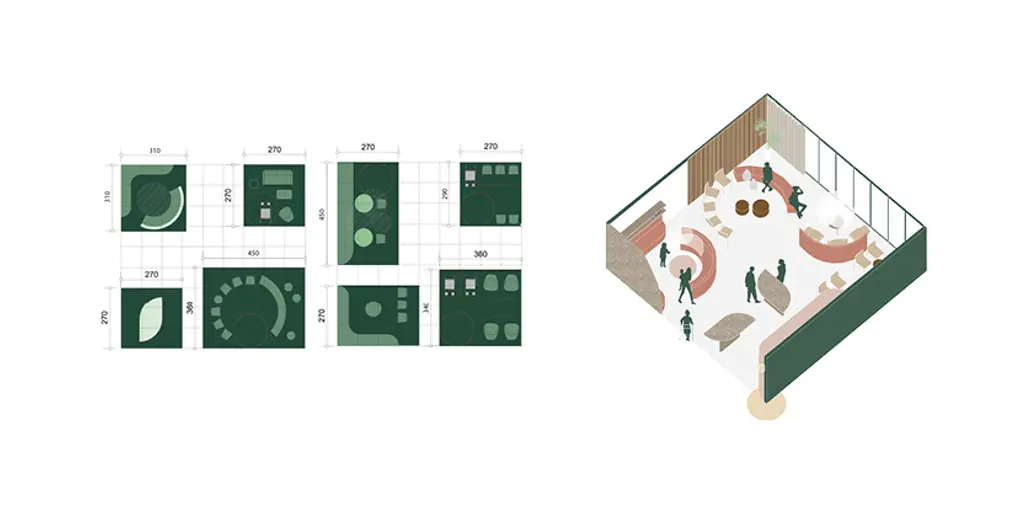
Space Kit waiting areas: social functions laid out on the (sub)grid, composed from Space Kit units to foster social interaction (early design stage)
Related projects & research
- Hospital
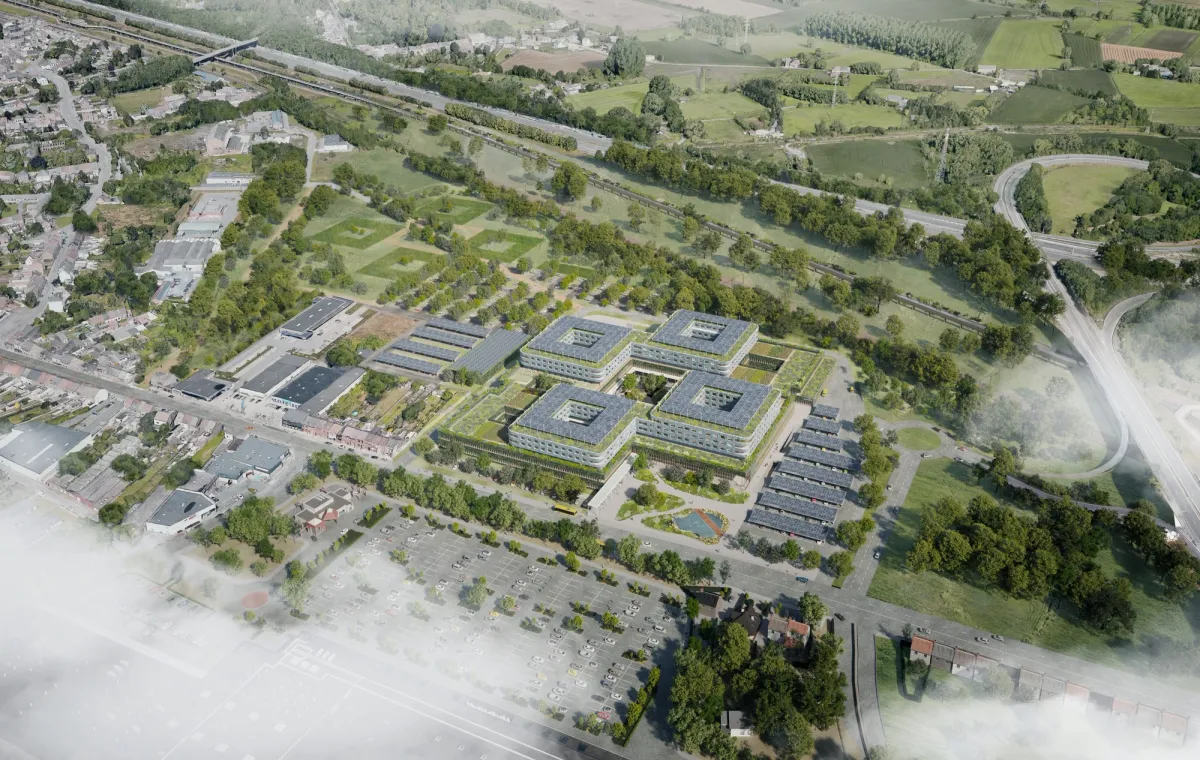
La Louvière, Mons, Warquignies, Nivelles, Lobbes
Helora
- Residential
- Mixed-use
- Masterplan
- Residential