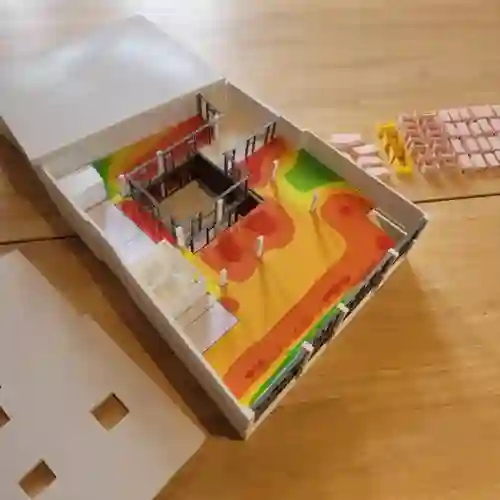
Building resilience in healthcare: how hospital room design impacts energy use and occupant well-being
Combinations of window size, glazing and solar shading determine energy use and comfort in patient rooms and thus act as a lever for more sustainable healthcare buildings.
 Giulia Scialpi Eleonora Rubinacci
 Joost Declercq
 Martijn Holvoet
 Peter-Willem Vermeersch
- Hospital
- Sufficiency
- Wellbeing
- Façade engineering
- Status
Completed
- Client
EU-funded Horizon project Caring Nature
- Partners
4D architects (Dr. Elma Durmisevic)
Designing smarter healthcare buildings: examining energy and comfort. Hospital design can play a decisive role in reducing energy use and improving well-being, especially in patient rooms. This study investigates how different combinations of window size, glazing properties and solar shading affect energy demand and indoor environmental quality in a single room. As part of the EU-funded Horizon project Caring Nature, it links detailed room-level design decisions to more sustainable and resilient healthcare buildings.
Read the full paper “Building resilience in healthcare: how hospital room design impacts energy use and occupant well-being” for the concrete results.
Related projects & research
- Residential
- Mixed-use
- Masterplan
- Residential