Integrating sufficiency in a design process: trans-disciplinarity between Co-design and Performance simulation
User-centred co-design links comfort simulations to well-being, enabling users to actively explore spatial qualities and usage scenarios.
 Peter-Willem Vermeersch
 Jo Van Hees
 Joost Declercq
- Office
- Sufficiency
- Wellbeing
- Status
Completed
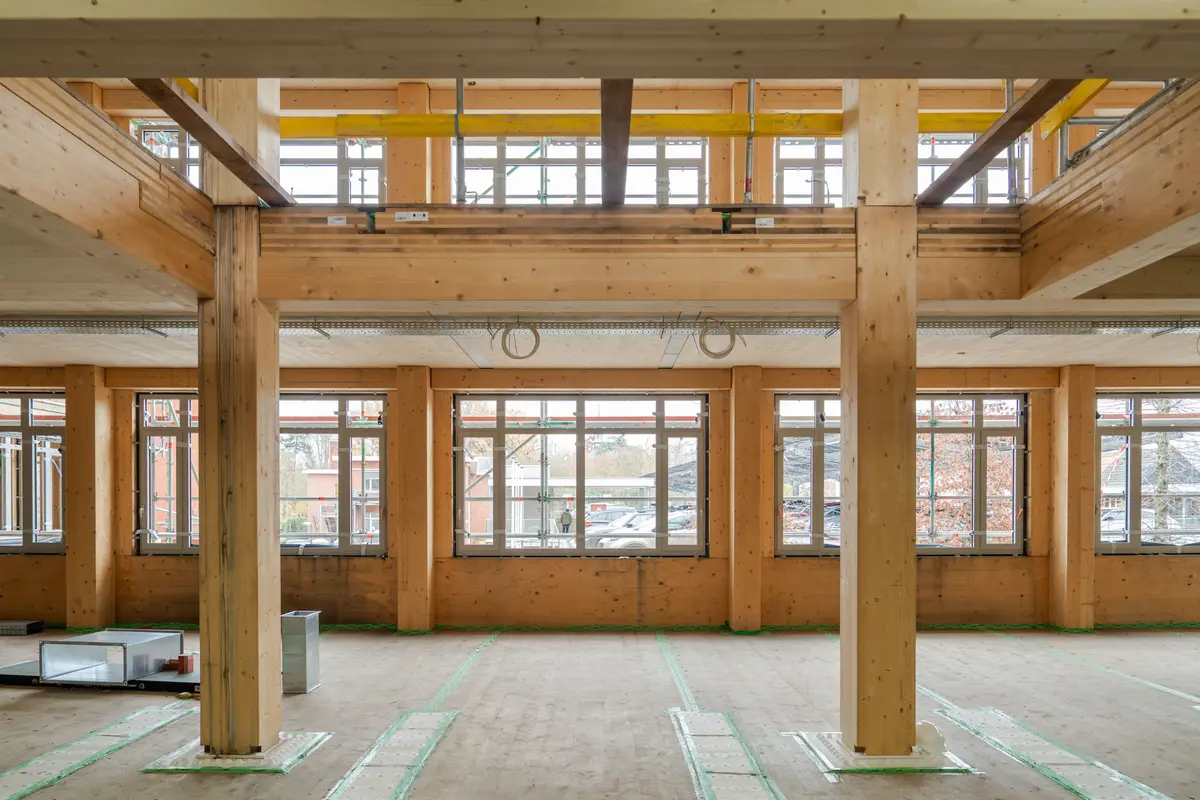
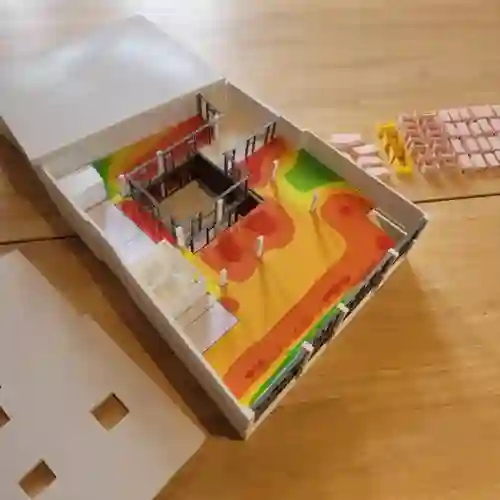
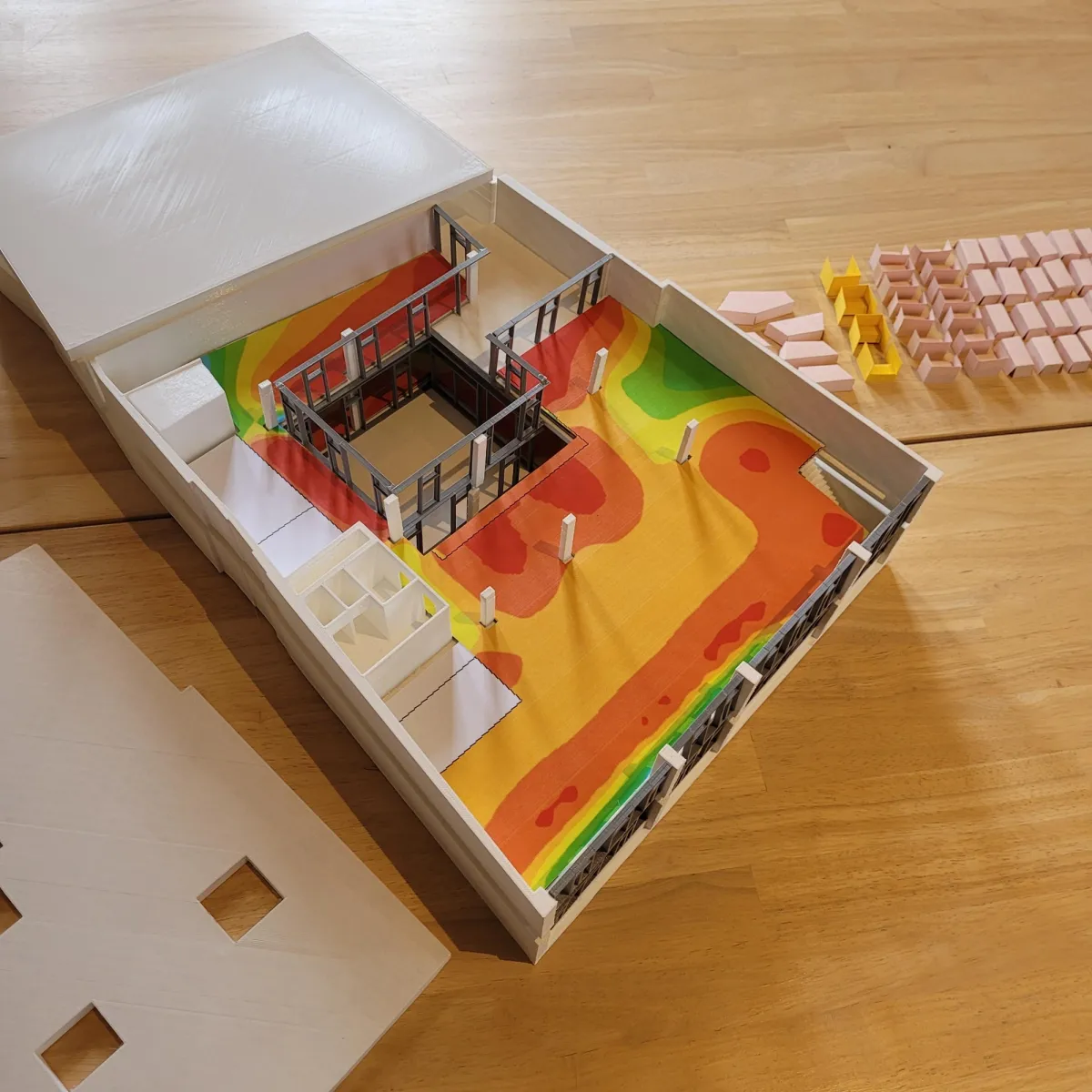
Rethinking comfort by focusing on lived experience. Comfort standards in buildings are often overly cautious, leading to higher costs, greater material use and additional embodied carbon, while broader aspects of wellbeing remain overlooked. This study develops a user-centred, simulation-based co-design strategy that links comfort performance to Self-Determination Theory. In two examples (Archipelago offices in Leuven and Brussels), daylight and other performance simulations are interpreted experientially, enabling participants to explore spatial qualities and imagine possible usage scenarios instead of merely adjusting technical parameters. Want to know more?
Related projects & research
- Residential
- Mixed-use
- Masterplan
- Residential