BIM
BIM serves as a shared 3D information model from sketch to as-built, connecting all disciplines, preventing clashes and guiding costs, sustainability and life cycle.
 Lennart Luchtens
- Process
Archipelago applies BIM throughout the life cycle of a building, from the first sketch to the as-built dossier. The shared 3D information model connects all construction disciplines, anticipates execution issues and strengthens cost control and quality. Based on international standards and its own internal BIM protocol, archipelago ensures coherent and flexible information management with a central “Single Source of Truth”. BIM offers many advantages: it supports programme studies, user experience through virtual walkthroughs, sustainability and energy analyses, and provides continuous insight into budget and life cycle. In this way, BIM becomes more than a drafting tool: a strategic, digital way of working for future-proof, efficient and sustainable buildings.
Smart collaboration with BIM: fewer problems and higher quality
Archipelago has many years of BIM experience thanks to its skilled team and expertise in complex projects. Building Information Modelling (BIM) is a process in which all information about a building is recorded, managed and exchanged throughout its life cycle in a single digital model. This holistic 3D model contains data on materials, structure, performance and planning, and is accessible to all parties within the project team. Using this model strengthens collaboration and increases efficiency. We apply the BIM methodology from the very first sketches through to the as-built dossier. We closely follow developments in the sector and actively participate in Buildwise’s Digital Construction cluster, which accelerates digital transformation in the construction industry. As a result, we have developed an advanced BIM protocol within Archipelago, based on international standards and norms.
Designing better together
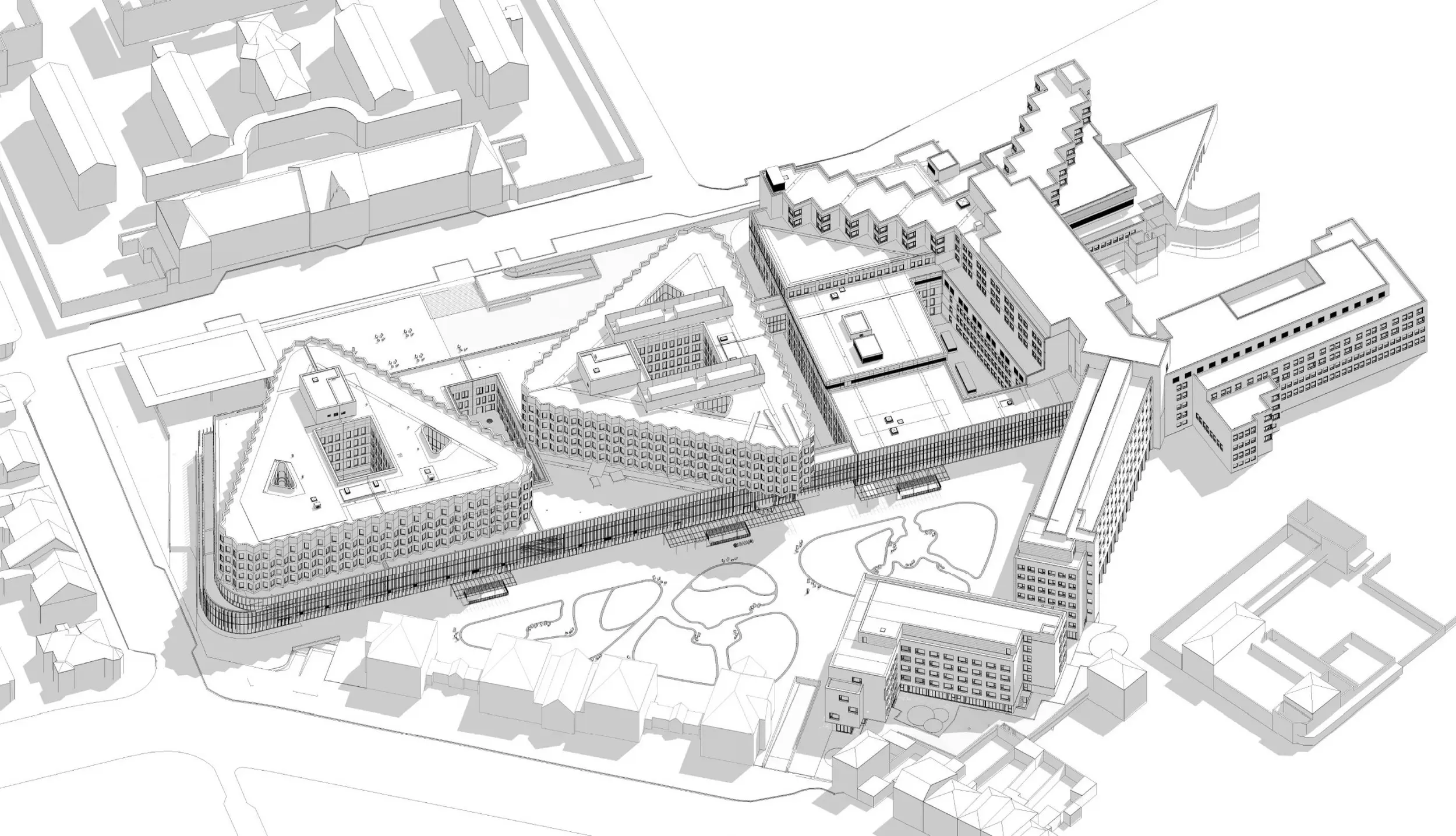
BIM is a collaborative process that brings together all construction disciplines around an architectural project in a virtual 3D model. Architects, engineers, specialists and the client exchange information simultaneously in a shared environment, with BIM ensuring the consistency of this information.
The aim is to predict and resolve construction issues already during the design phase, so that cost control and quality are safeguarded throughout the entire project.
The benefits are substantial, both for our clients and for our designers. To achieve this, we work together with the client to develop an overarching strategy for the long-term creation and exchange of information, including information exchange requirements and BIM objectives.
Thanks to BIM, we optimise concepts in line with our architectural vision while meeting the client’s objectives. The quality of our approach was recognised, among other things, by a BIM Award in 2017 for the “ParTICLe” proton therapy centre at UZ Leuven.
International standards and norms for working as a team
Our information management and BIM protocols are firmly rooted in national and international standards. We use the ISO 19650 series as a guiding framework for our processes and workflows, ensuring that they are coherent and complete.
OpenBIM is our core principle for creating and exchanging information models. ISO 19650‑2 provides a clear structure for a successful information management process through to building handover. At the same time, we keep our processes flexible so that they can be adapted to each specific project without losing coherence.
This is made possible by our team of BIM experts, who are involved from the drawing-board stage. Each project manager is supported by a BIM Process Manager, who coordinates the process, and a BIM Coordinator, who reviews all models at the delivery stages.
Each team also has a BIM Coach who supports the modellers during the modelling process. The philosophy behind these standards is that the entire team contributes to one central project information model, comprising the BIM models and all related information. A Single Source of Truth, together with clearly defined objectives, requirements and responsibilities for all parties, is central to this approach.
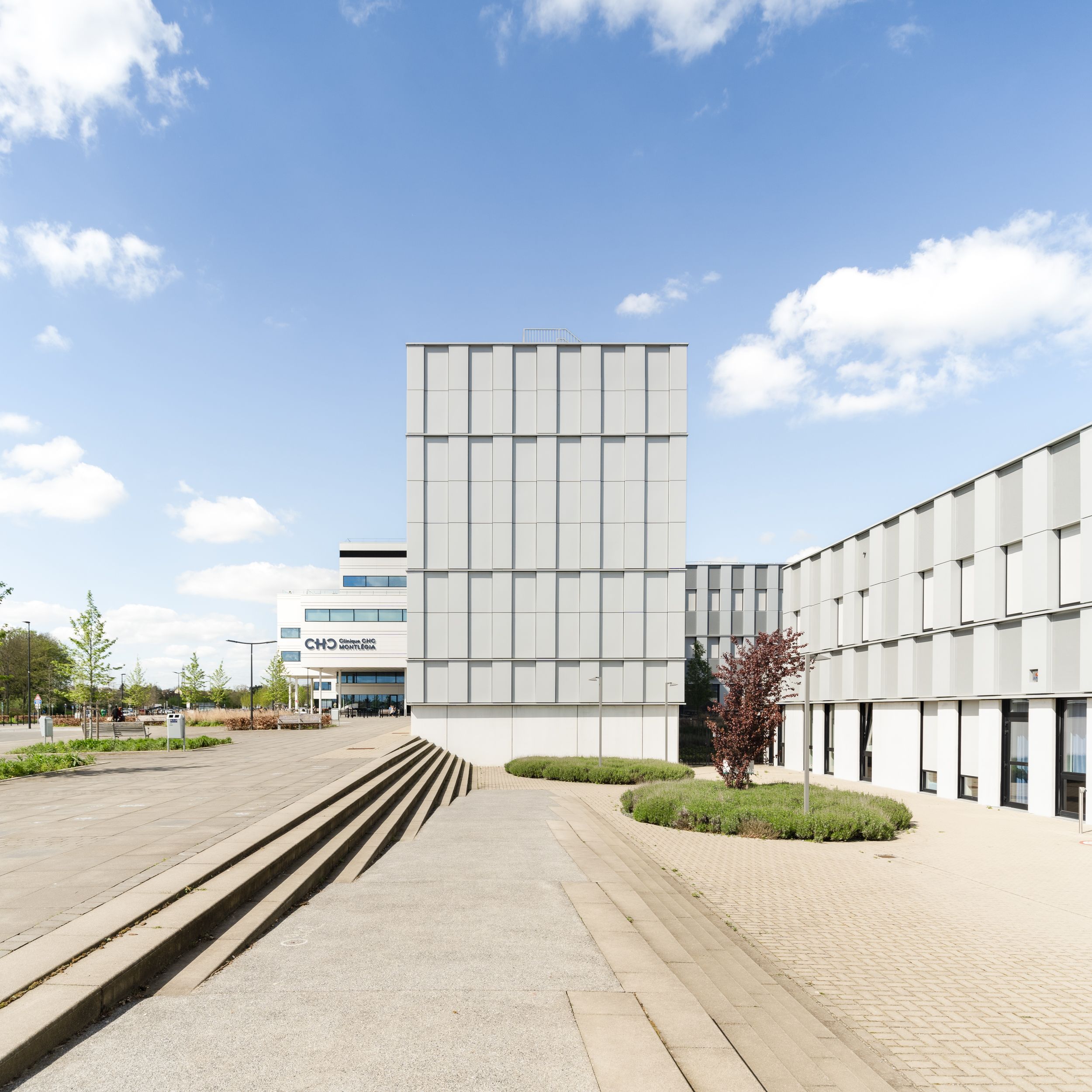
A powerful tool
We design all projects using an integrated BIM approach and have advanced IT tools, proprietary libraries and internal resources at our disposal. BIM is used throughout the design and construction process and offers, among others, the following opportunities:
- Rapid issue resolution: in a central model within the digital environment Autodesk Construction Cloud (ACC), automatic clash detection is carried out. This brings together all changes made by the various parties into a single model and checks for any structural or practical issues that may arise during the construction of the project. With this overview, the different parties can communicate smoothly and quickly develop solutions to address these issues.
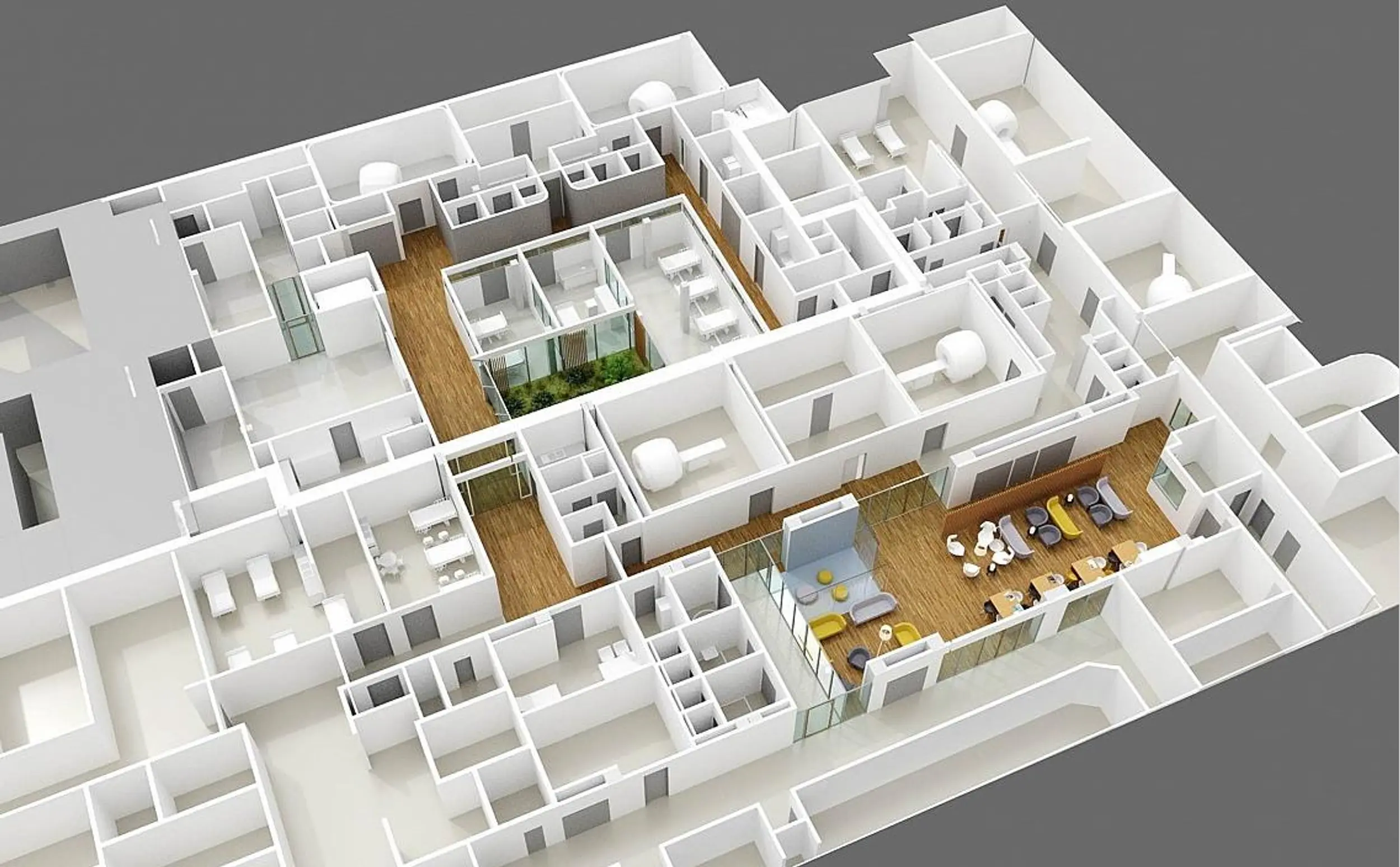
- Programme: volumetric modelling of the programme, functions and area checks during the design phase.
- User experience: dynamic virtual walkthroughs create a sense of atmosphere and immerse users in how the building will function.
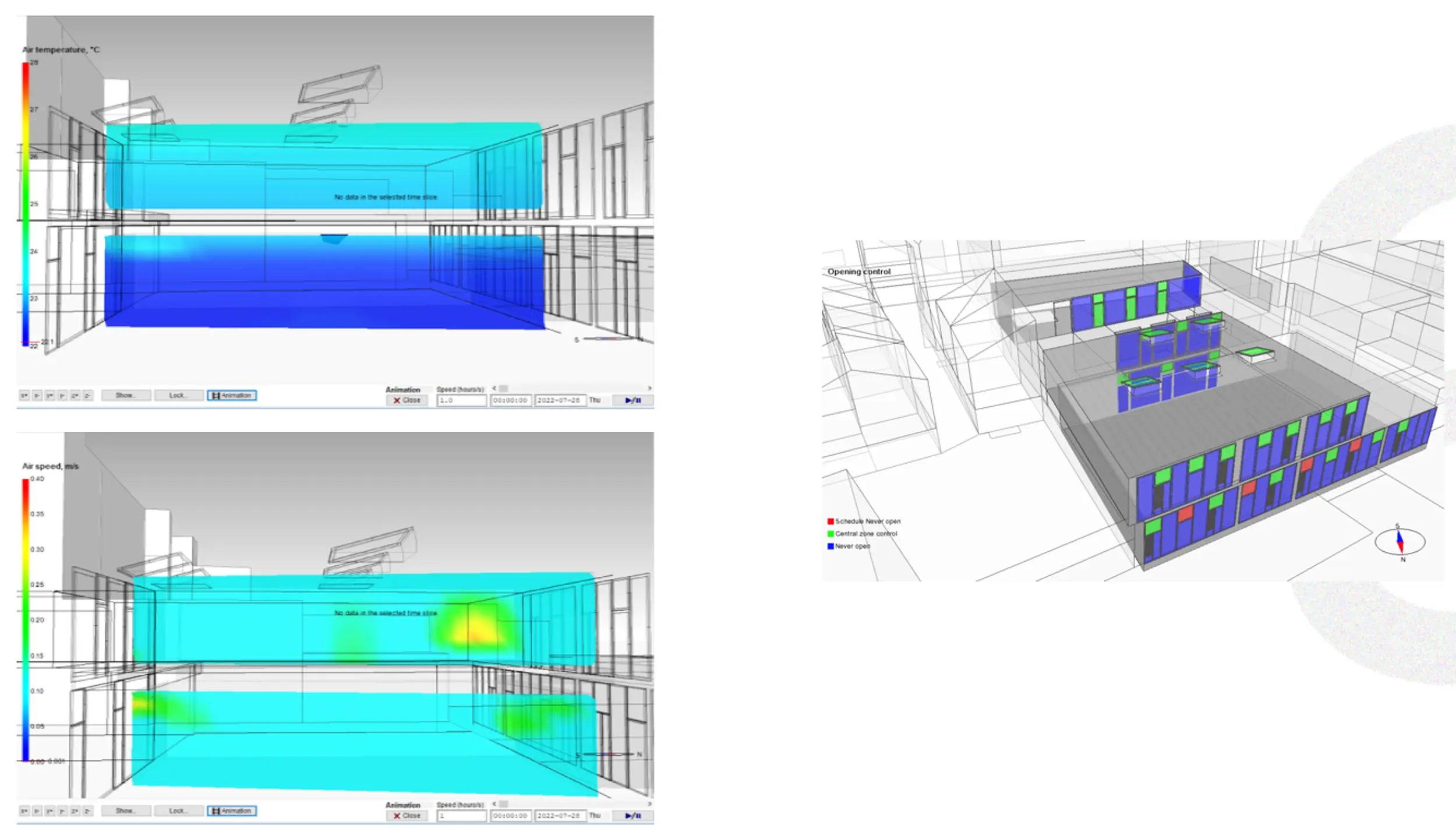
- Sustainability: the model supports simulations for sustainability and energy performance, optimisation of natural daylight and analysis of environmental impact using tools such as the TOTEM database or One Click LCA.
- Management: it provides immediate insight into the budgetary impact of design choices. Data on time (4D) and cost (5D) give a clear picture of the building’s life cycle.
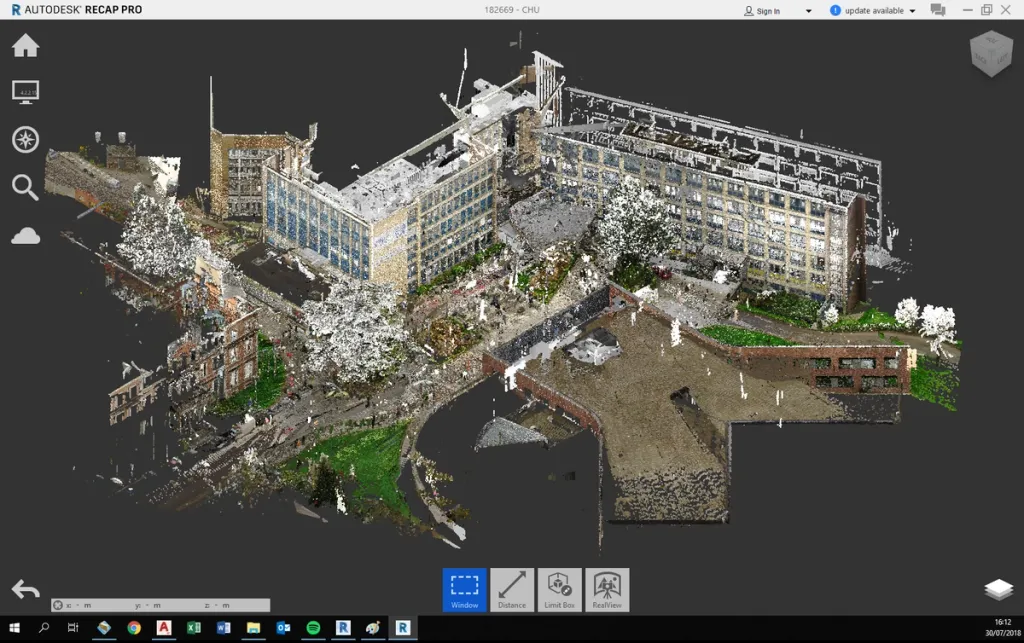
Surveyor’s point cloud – CHU
The change is now
Not only architects, but all stakeholders in the construction sector feel the impact of BIM. Time savings and efficiency are key. Even before the first sketches are made, surveyors can produce highly accurate scans of buildings and their surroundings. Increasingly, contractors are asked to base their tenders and as-built dossiers on a virtual 3D model. With a few targeted adjustments, these models can be transformed into a management tool that centralises technical data and operational planning.
More than a digital drawing tool
BIM at Archipelago is far more than a digital drafting tool. It is a considered, shared way of working that brings all partners together around one reliable information model. By encouraging collaboration, transparent data exchange and the use of open standards from the very beginning, we enhance the quality, predictability and efficiency of every project.
From the first sketch to the as-built dossier, our BIM processes support better-informed decisions and provide clear insight into budgets and life cycle. By integrating digital innovations into our workflows, we deliver buildings that are technically feasible, sustainable, smart and truly future-proof.
Related projects & research
- Residential
- Mixed-use
- Masterplan
- Residential