Affordable housing: searching for the middle ground
Affordable housing requires new solutions that sit between social and private housing. Through collaboration, smart design, and attention to sustainability, housing can remain accessible and affordable for everyone.
 Maarten Lambrechts
 Sébastien Jamar
- Residential
- Social dynamics
Many people today find it difficult to access affordable, high-quality housing. The housing crisis shows that there is a need for a middle segment between social housing and the private market. By working together, designing smartly, and paying attention to energy performance and quality, housing can remain affordable and livable throughout different stages of life.
Housing is a basic human need, yet in many cities affordable, high-quality housing is becoming increasingly difficult to access. The housing crisis is not a temporary issue, but a structural one. Rising land prices, a growing gap between supply and demand, changing lifestyles, increasingly limited access to homeownership, an ageing housing stock, and stricter environmental standards all reinforce one another.
A key bottleneck is the absence of an intermediate zone. Many people are trapped between two systems: heavily subsidised social housing and an increasingly expensive private market. Simply building more social housing is not enough. In Brussels, the system is under pressure: construction costs are rising, while the incomes of applicants for social housing are declining. At the same time, the private market is primarily driven by return on investment and land speculation.
“The middle segment is missing. If we continue building as we do today, the problem will not be solved”, says Sébastien Jamar.
His master’s thesis on institutional rental models in Brussels explored how intermediate housing forms could emerge: a model that is neither fully market-driven nor fully dependent on subsidies. One possible pathway lies in cooperation between public and private partners, based on clear agreements that protect the collective interest.
“Affordability is not only about price, but about guaranteeing decent housing that remains affordable throughout people’s lives. Energy performance, long-term maintenance costs, housing quality, and adaptability are just as important.”
Housing therefore becomes a systemic issue, where financial, ecological, and social parameters must be considered together.
“Affordability is not only about price, but about guaranteeing decent housing that remains affordable throughout people’s lives. Energy performance, long-term maintenance costs, housing quality, and adaptability are just as important.” Sébastien Jamar
affordable
The role of the architect
The role of the architect is changing. The architect increasingly acts as a mediator between developers, public authorities, and residents. “Architects will not solve the housing crisis on their own, but they can help restore balance and create positive impact in the project process.”
That is why Archipelago invests in research, real estate knowledge, and feasibility studies. “This allows us to be involved early in the process, when projects are still taking shape and key decisions are being made”, says Maarten Lambrechts. “If we limit ourselves to design and obtaining permits, our impact remains limited. We want to help define the conditions that make projects feasible.”
Feasibility is not only a financial exercise, but also a search for balance between cost, quality, and long-term impact. “We need to do more with less, and work with what already exists. Our role is to clarify parameters and compare scenarios before a project is fixed, so that decisions become objective and transparent”, he says.
Parameters
The architect thus acts as a mediator. By making parameters explicit and comparing scenarios, financial feasibility, social impact, and ecological ambitions become concrete choices rather than abstract positions.
1. Using space smartly
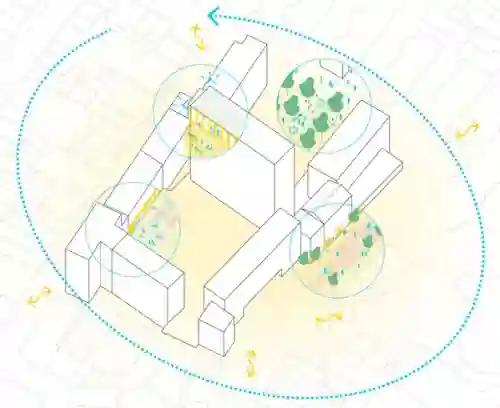
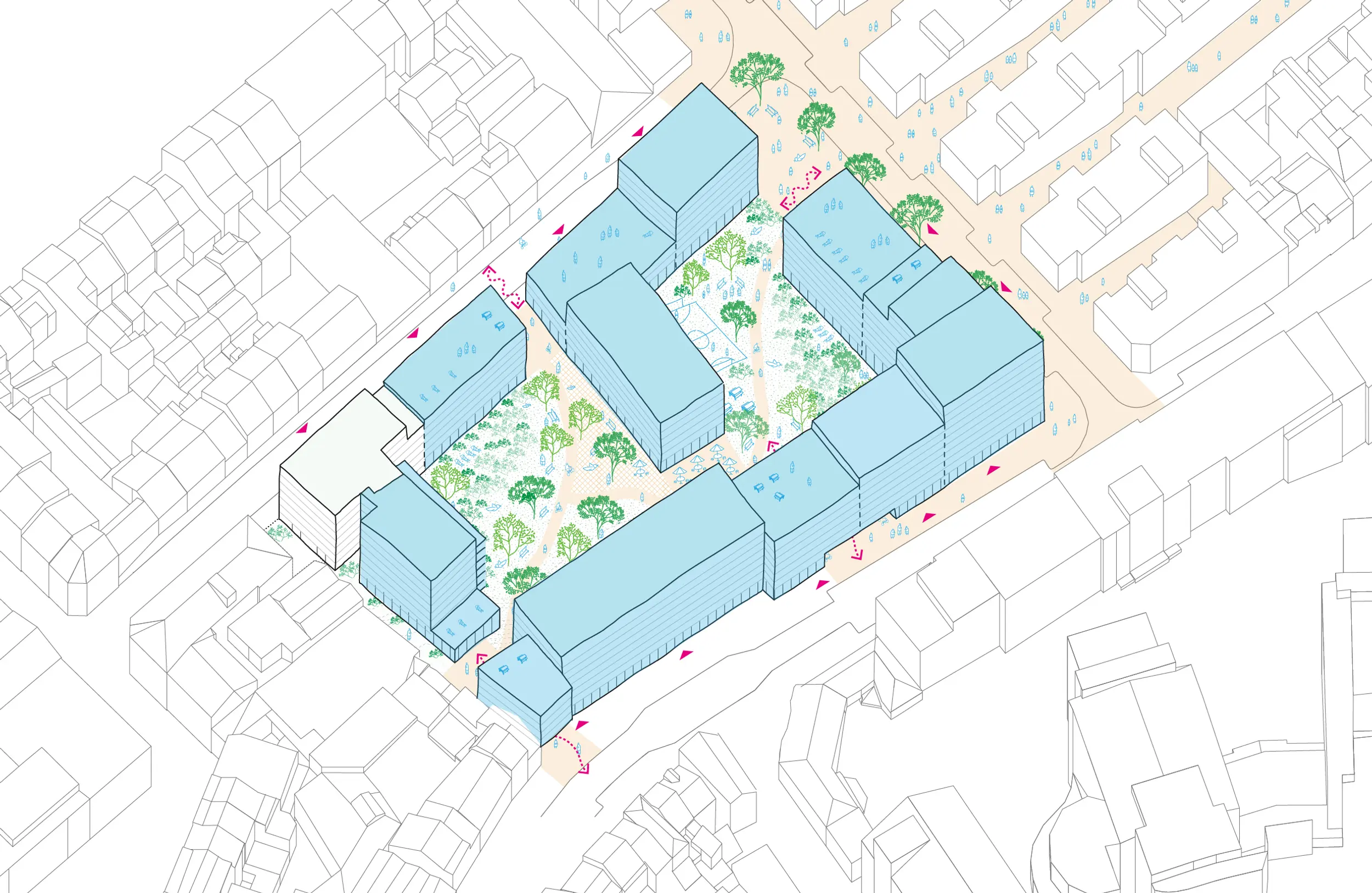
Land is often the biggest cost factor. The first step is therefore to focus on compact construction, smart densification, and the reuse of existing buildings. “Shared outdoor spaces can compensate for smaller private surfaces without reducing housing quality. We see urban planning regulations as a framework that can sometimes be challenged.”
2. Controlling energy costs
Affordability also means lower running costs. “We look for robust solutions with a good balance between energy performance, material use, and maintenance. Adapting buildings to current and future climate conditions, such as integrated shading, can reduce the need for technical installations and help control future costs.”
3. Efficient construction
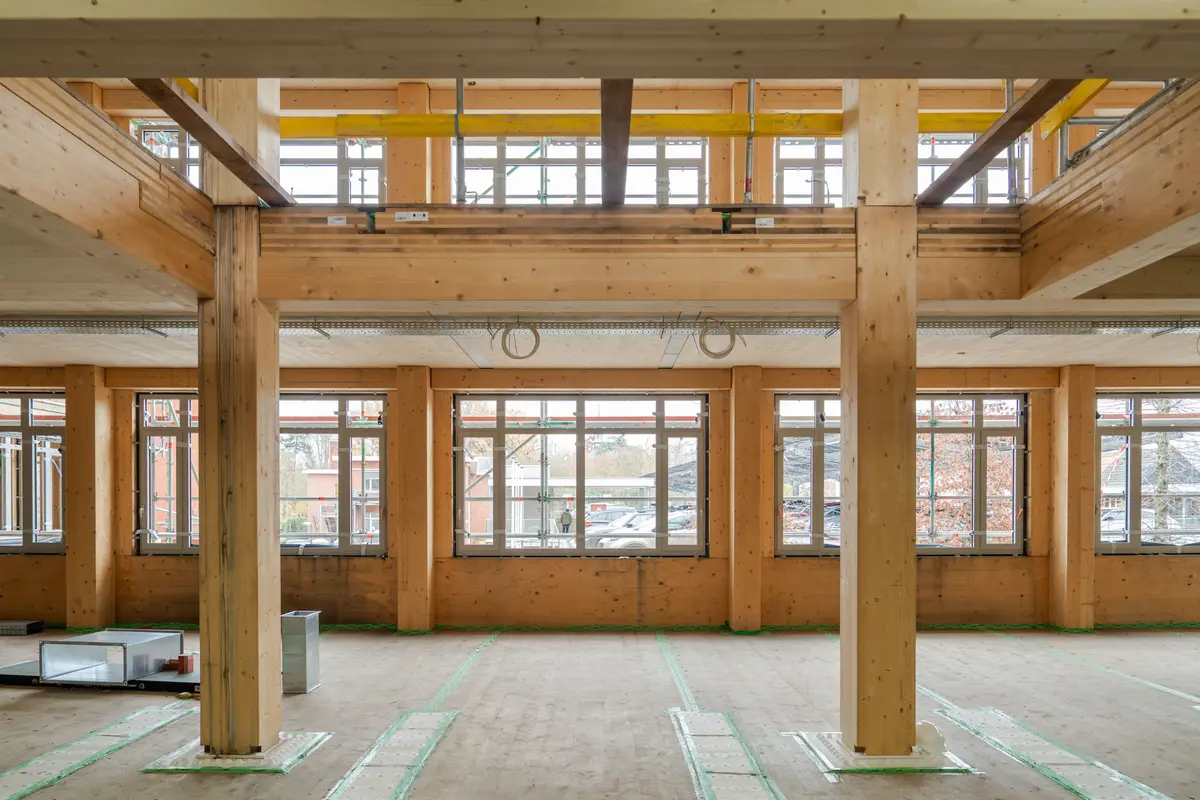
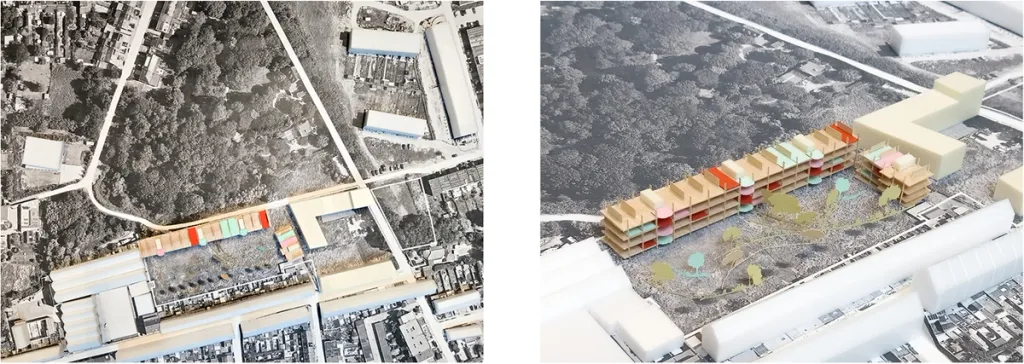
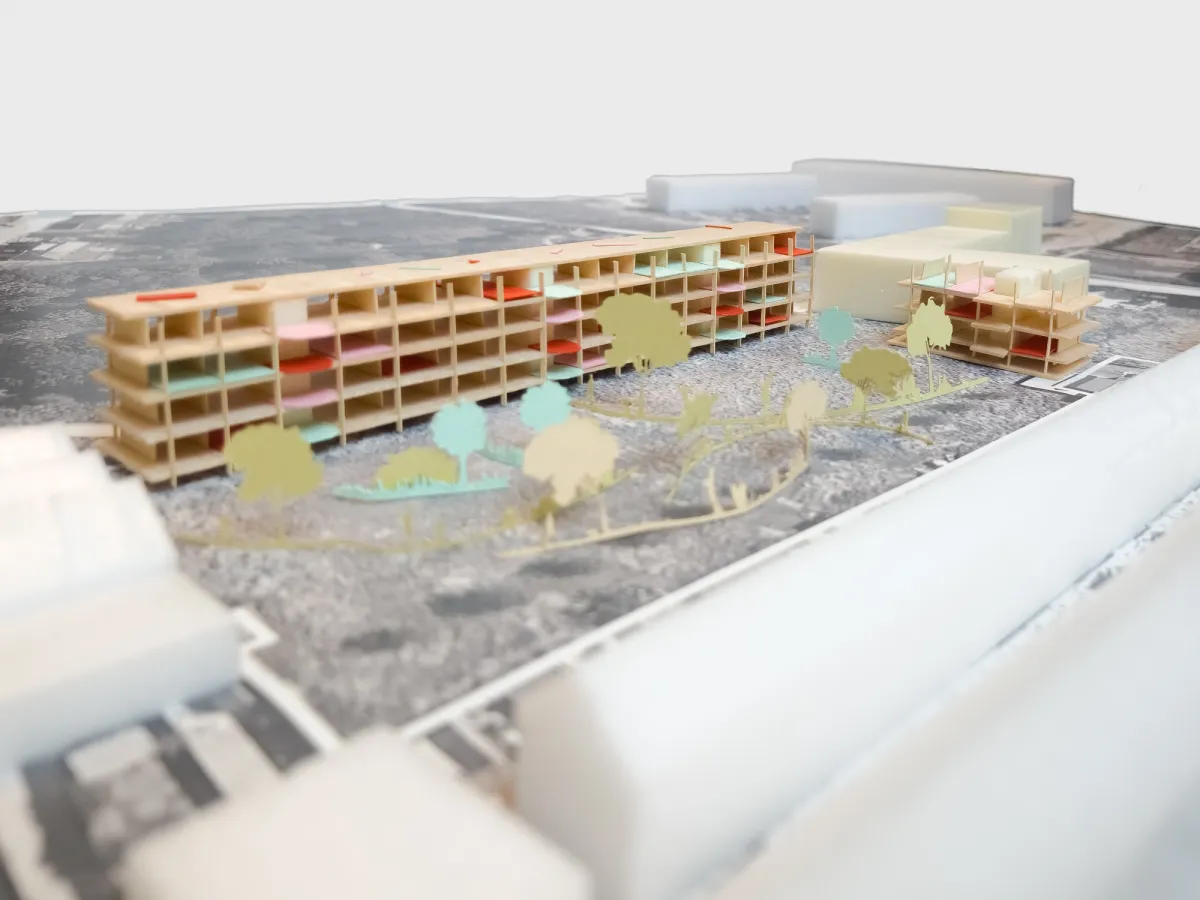
Standardisation and modularity help reduce both investment and maintenance costs. In the Papenhof study, a structural grid enabled a flexible and rational building structure.
4. Respect for the environment
Feasibility also concerns environmental quality and ecological impact. “Using scenario comparison and tools such as TOTEM, we analyse environmental impact, embodied carbon, waste production, and material use alongside financial and spatial choices.”
5. Social added value
A project should engage with its neighbourhood and leave room for residents to shape the space themselves. “A mix of affordable and market-rate housing can create financial flexibility. Simple and thoughtful spatial interventions can strengthen community life.”
Examples
Papenhof: hybrid affordability
Within the Living Lab, research explored how a cooperative housing model can remain financially feasible. “We tested the number of housing units and volumes in relation to land value, rental prices, and environmental performance. Compact building, shared gardens, and a modular construction system helped limit costs without losing quality.”
Site Haute: renovation as a strategic choice
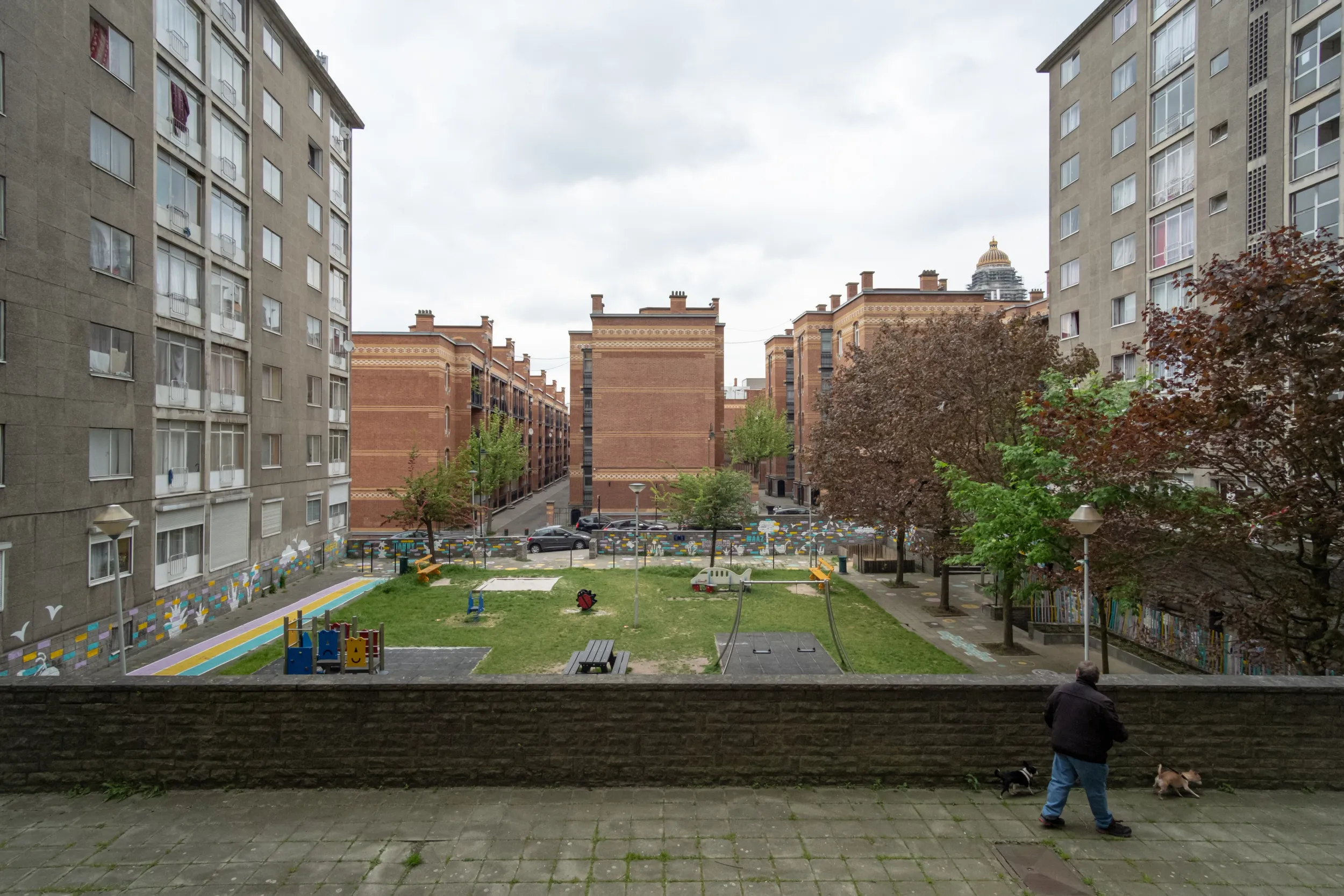
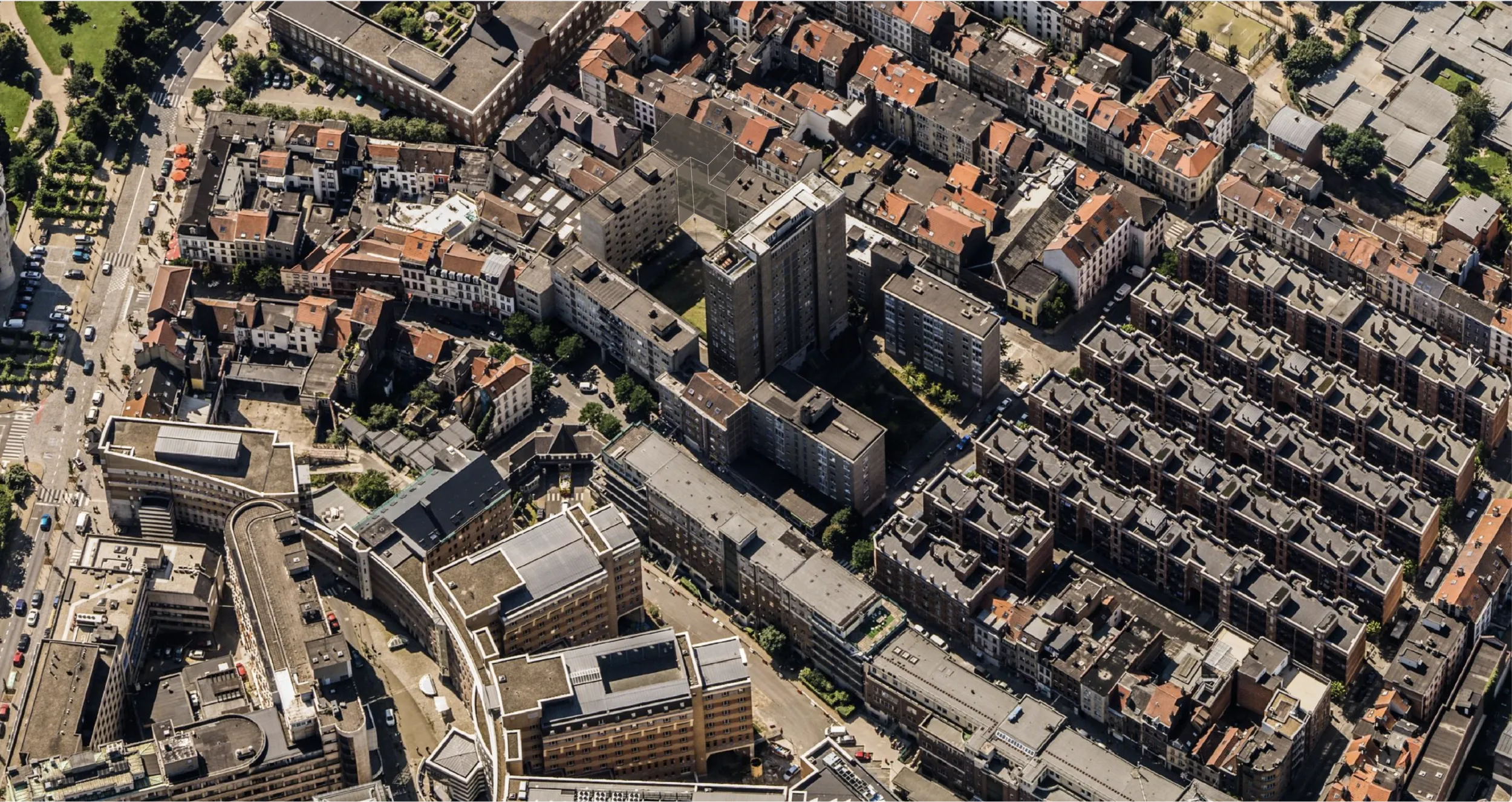
For this social housing project in Brussels, renovation, partial demolition, and new construction were compared. “We analysed financial feasibility, energy performance, environmental effects using TOTEM, social impact, and architectural quality. By considering all parameters together, the client could make a clear and broadly supported decision.” The feasibility study thus became not just a technical report, but a tool for informed decision-making.
Related projects & research
- Masterplan
- Residential
- Care
Broydenborg
- Masterplan
- Mixed-use
Gelatine quarter
- Residential
Social Housing Solveld
- Mixed-use
- Masterplan
- Residential